
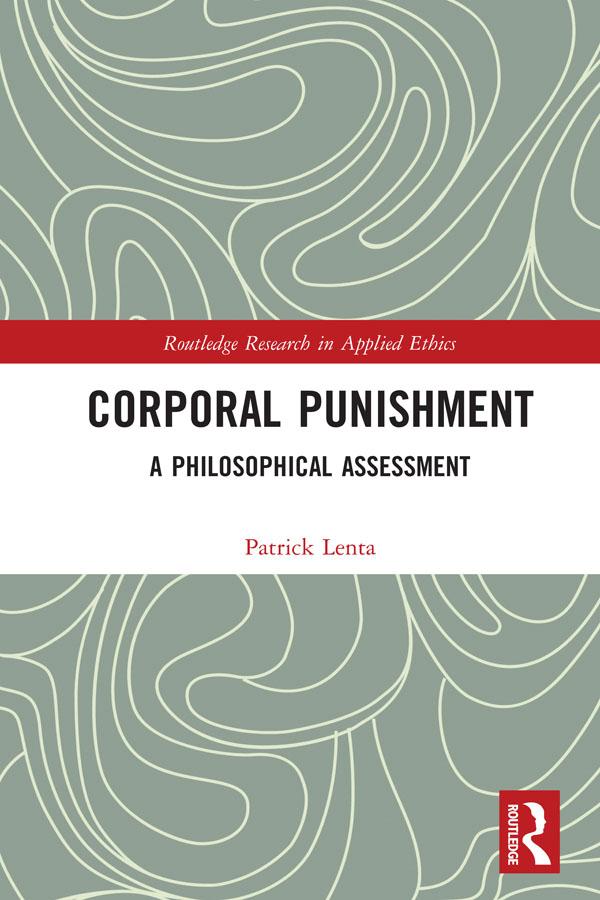
The aim of this book is to assess the moral permissibility of corporal punishment and to enquire into whether or not it ought to be legally prohibited. Against the widespread view that corporal punishment is morally legitimate and should be legally permitted provided it falls short of abuse, Patrick Lenta argues that all corporal punishment, even parental spanking, is morally impermissible and ought to be legally proscribed. The advantages claimed for corporal punishment over alternative disciplinary techniques, he contends, are slight or speculative and are far outweighed by its disadvantages. He presents, in addition, a rights-based case against corporal punishment, arguing that children possess certain fundamental rights that all corporal punishment of them violates, namely the right to security of the person and the right not to be subjected to degrading punishment. Lenta’s approach is unique in that it engages with empirical literature in the social sciences in order to fully examine the emotional and psychological effects of corporal punishment on children. Corporal Punishment: A Philosophical Assessment is a philosophically rigorous and engaging treatment of a hitherto neglected topic in applied ethics and social philosophy.
Betala smidigt med kort, Klarna, Apple Pay eller Google Pay. Är du inte nöjd har du alltid 14 dagars ångerrätt. Läs mer i våra villkor. Har du några frågor, mejla oss på hello@memmo.org.
Memmo gör det enklare att plugga – var du än är i världen. Hos oss samlar du kursböcker och smarta studieverktyg på ett och samma ställe: sammanfattningar, quiz, poddar och flashcards. Och så Ted, din studiekompis som svarar på allt du undrar. Över 50 000 studenter pluggar redan här – byggt för att du ska lära dig snabbare och stressa mindre.