
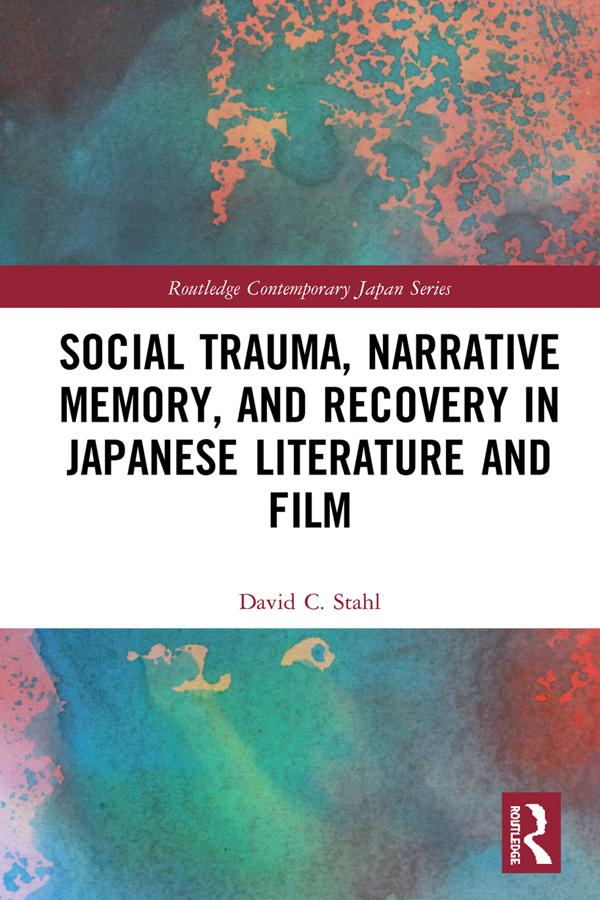
This book provides a comprehensive analysis of major works in Japanese literature and film through the interpretive lens of trauma and PTSD studies. Focusing critical attention on the psychodynamics and enduring psychosocial aftereffects of social trauma, it also evaluates the themes of dissociation, failed mourning, and psychological defence fantasies.
Building on earlier studies, this book emphasizes the role of protagonists in managing to effect partial recovery by composing memoirs in which they transform dissociated traumatic memory into articulate, narrative memory or bring about advanced recovery by pioneering alternative means of orally communicating, working through, and overcoming debilitating personal histories of traumatization and victimization. In so doing, Stahl also demonstrates that what holds true on the individual and microcosmic level, also does so on the collective and macrocosmic level.
This new critical approach sheds important new light on canonical Japanese novels and films and enables recognition and appreciation of integral psychosocial aspects of these traumatic narratives. As such, the book will be of huge interest to students and scholars of Japanese film and literature, as well as those of trauma studies.
Betala smidigt med kort, Klarna, Apple Pay eller Google Pay. Är du inte nöjd har du alltid 14 dagars ångerrätt. Läs mer i våra villkor. Har du några frågor, mejla oss på hello@memmo.org.
Memmo gör det enklare att plugga – var du än är i världen. Hos oss samlar du kursböcker och smarta studieverktyg på ett och samma ställe: sammanfattningar, quiz, poddar och flashcards. Och så Ted, din studiekompis som svarar på allt du undrar. Över 50 000 studenter pluggar redan här – byggt för att du ska lära dig snabbare och stressa mindre.