
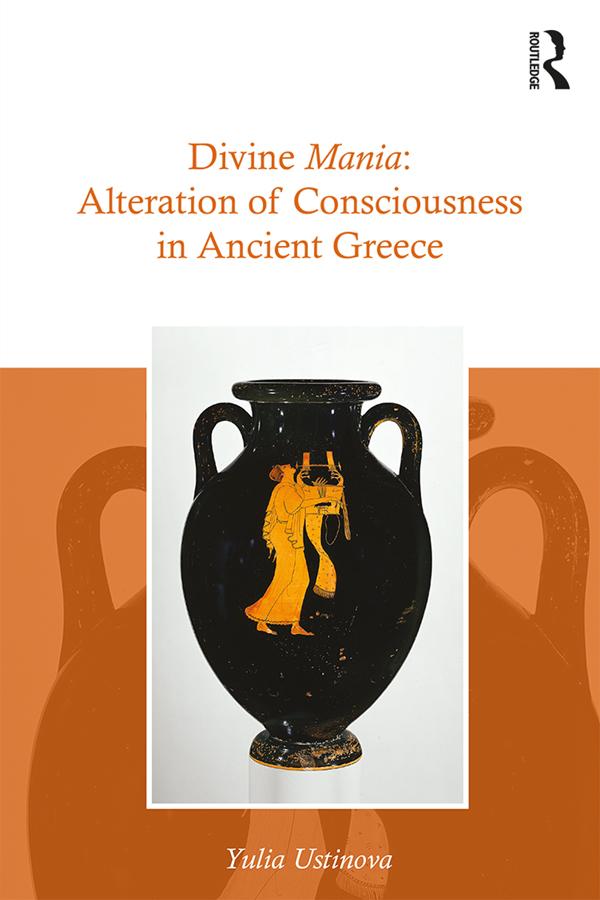
‘Our greatest blessings come to us by way of mania, provided it is given us by divine gift,’ – says Socrates in Plato’s Phaedrus. Certain forms of alteration of consciousness, considered to be inspired by supernatural forces, were actively sought in ancient Greece. Divine mania comprises a fascinating array of diverse experiences: numerous initiates underwent some kind of alteration of consciousness during mystery rites; sacred officials and inquirers attained revelations in major oracular centres; possession states were actively sought; finally, some thinkers, such as Pythagoras and Socrates, probably practiced manipulation of consciousness. These experiences, which could be voluntary or involuntary, intense or mild, were interpreted as an invasive divine power within one’s mind, or illumination granted by a super-human being.
Greece was unique in its attitude to alteration of consciousness. From the perspective of individual and public freedom, the prominent position of the divine mania in Greek society reflects its acceptance of the inborn human proclivity to experience alteration of consciousness, interpreted in positive terms as god-sent. These mental states were treated with cautious respect, and in contrast to the majority of complex societies, ancient and modern, were never suppressed or pushed to the cultural and social periphery.
Betala smidigt med kort, Klarna, Apple Pay eller Google Pay. Är du inte nöjd har du alltid 14 dagars ångerrätt. Läs mer i våra villkor. Har du några frågor, mejla oss på hello@memmo.org.
Memmo gör det enklare att plugga – var du än är i världen. Hos oss samlar du kursböcker och smarta studieverktyg på ett och samma ställe: sammanfattningar, quiz, poddar och flashcards. Och så Ted, din studiekompis som svarar på allt du undrar. Över 50 000 studenter pluggar redan här – byggt för att du ska lära dig snabbare och stressa mindre.