
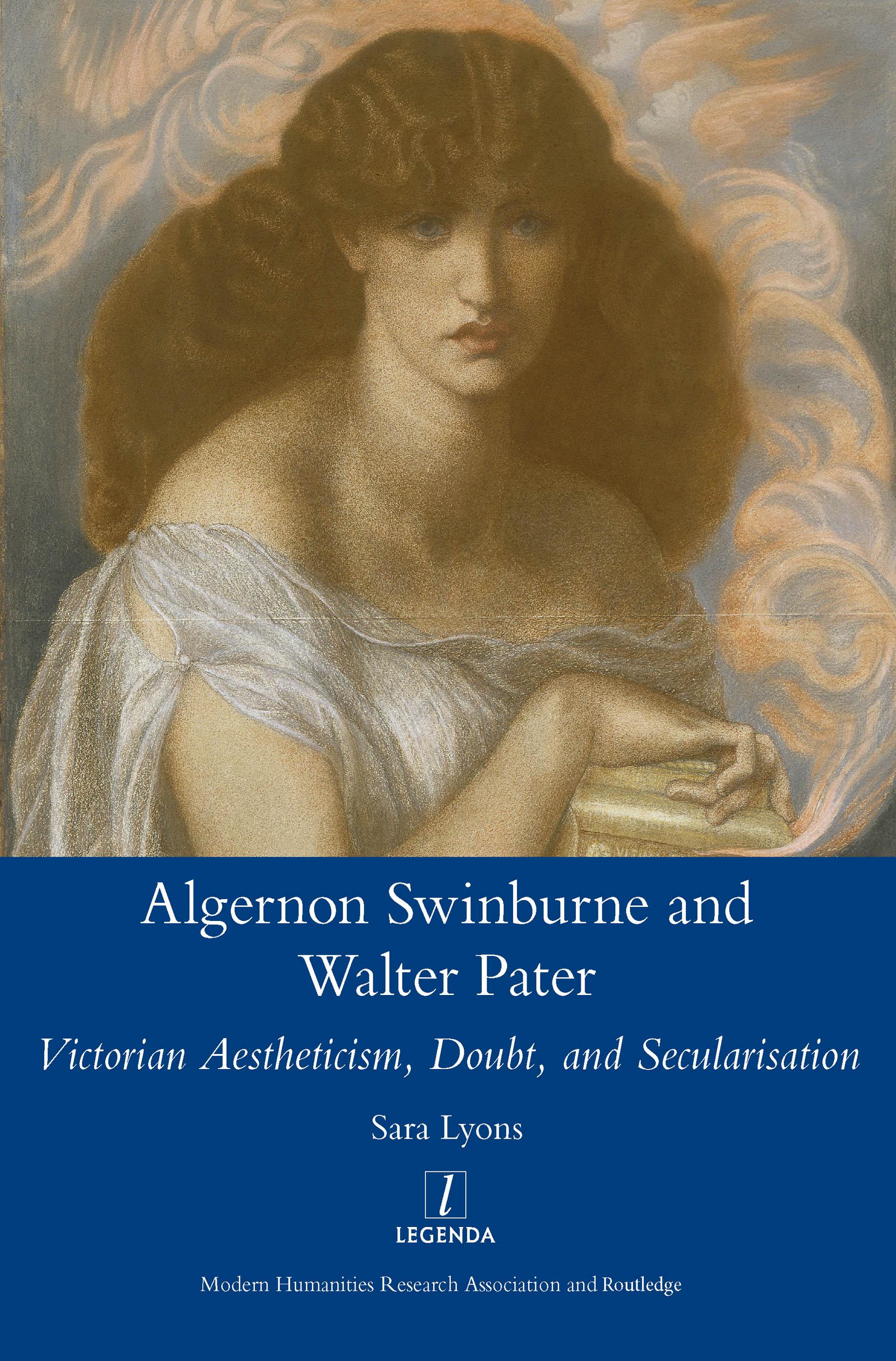
How did literary aestheticism emerge in Victorian Britain, with its competing models of religious doubt and visions of secularisation? For Lyons, the aestheticism developed and progressively revised by Algernon Charles Swinburne (1837-1909) and Walter Pater (1839-1894) illuminates the contradictory impulses of modern secularism: on the one hand, a desire to cast itself as a form of neutrality or disinterestedness; on the other, a desire to affirm 'this world' as the place of human flourishing or even enchantment. The standard narrative of a 'crisis of faith' does not do justice to the fissured, uncertain quality of Victorian visions of secularisation. Precisely because it had the status of a confusing hypothesis rather than a self-evident reality, it provoked not only dread and melancholia, but also forms of fantasy. Within this context Lyons gives a fundamentally new account of the aims and nature of Victorian aestheticism, taking as a focus its deceptively simple claim that art is for art's sake first of all.
Betala smidigt med kort, Klarna, Apple Pay eller Google Pay. Är du inte nöjd har du alltid 14 dagars ångerrätt. Läs mer i våra villkor. Har du några frågor, mejla oss på hello@memmo.org.
Memmo gör det enklare att plugga – var du än är i världen. Hos oss samlar du kursböcker och smarta studieverktyg på ett och samma ställe: sammanfattningar, quiz, poddar och flashcards. Och så Ted, din studiekompis som svarar på allt du undrar. Över 50 000 studenter pluggar redan här – byggt för att du ska lära dig snabbare och stressa mindre.
Du kanske också gillar
Köp boken0