
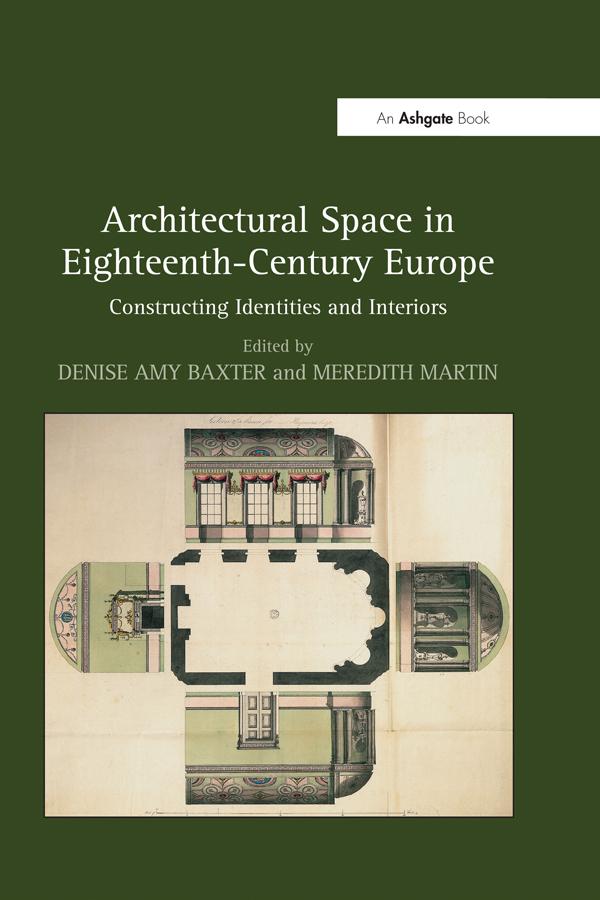
Architectural Space in Eighteenth-Century Europe: Constructing Identities and Interiors explores how a diverse, pan-European group of eighteenth-century patrons - among them bankers, bishops, bluestockings, and courtesans - used architectural space and décor to shape and express identity. Eighteenth-century European architects understood the client's instrumental role in giving form and meaning to architectural space. In a treatise published in 1745, the French architect Germain Boffrand determined that a visitor could "judge the character of the master for whom the house was built by the way in which it is planned, decorated and distributed." This interdisciplinary volume addresses two key interests of contemporary historians working in a range of disciplines: one, the broad question of identity formation, most notably as it relates to ideas of gender, class, and ethnicity; and two, the role played by different spatial environments in the production - not merely the reflection - of identity at defining historical and cultural moments. By combining contemporary critical analysis with a historically specific approach, the book's contributors situate ideas of space and the self within the visual and material remains of interiors in eighteenth-century Europe. In doing so, they offer compelling new insight not only into this historical period, but also into our own.
Betala smidigt med kort, Klarna, Apple Pay eller Google Pay. Är du inte nöjd har du alltid 14 dagars ångerrätt. Läs mer i våra villkor. Har du några frågor, mejla oss på hello@memmo.org.
Memmo gör det enklare att plugga – var du än är i världen. Hos oss samlar du kursböcker och smarta studieverktyg på ett och samma ställe: sammanfattningar, quiz, poddar och flashcards. Och så Ted, din studiekompis som svarar på allt du undrar. Över 75 000 studenter pluggar redan här – byggt för att du ska lära dig snabbare och stressa mindre.