
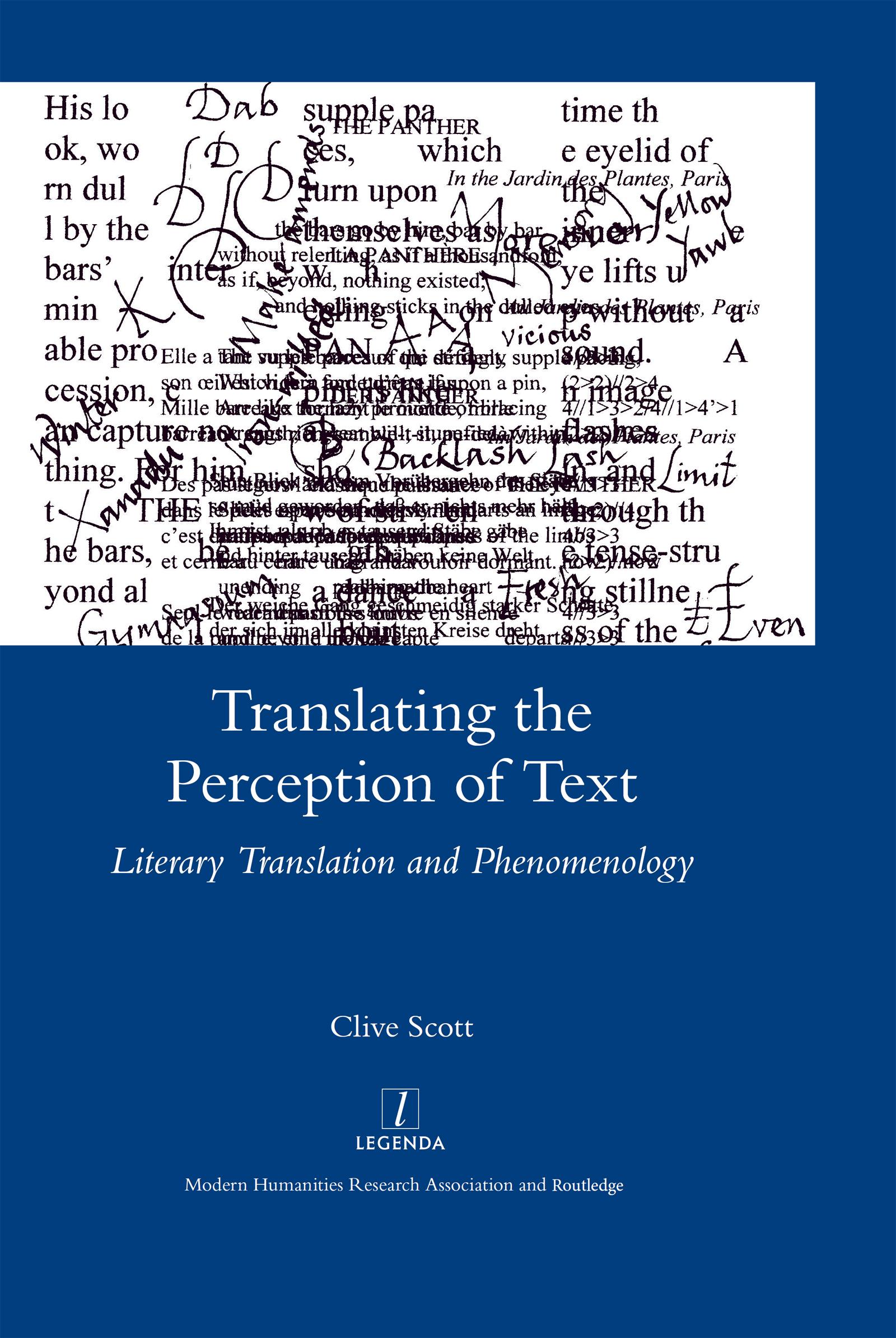
Translation often proceeds as if languages already existed, as if the task of the translator were to make an appropriate selection from available resources. Clive Scott challenges this tacit assumption. If the translator is to do justice to himself/herself as a reader, if the translator is to become the creative writer of his/her reading, then the language of translation must be equal to the translators perceptual experience of, and bodily responses to, source texts. Each renewal of perceptual and physiological contact with a text involves a renewal of the ways we think language and use our expressive faculties (listening, speaking, writing). Phenomenology and particularly the phenomenology of Merleau-Ponty underpins this new approach to translation. The task of the translator is tirelessly to develop new translational languages, ever to move beyond the bilingual into the multilingual, and always to remember that language is as much an active instrument of perception as an object of perception. Clive Scott is Professor Emeritus of European Literature at the University of East Anglia, and a Fellow of the British Academy.
Betala smidigt med kort, Klarna, Apple Pay eller Google Pay. Är du inte nöjd har du alltid 14 dagars ångerrätt. Läs mer i våra villkor. Har du några frågor, mejla oss på hello@memmo.org.
Memmo gör det enklare att plugga – var du än är i världen. Hos oss samlar du kursböcker och smarta studieverktyg på ett och samma ställe: sammanfattningar, quiz, poddar och flashcards. Och så Ted, din studiekompis som svarar på allt du undrar. Över 50 000 studenter pluggar redan här – byggt för att du ska lära dig snabbare och stressa mindre.
Du kanske också gillar
Köp boken0