
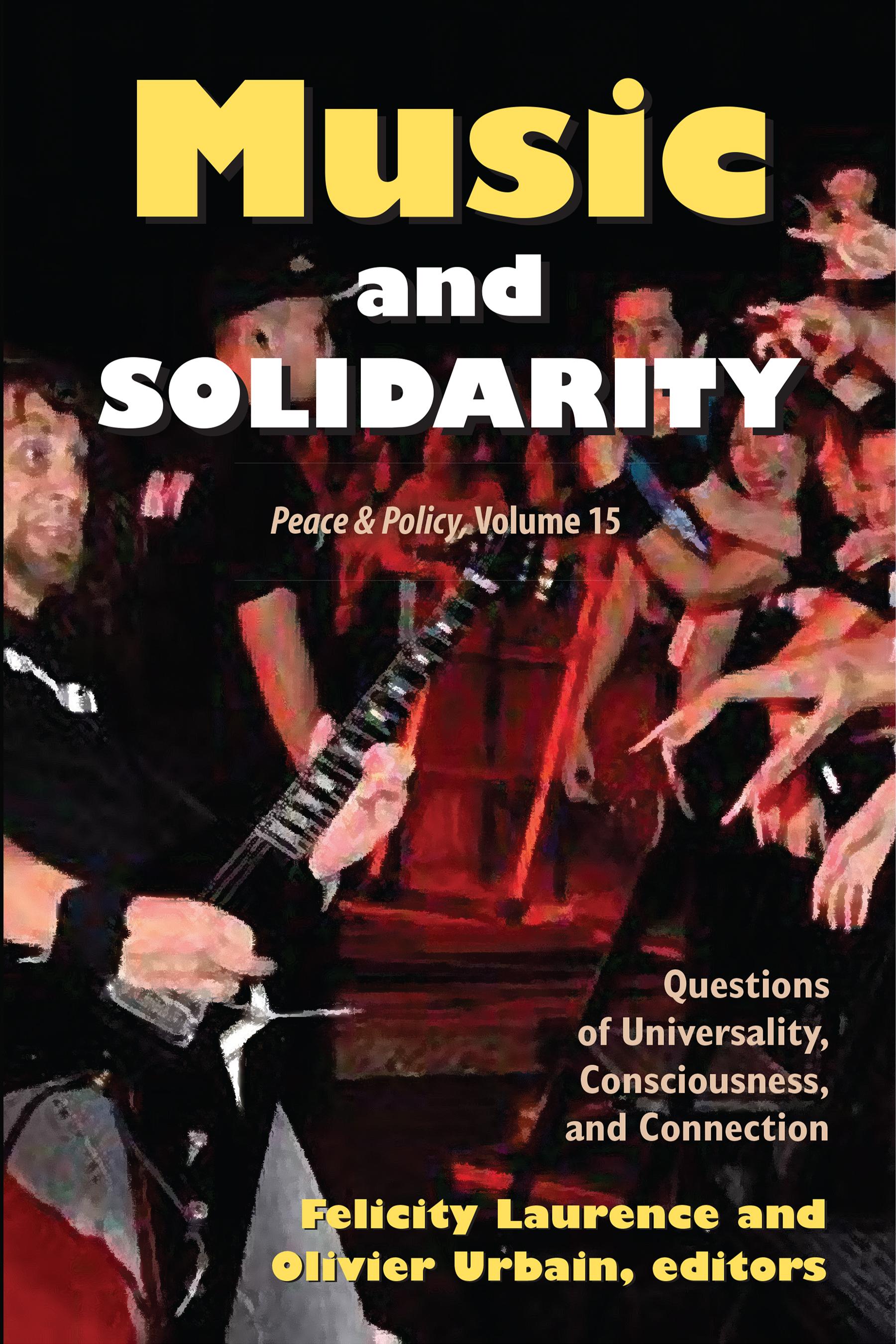
The philosopher Christopher Small suggests that musical meanings are concerned with relationships, both with other human beings and with the world, and that music functions as a means of exploration, affirmation, and celebration of those relationships. If members of different social groups have different values, or different concepts of ideal relationships, then the kinds of performances that enact those relationships will differ from one another.
Using music to express benevolent intentions is not, in general, one of its most obvious functions. In fact, military music has been used throughout history to destroy cross-cultural communion. Music is also a powerful and ubiquitous tool in propaganda, and in facilitating various political projects in all kinds of inventive ways that have nothing much to do with the pursuit of peaceful and cooperative intercultural understanding, or with helping people address issues of injustice.
This text moves far beyond the knowledge of music's power upon humans, however this may be conceived and explained. It addresses a field of inquiry that is still a tiny endeavor, at least in comparison with all other academic efforts in the world. The sparseness of serious theoretical engagement with the topic of music's potential role in the area of peace and policy is echoed by how little music is directly used in the "real world" for building a more humane consciousness. Finding ways to that goal is the purpose of this work.
Betala smidigt med kort, Klarna, Apple Pay eller Google Pay. Är du inte nöjd har du alltid 14 dagars ångerrätt. Läs mer i våra villkor. Har du några frågor, mejla oss på hello@memmo.org.
Memmo gör det enklare att plugga – var du än är i världen. Hos oss samlar du kursböcker och smarta studieverktyg på ett och samma ställe: sammanfattningar, quiz, poddar och flashcards. Och så Ted, din studiekompis som svarar på allt du undrar. Över 50 000 studenter pluggar redan här – byggt för att du ska lära dig snabbare och stressa mindre.