
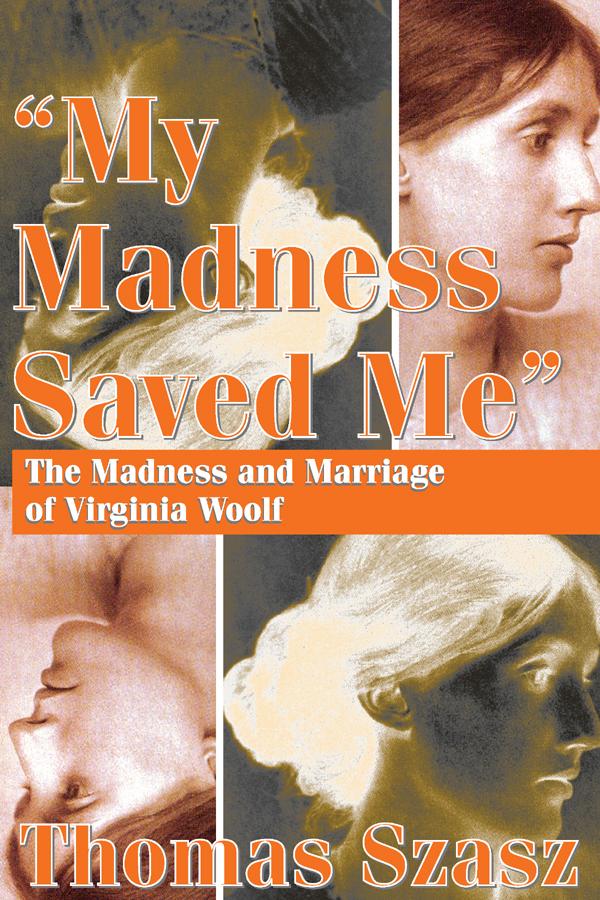
"The vast literature on Virginia Woolf's life, work, and marriage falls into two groups. A large majority is certain that she was mentally ill, and a small minority is equally certain that she was not mentally ill but was misdiagnosed by psychiatrists. In this daring exploration of Woolf's life and work, Thomas Szasz--famed for his radical critique of psychiatric concepts, coercions, and excuses--examines the evidence and rejects both views. Instead, he looks at how Virginia Woolf, as well as her husband Leonard, used the concept of madness and the profession of psychiatry to manage and manipulate their own and each other's lives.Do we explain achievement when we attribute it to the fictitious entity we call ""genius""? Do we explain failure when we attribute it to the fictitious entity we call ""madness""? Or do we deceive ourselves the same way that the person deceives himself when he attributes the easy ignition of hydrogen to its being ""flammable""? Szasz interprets Virginia Woolf's life and work as expressions of her character, and her character as the ""product"" of her free will. He offers this view as a corrective against the prevailing, ostensibly scientific view that attributes both her ""madness"" and her ""genius"" to biological-genetic causes. We tend to attribute exceptional achievement to genius, and exceptional failure to madness. Both, says Szasz, are fictitious entities."
Betala smidigt med kort, Klarna, Apple Pay eller Google Pay. Är du inte nöjd har du alltid 14 dagars ångerrätt. Läs mer i våra villkor. Har du några frågor, mejla oss på hello@memmo.org.
Memmo gör det enklare att plugga – var du än är i världen. Hos oss samlar du kursböcker och smarta studieverktyg på ett och samma ställe: sammanfattningar, quiz, poddar och flashcards. Och så Ted, din studiekompis som svarar på allt du undrar. Över 50 000 studenter pluggar redan här – byggt för att du ska lära dig snabbare och stressa mindre.
Du kanske också gillar
Köp boken0