
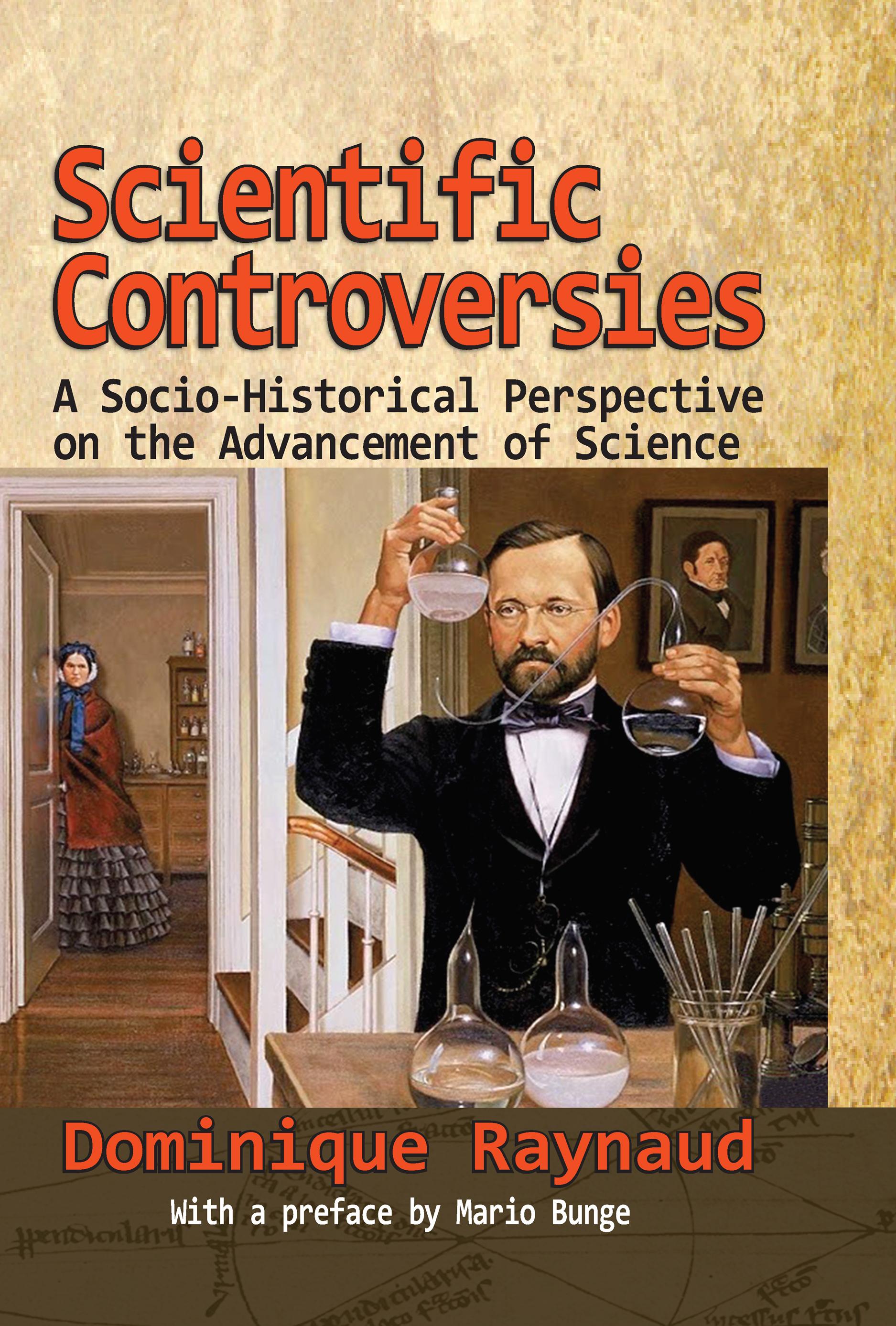
In Scientific Controversies, Dominque Raynaud shows how organized debates in the sciences help us establish or verify our knowledge of the world. If debates focus on form, scientific controversies are akin to public debates that can be understood within the framework of theories of conflict. If they focus on content, then such controversies have to do with a specific activity and address the nature of science itself. Understanding the major focus of a scientific controversy is a first step toward understanding these debates and assessing their merits.Controversies of unique socio-historic context, disciplines, and characteristics are examined: Pasteur's germ theory and Pouchet's theory of spontaneous generation; vitalism advocated at Montpellier versus experimental medicine in Paris; the science of optics about the propagation of visual rays; the origins of relativism (the Duhem-Quine problem). Touching on the work of Boudon, Popper, and others, Raynaud puts forward an incrementalist theory about the advancement of science through scientific controversies.The debates Raynaud has selected share in common their pivotal importance to the history of the sciences. By understanding the role of controversy, we better understand the functioning of science and the stakes of the contemporary scientific debates.
Betala smidigt med kort, Klarna, Apple Pay eller Google Pay. Är du inte nöjd har du alltid 14 dagars ångerrätt. Läs mer i våra villkor. Har du några frågor, mejla oss på hello@memmo.org.
Memmo gör det enklare att plugga – var du än är i världen. Hos oss samlar du kursböcker och smarta studieverktyg på ett och samma ställe: sammanfattningar, quiz, poddar och flashcards. Och så Ted, din studiekompis som svarar på allt du undrar. Över 50 000 studenter pluggar redan här – byggt för att du ska lära dig snabbare och stressa mindre.
Du kanske också gillar
Köp boken0