
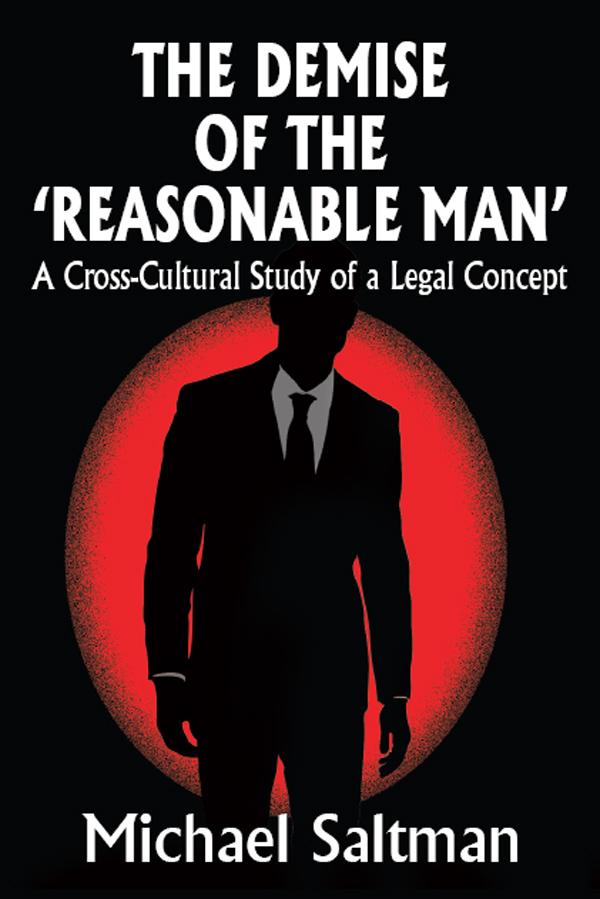
Judges in most societies often resort to resolving disputes by means of applying a criterion of reasonableness. In The Demise of the'Reasonable Man' Michael Saltman explores the ways in which reasonableness varies from one legal culture to another, defined by the relative presence or absence of centralized political power. In non-politically centralized societies, Saltman says, judges seek meanings underlying human behavior, and try to place reasonableness within a societal and cultural context. This is possible because primitive societies are relatively homogenous in their values and tend towards consensus when determining what constitutes reasonable behavior. In contrast, modern judges resort to standards of reasonableness only when the legal standard is unclear. Saltman contrasts judges in politically centralized societies, who, in the absence of such consensus, have the authority to determine, on the basis of that authority, what constitutes reasonableness. This rich volume references case studies drawn from ethnographic fieldwork, historical sources, and law reports to demonstrate differences in judicial attitudes toward reasonableness.
Betala smidigt med kort, Klarna, Apple Pay eller Google Pay. Är du inte nöjd har du alltid 14 dagars ångerrätt. Läs mer i våra villkor. Har du några frågor, mejla oss på hello@memmo.org.
Memmo gör det enklare att plugga – var du än är i världen. Hos oss samlar du kursböcker och smarta studieverktyg på ett och samma ställe: sammanfattningar, quiz, poddar och flashcards. Och så Ted, din studiekompis som svarar på allt du undrar. Över 50 000 studenter pluggar redan här – byggt för att du ska lära dig snabbare och stressa mindre.
Du kanske också gillar
Köp boken0