
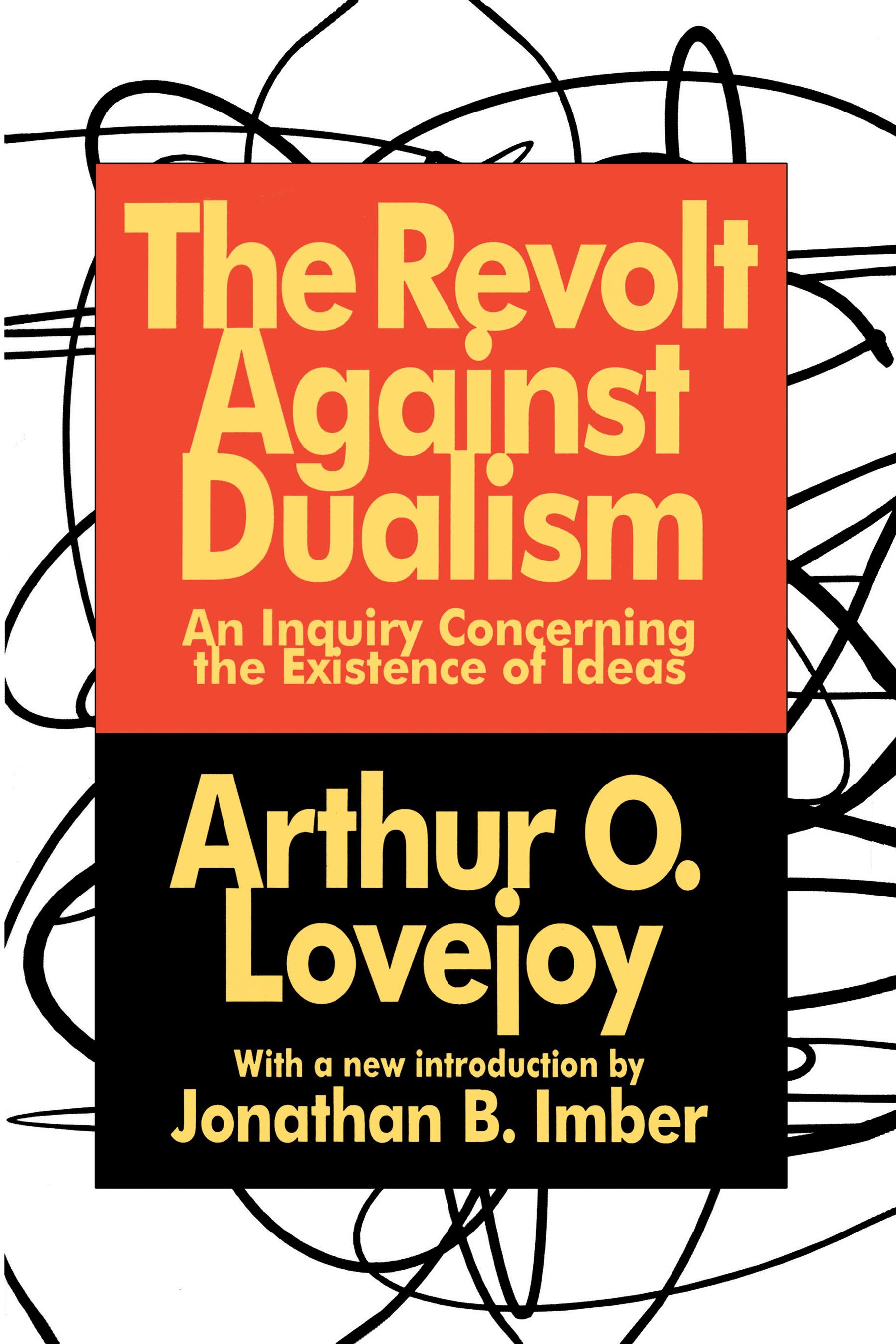
The Revolt Against Dualism, first published in 1930, belongs to a tradition in philosophical theorizing that Arthur O. Lovejoy called "descriptive epistemology." Lovejoy's principal aim in this book is to clarify the distinction between the quite separate phenomena of the knower and the known, something regularly obvious to common sense, if not always to intellectual understanding. This work is as much an argument about the ineluctable differences between subject and object and between mentality and reality, as it is a subtle polemic against those who would stray far from acknowledging these differences. With a resolve that lasts over three hundred pages, Lovejoy offers candid evaluations of a generation's worth of philosophical discussions that address the problem of epistemological dualism.
In his stunning new introduction, Jonathan B. Imber offers a reassessment of Lovejoy's career as a thinker and as an active participant in the worldly affairs of academic life. He introduces to a new generation of readers some enduring principles of the vocation of the scholar to which Lovejoy not only subscribed but to which he also gave substance through his activities as an academic man. The opening statement provides both a fit tribute to a great pioneer in the history of ideas, and an example of intellectual history in its own right. The Revolt Against Dualism will be a significant addition to the libraries of philosophers, sociologists, and history of ideas scholars.
Betala smidigt med kort, Klarna, Apple Pay eller Google Pay. Är du inte nöjd har du alltid 14 dagars ångerrätt. Läs mer i våra villkor. Har du några frågor, mejla oss på hello@memmo.org.
Memmo gör det enklare att plugga – var du än är i världen. Hos oss samlar du kursböcker och smarta studieverktyg på ett och samma ställe: sammanfattningar, quiz, poddar och flashcards. Och så Ted, din studiekompis som svarar på allt du undrar. Över 50 000 studenter pluggar redan här – byggt för att du ska lära dig snabbare och stressa mindre.