
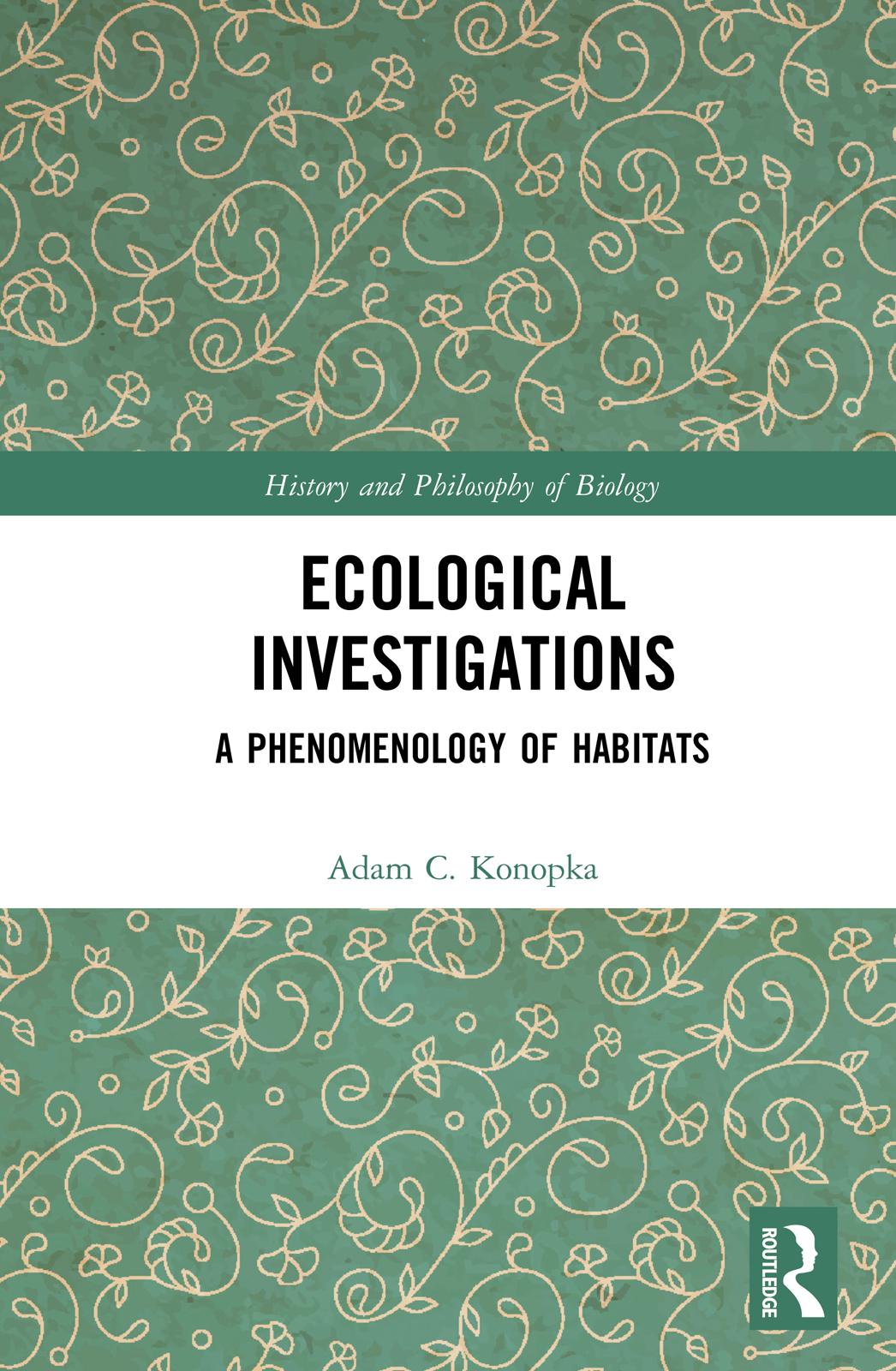
These investigations identify and clarify some basic assumptions and methodological principles involved in ecological explanations of plant associations. How are plants geographically distributed into characteristic groups? What are the basic conditions that organize groups of interspecific plant populations that are characteristic of particular kinds of habitats? Answers to these questions concerning the geographical distribution of plants in late 19th century European plant geography and early 20th century American plant ecology can be distinguished according to differing logical assumptions concerning the habitats of plant associations. Through an analysis of several significant case studies in the early history of plant ecology, Konopka distinguishes a logic of habitats that conceives of plant associations in an analogy to individual organisms with a logic that conceives of plant associations in a reciprocal relation to habitat physiography. He argues that a phenomenological conception of the logical attributes of habitats can philosophically complement the physiographic tradition in early plant ecology and provide an attractive alternative to standard reductionism and holism debates that persist today. This wide ranging and original analysis will be valuable for readers interested in the history and philosophy of ecology.
Betala smidigt med kort, Klarna, Apple Pay eller Google Pay. Är du inte nöjd har du alltid 14 dagars ångerrätt. Läs mer i våra villkor. Har du några frågor, mejla oss på hello@memmo.org.
Memmo gör det enklare att plugga – var du än är i världen. Hos oss samlar du kursböcker och smarta studieverktyg på ett och samma ställe: sammanfattningar, quiz, poddar och flashcards. Och så Ted, din studiekompis som svarar på allt du undrar. Över 50 000 studenter pluggar redan här – byggt för att du ska lära dig snabbare och stressa mindre.