
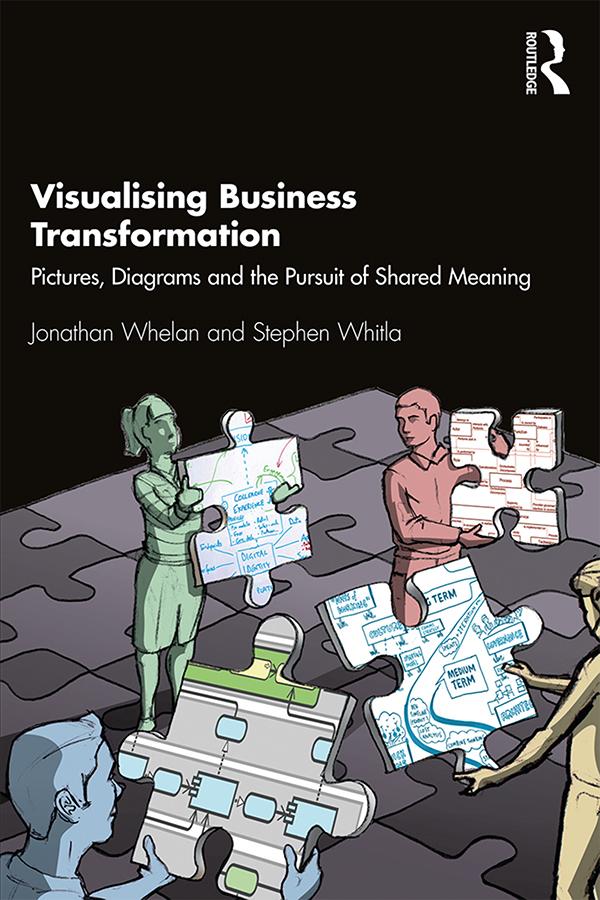
Business transformation typically involves a wide range of visualisation techniques, from the templates and diagrams used by managers to make better strategic choices, to the experience maps used by designers to understand customer needs, the technical models used by architects to propose possible solutions, and the pictorial representations used by change managers to engage stakeholder groups in dialogue. Up until now these approaches have always been dealt with in isolation, in the literature as well as in practice. This is surprising, because although they can look very different, and tend to be produced by distinct groups of people, they are all modelling different aspects of the same thing. Visualising Business Transformation draws them together for the first time into a coherent whole, so that readers from any background can expand their repertoire and understand the context and rationale for each technique across the transformation lifecycle. The book will appeal to a broad spectrum of readers involved in change, whether that is by creating change models themselves (strategists, architects, designers, engineers, business analysts, developers, illustrators, graphic facilitators, etc.), interpreting and using them (sponsors, business change managers, portfolio/programme/project managers, communicators, change champions, etc.), or supporting those involved in change indirectly (trainers, coaches, mentors, higher education establishments and professional training facilities).
Betala smidigt med kort, Klarna, Apple Pay eller Google Pay. Är du inte nöjd har du alltid 14 dagars ångerrätt. Läs mer i våra villkor. Har du några frågor, mejla oss på hello@memmo.org.
Memmo gör det enklare att plugga – var du än är i världen. Hos oss samlar du kursböcker och smarta studieverktyg på ett och samma ställe: sammanfattningar, quiz, poddar och flashcards. Och så Ted, din studiekompis som svarar på allt du undrar. Över 50 000 studenter pluggar redan här – byggt för att du ska lära dig snabbare och stressa mindre.