
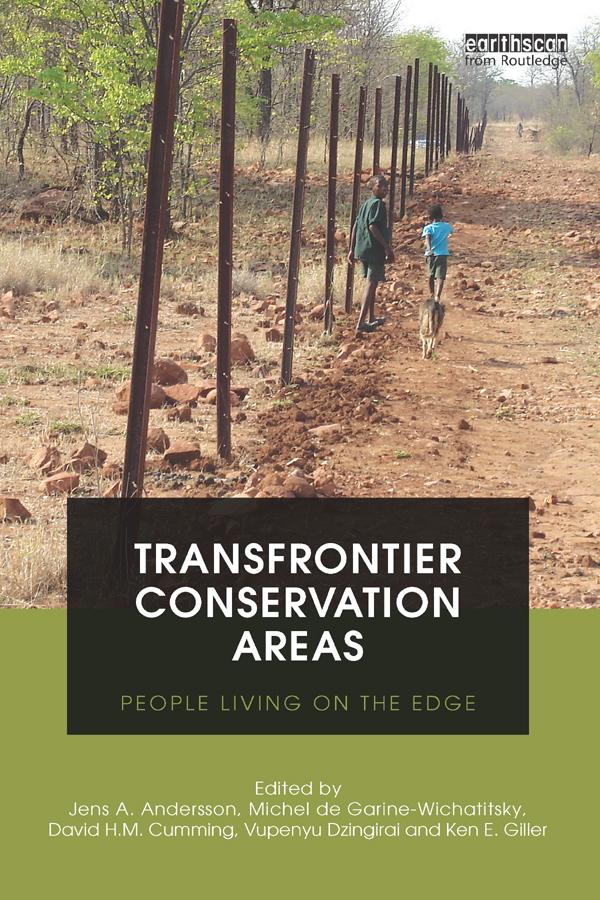
The introduction of transfrontier conservation areas (TFCAs) in southern Africa was based on an enchanting promise: simultaneously contributing to global biodiversity conservation initiatives, regional peace and integration, and the sustainable socio-economic development of rural communities. Cross-border collaboration and eco-tourism became seen as the vehicles of this promise, which would enhance regional peace and stability along the way. However, as these highly political projects take shape, conservation and development policymaking progressively shifts from the national to regional and global arenas, and the peoples most affected by TFCA formation tend to disappear from view.
This book focuses on the forgotten people displaced by, or living on the edge of, protected wildlife areas. It moves beyond the grand 'enchanting promise' of conservation and development across frontiers, and unfounded notions of TFCAs as integrated social-ecological systems. Peoples' dependency on natural resources – the specific combination of crop cultivation, livestock keeping and natural resource harvesting activities – varies enormously along the conservation frontier, as does their reliance on resources on the other side of the conservation boundary. Hence, the studies in this book move from the dream of eco-tourism-fuelled development supporting nature conservation and people towards the local realities facing marginalized people, living adjacent to protected areas in environments often poorly suited to agriculture.
Betala smidigt med kort, Klarna, Apple Pay eller Google Pay. Är du inte nöjd har du alltid 14 dagars ångerrätt. Läs mer i våra villkor. Har du några frågor, mejla oss på hello@memmo.org.
Memmo gör det enklare att plugga – var du än är i världen. Hos oss samlar du kursböcker och smarta studieverktyg på ett och samma ställe: sammanfattningar, quiz, poddar och flashcards. Och så Ted, din studiekompis som svarar på allt du undrar. Över 50 000 studenter pluggar redan här – byggt för att du ska lära dig snabbare och stressa mindre.