
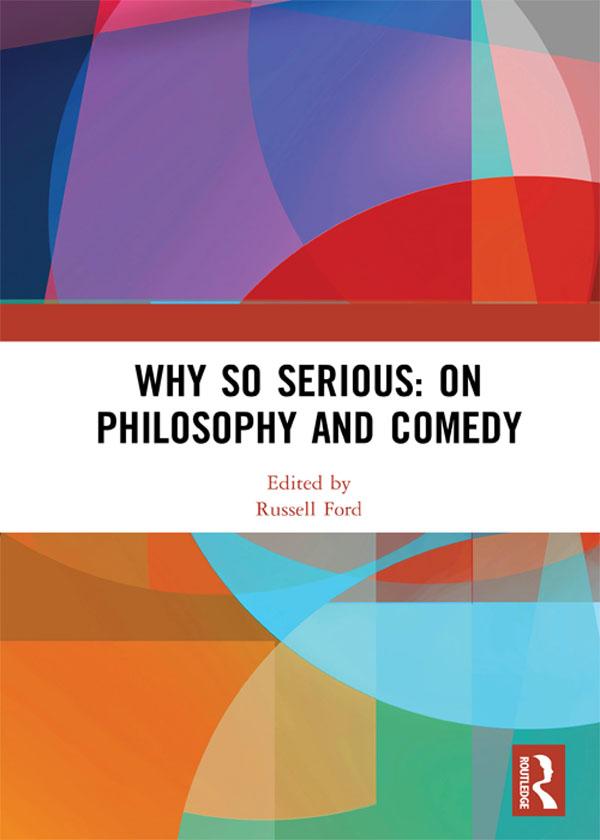
The Western philosophical tradition shows a marked fondness for tragedy. From Plato and Aristotle, through German idealism, to contemporary reflections on the murderous violence of the twentieth century, philosophy has often looked to tragedy for resources to make suffering, grief, and death thinkable. But what if showing a preference for tragedy, philosophical thought has unwittingly and unknowingly aligned itself with a form of thinking that accepts injustice without protest?
This collection explores possibilities for philosophical thinking that refuses the tragic model of thought, and turns instead to its often-overlooked companion: comedy. Comprising of a series of experiments ranging across the philosophical tradition, the essays in this volume propose to break, or at least suspend, the use of tragedy as an index of truth and philosophical worth. Instead, they explore new conceptions of solidarity, sympathy, critique, and justice.
In addition, the essays collected here provide ample reason to believe that philosophical thinking, aligned with comedy, is capable of important and original insights, discoveries, and creations. The prejudicial acceptance of tragic seriousness only impoverishes the life of thought; it can be rejuvenated and renewed by laughter and the comic. This book was originally published as a special issue of Angelaki.
Betala smidigt med kort, Klarna, Apple Pay eller Google Pay. Är du inte nöjd har du alltid 14 dagars ångerrätt. Läs mer i våra villkor. Har du några frågor, mejla oss på hello@memmo.org.
Memmo gör det enklare att plugga – var du än är i världen. Hos oss samlar du kursböcker och smarta studieverktyg på ett och samma ställe: sammanfattningar, quiz, poddar och flashcards. Och så Ted, din studiekompis som svarar på allt du undrar. Över 50 000 studenter pluggar redan här – byggt för att du ska lära dig snabbare och stressa mindre.