
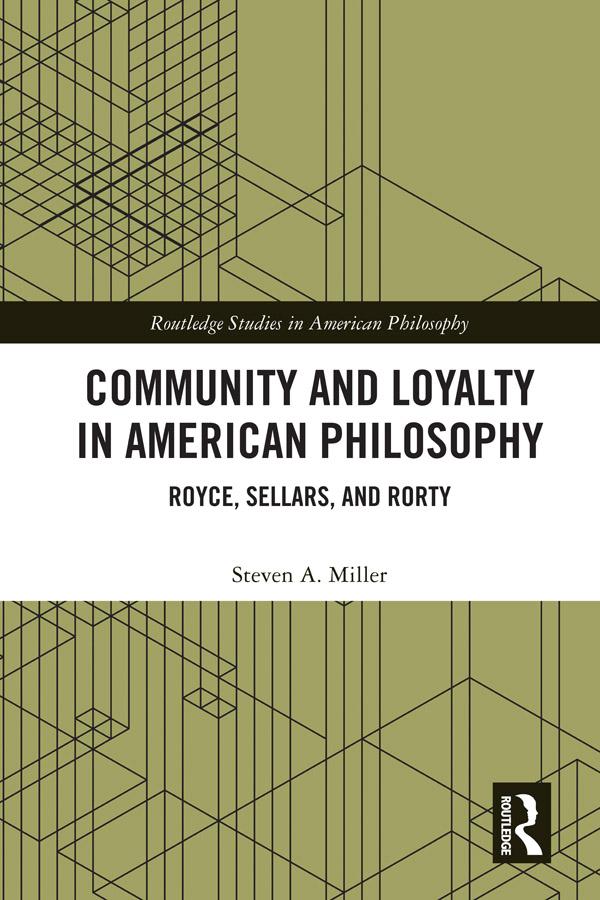
American pragmatism has always had at its heart a focus on questions of communities and ethics. This book explores the interrelated work of three thinkers influenced by the pragmatist tradition: Josiah Royce, Wilfrid Sellars, and Richard Rorty. These thinkers’ work spanned the range of twentieth-century philosophy, both historically and conceptually, but all had common concerns about how morality functions and what we can hope for in our interactions with others. Steven Miller argues that Royce, Sellars, and Rorty form a traditional line of inheritance, with the thought of each developing upon the best insights of the ones prior. Furthermore, he shows how three divergent views about the function, possibilities, and limits of moral community coalesce into a key narrative about how best we can work with and for other people, as we strive to come to think of widely different others as somehow being morally considerable as "one of us."
Betala smidigt med kort, Klarna, Apple Pay eller Google Pay. Är du inte nöjd har du alltid 14 dagars ångerrätt. Läs mer i våra villkor. Har du några frågor, mejla oss på hello@memmo.org.
Memmo gör det enklare att plugga – var du än är i världen. Hos oss samlar du kursböcker och smarta studieverktyg på ett och samma ställe: sammanfattningar, quiz, poddar och flashcards. Och så Ted, din studiekompis som svarar på allt du undrar. Över 50 000 studenter pluggar redan här – byggt för att du ska lära dig snabbare och stressa mindre.