
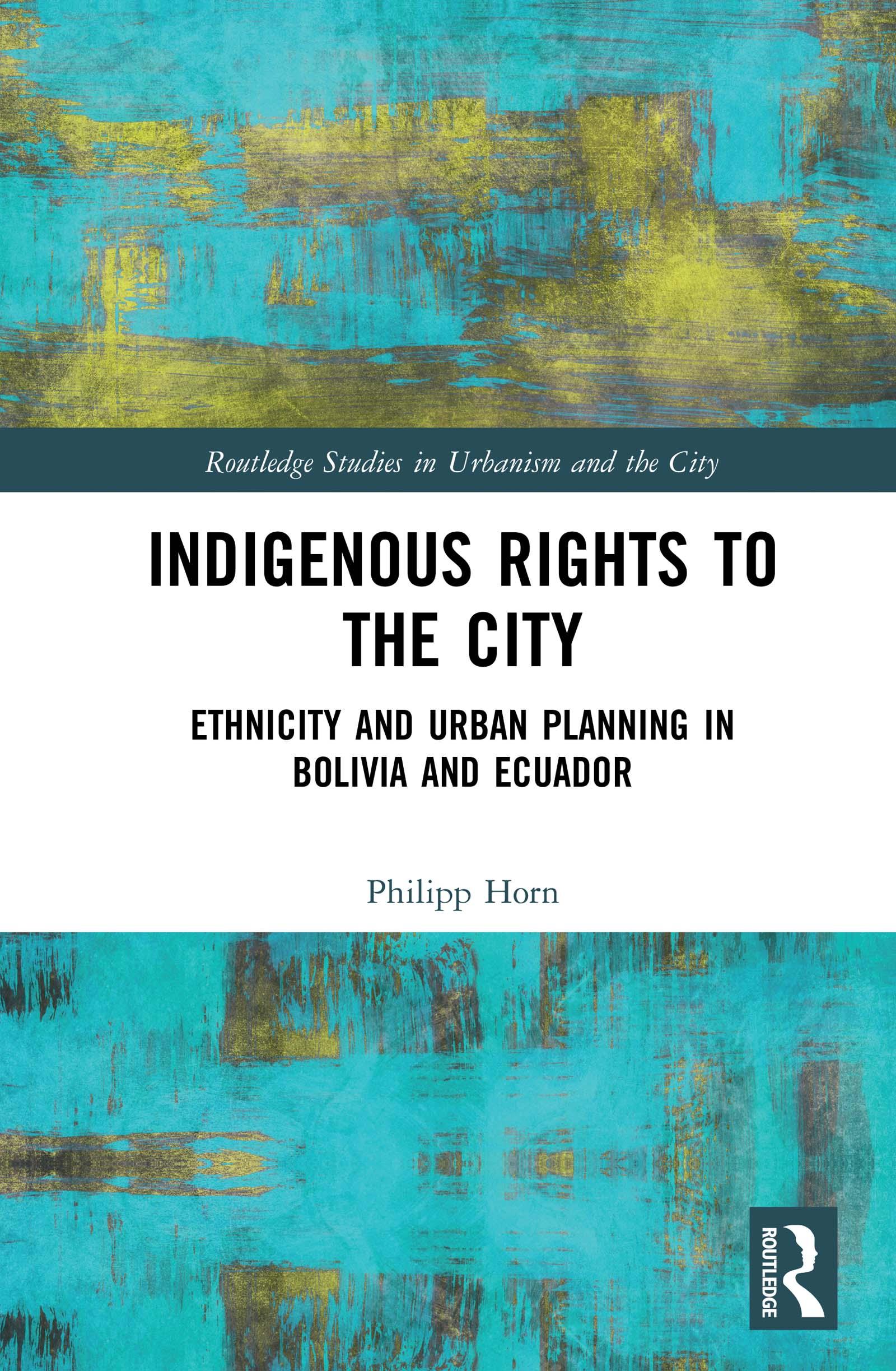
This book breaks new ground in understanding urban indigeneity in policy and planning practice. It is the first comprehensive and comparative study that foregrounds the complex interplay of multiple organisations involved in translating indigenous rights to the city in Latin America, focussing on the cities of La Paz and Quito.
The book establishes how planning for urban indigeneity looks in practice, even in seemingly progressive settings, such as Bolivia and Ecuador, where indigenous rights to the city are recognised within constitutions. It demonstrates that the translation of indigenous rights to the city is a process involving different actor groups operating within state institutions and indigenous communities, which often hold conflicting interests and needs. The book also establishes a set of theoretical, methodological, and practical foundations for envisaging how urban indigenous planning in Latin America and elsewhere should be understood, studied, and undertaken: As a process which embraces conflict and challenges power relations within indigenous communities and between these communities and the state.
This book will appeal to practitioners, researchers, and students working within the fields of urban planning, urban development, and indigenous rights.
Betala smidigt med kort, Klarna, Apple Pay eller Google Pay. Är du inte nöjd har du alltid 14 dagars ångerrätt. Läs mer i våra villkor. Har du några frågor, mejla oss på hello@memmo.org.
Memmo gör det enklare att plugga – var du än är i världen. Hos oss samlar du kursböcker och smarta studieverktyg på ett och samma ställe: sammanfattningar, quiz, poddar och flashcards. Och så Ted, din studiekompis som svarar på allt du undrar. Över 75 000 studenter pluggar redan här – byggt för att du ska lära dig snabbare och stressa mindre.