
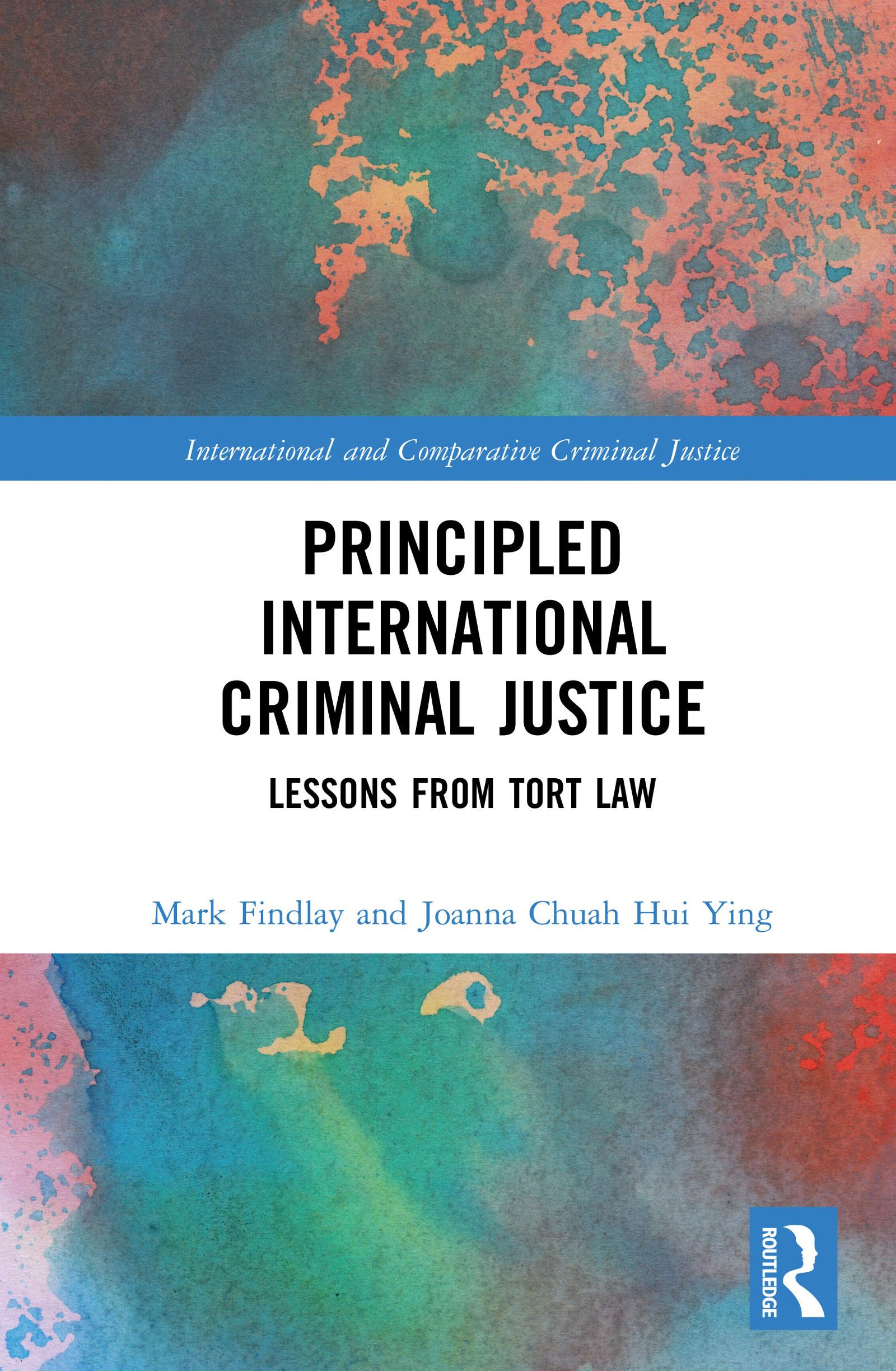
Commencing its search for a principled international criminal justice, this book argues that the Preamble to the Rome Statute requires a very different notion of justice than that which would be expected in domestic jurisdictions. This thinking necessitates theorising what international criminal justice requires in terms of its legitimacy much more than normative invocations, which in their unreality can endanger the satisfaction of two central concerns – the punitive and the harm-minimisation dimensions. The authors suggest that because of the unique nature and form of the four global crimes, pre-existing proof technologies are failing prosecutors and judges, forcing the development of an often unsustainable line of judicial reasoning. The empirical focus of the book is to look at JCE (joint criminal enterprise) and aiding and abetting as case-studies in the distortion of proof tests. The substantial harm focus of ICJ (international criminal justice) invites applying compatible proof technologies from tort (causation, aggregation, and participation). The book concludes by examining recent developments in corporate criminal liability and criminalising associations, radically asserting that even in harmonising/hybridising international criminal law there resides a new and rational vision for the juridical project of international criminal justice.
Betala smidigt med kort, Klarna, Apple Pay eller Google Pay. Är du inte nöjd har du alltid 14 dagars ångerrätt. Läs mer i våra villkor. Har du några frågor, mejla oss på hello@memmo.org.
Memmo gör det enklare att plugga – var du än är i världen. Hos oss samlar du kursböcker och smarta studieverktyg på ett och samma ställe: sammanfattningar, quiz, poddar och flashcards. Och så Ted, din studiekompis som svarar på allt du undrar. Över 50 000 studenter pluggar redan här – byggt för att du ska lära dig snabbare och stressa mindre.