
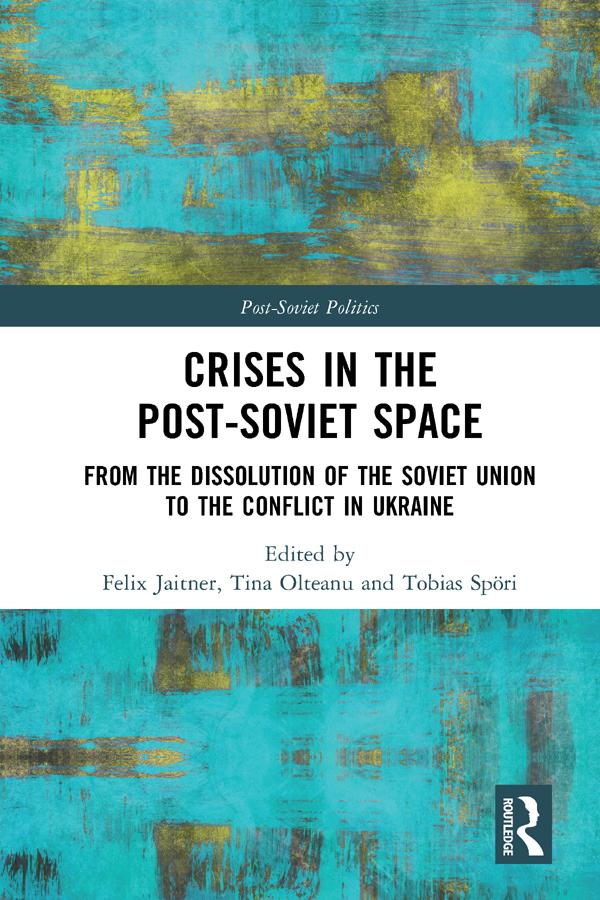
The breakup of the Soviet Union led to the creation of new states and territorial conflicts of different levels of intensity. Scrutinising the post‐Soviet period, this volume offers explanations for both the frequency and the intensity of crises in the region.
This book argues that the societies which emerged in the post-Soviet space share characteristic features, and that the instability and conflict-prone nature of the Soviet Union’s successor states can be explained by analysing the post-independence history of the region and linking it to the emergence of overlapping economic, political and violent crises (called 'Intersecting Crises Phenomena’). Transformation itself is shown to be a decisive process and, while acknowledging specific national and regional characteristics and differences, the authors demonstrate its shared impact. This comparison across countries and over time presents patterns of crisis and crisis management common to all the successor states. It disentangles the process, highlighting the multifaceted features of post-Soviet crises and draws upon the concept of crisis to determine the tipping points of post-Soviet development.
Especially useful for scholars and students dealing with the Soviet successor states, this book should also prove interesting to those researching in the fields of communist and post‐communist Studies, Eurasian politics, international relations and peace and conflict studies.
Betala smidigt med kort, Klarna, Apple Pay eller Google Pay. Är du inte nöjd har du alltid 14 dagars ångerrätt. Läs mer i våra villkor. Har du några frågor, mejla oss på hello@memmo.org.
Memmo gör det enklare att plugga – var du än är i världen. Hos oss samlar du kursböcker och smarta studieverktyg på ett och samma ställe: sammanfattningar, quiz, poddar och flashcards. Och så Ted, din studiekompis som svarar på allt du undrar. Över 50 000 studenter pluggar redan här – byggt för att du ska lära dig snabbare och stressa mindre.