
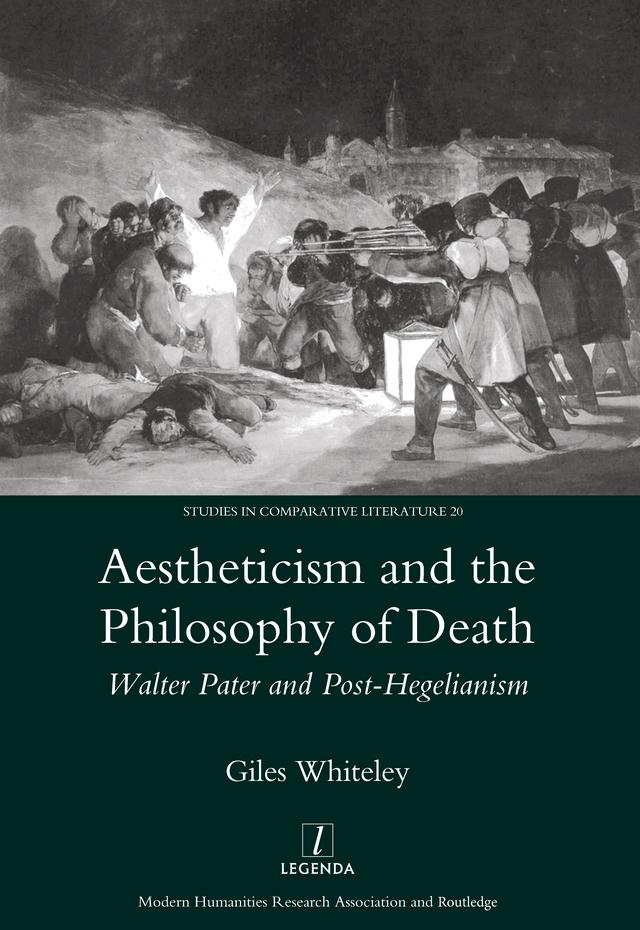
"Walter Pater, best known as the author of The Renaissance (1873) and as Oscar Wildes tutor and friend, was a leading figure in European aestheticism and British fin-de-siecle culture. Despite this, he has received only limited critical attention, and has tended to be read conservatively. Drawing on Paters unpublished manuscripts, Giles Whiteley challenges this view of Pater as a closeted don who spend the remainder of his life regretting the excesses of his Renaissance. Focusing on Paters reading of the German idealist philosopher, G. W. F. Hegel, Whiteley argues that Paters response to both the philosophical and the ideological legacies of idealism was significantly more advanced than has been hitherto thought. Presenting a persuasive new reading of the genre of the imaginary portrait Paters most elusive form of writing the book paints a picture of Walter Pater as a truly revolutionary thinker. Pater, like Nietzsche during the same period, breaks with the dialectic as a method. Anticipating the radical critiques of ideology of post- Hegelians such as Derrida and Deleuze, Pater becomes a radical and transgressive thinker in his own right."
Betala smidigt med kort, Klarna, Apple Pay eller Google Pay. Är du inte nöjd har du alltid 14 dagars ångerrätt. Läs mer i våra villkor. Har du några frågor, mejla oss på hello@memmo.org.
Memmo gör det enklare att plugga – var du än är i världen. Hos oss samlar du kursböcker och smarta studieverktyg på ett och samma ställe: sammanfattningar, quiz, poddar och flashcards. Och så Ted, din studiekompis som svarar på allt du undrar. Över 50 000 studenter pluggar redan här – byggt för att du ska lära dig snabbare och stressa mindre.
Du kanske också gillar
Köp boken0