
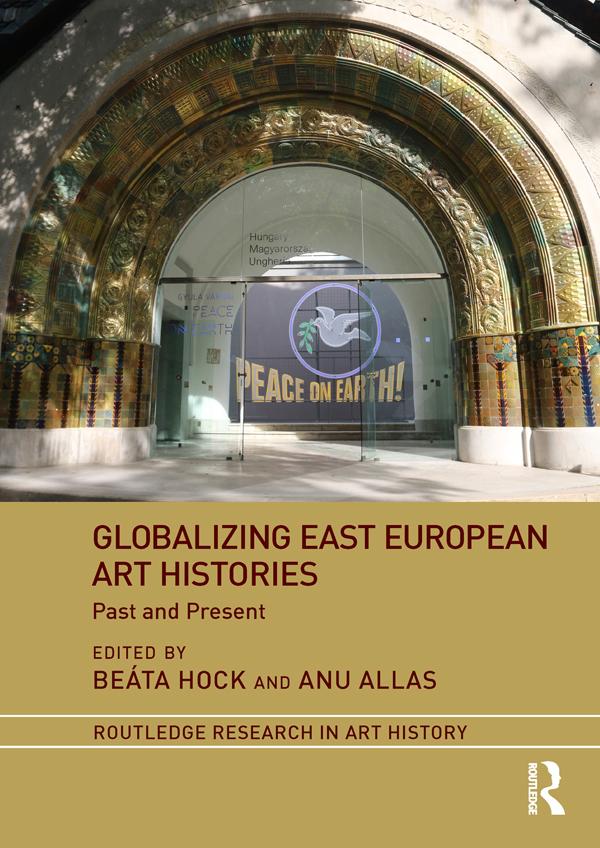
This edited collection reassesses East-Central European art by offering transnational perspectives on its regional or national histories, while also inserting the region into contemporary discussions of global issues. Both in popular imagination and, to some degree, scholarly literature, East-Central Europe is persistently imagined as a hermetically isolated cultural landscape. This book restores the diverse ways in which East-Central European art has always been entangled with actors and institutions in the wider world. The contributors engage with empirically anchored and theoretically argued case studies from historical periods representing notable junctures of globalization: the early modern period, the age of Empires, the time of socialist rule and the global Cold War, and the most recent decades of postsocialism understood as a global condition.
Betala smidigt med kort, Klarna, Apple Pay eller Google Pay. Är du inte nöjd har du alltid 14 dagars ångerrätt. Läs mer i våra villkor. Har du några frågor, mejla oss på hello@memmo.org.
Memmo gör det enklare att plugga – var du än är i världen. Hos oss samlar du kursböcker och smarta studieverktyg på ett och samma ställe: sammanfattningar, quiz, poddar och flashcards. Och så Ted, din studiekompis som svarar på allt du undrar. Över 50 000 studenter pluggar redan här – byggt för att du ska lära dig snabbare och stressa mindre.