
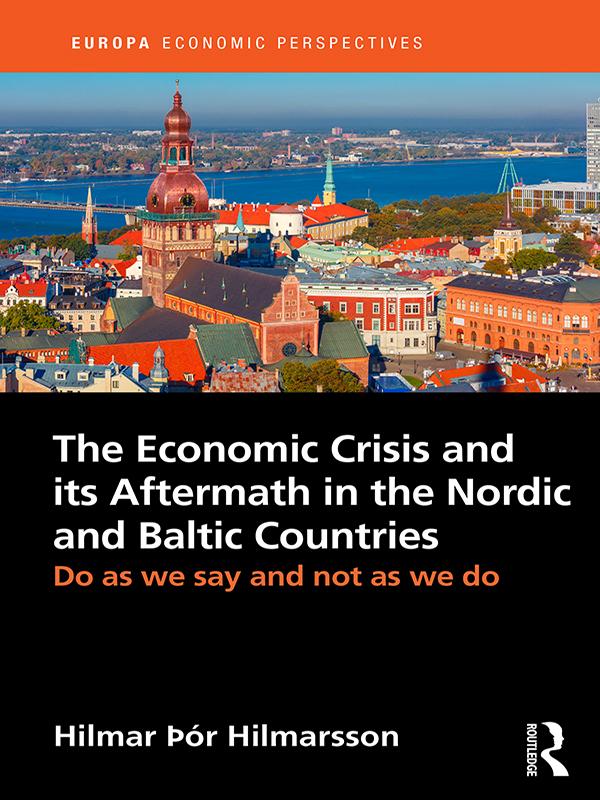
The Nordic-Baltic region has become highly integrated. The Nordic countries have been successful in balancing competitiveness and economic growth with social inclusiveness, while the Baltic States have grown economically but remain vulnerable with weak social systems and highly unequal income distribution. European Union (EU) membership and inter-linkages with the continental Nordic banking systems appear to have affected the 2008/09 crisis response of the Baltic States.
In spite of their strengths, including their social systems, continental Nordic states are faced with a challenging mix of large, cross-border banks and highly indebted households at a time of rather weak global growth. The Baltic States are challenged by slow economic growth post-crisis, security concerns, and large-scale outward migration of the youngest and most highly educated people.
It is now a decade since the Baltic States were hit by the global crisis. It is time to take stock of their progress and assess their relations with other countries in the region and with the EU. This book focuses on the Baltics and their Nordic partners pre- and post-crisis: successes, failures, lessons learned, and future challenges, examining and comparing the crisis response of these various small states that enjoy different income levels, operate different welfare and tax systems, and seek different levels of integration with the EU.
Betala smidigt med kort, Klarna, Apple Pay eller Google Pay. Är du inte nöjd har du alltid 14 dagars ångerrätt. Läs mer i våra villkor. Har du några frågor, mejla oss på hello@memmo.org.
Memmo gör det enklare att plugga – var du än är i världen. Hos oss samlar du kursböcker och smarta studieverktyg på ett och samma ställe: sammanfattningar, quiz, poddar och flashcards. Och så Ted, din studiekompis som svarar på allt du undrar. Över 50 000 studenter pluggar redan här – byggt för att du ska lära dig snabbare och stressa mindre.