
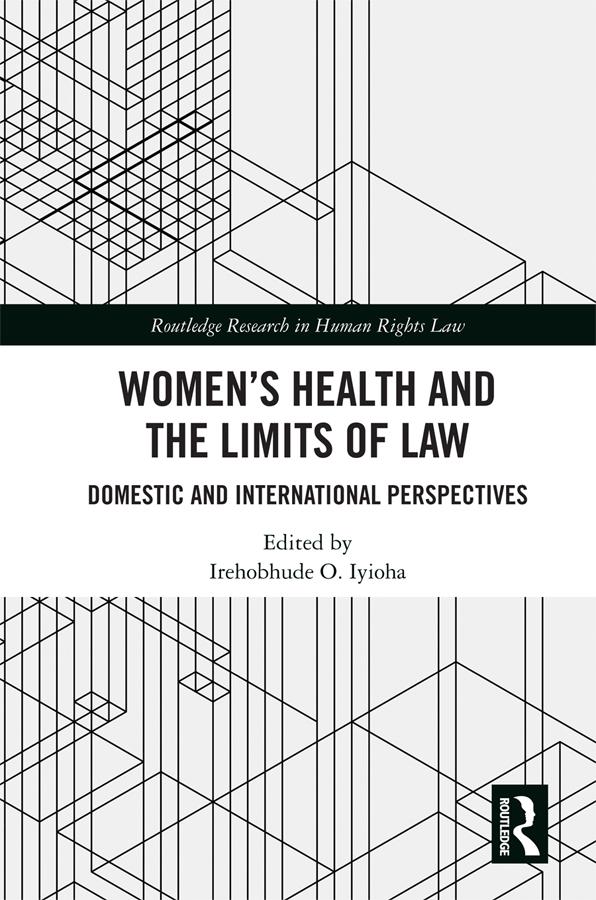
Despite some significant advances in the creation and protection of rights affecting women’s health, these do not always translate into actual health benefits for women. This collection asks: 'What is an effective law and what influences law’s effectiveness or ineffectiveness? What dynamics, elements, and conditions come together to limit law’s capacity to achieve instrumental goals for women’s health and the advancement of women’s health rights?' The book presents an integrated, co-referential and sustained critical discussion of the normative and constitutive reasons for law’s limited effectiveness in the field of women’s health. It offers comprehensive and cohesive explanatory accounts of law’s limits and for the first time in the field, introduces a distinction between formal and substantive effectiveness of laws. Its approach is trans-systemic, multi-jurisdictional and comparative, with a focus on six countries in North America, Europe, Asia, and Africa and international human rights case law based on matters arising from Hungary, Portugal, Spain, Slovakia, the Czech Republic, Peru and Bolivia.
The book will be a valuable resource for educators, students, lawyers, rights advocates and policymakers working in women’s health, socio-legal studies, human rights, feminist legal studies, and legal philosophy more broadly.
Betala smidigt med kort, Klarna, Apple Pay eller Google Pay. Är du inte nöjd har du alltid 14 dagars ångerrätt. Läs mer i våra villkor. Har du några frågor, mejla oss på hello@memmo.org.
Memmo gör det enklare att plugga – var du än är i världen. Hos oss samlar du kursböcker och smarta studieverktyg på ett och samma ställe: sammanfattningar, quiz, poddar och flashcards. Och så Ted, din studiekompis som svarar på allt du undrar. Över 50 000 studenter pluggar redan här – byggt för att du ska lära dig snabbare och stressa mindre.