
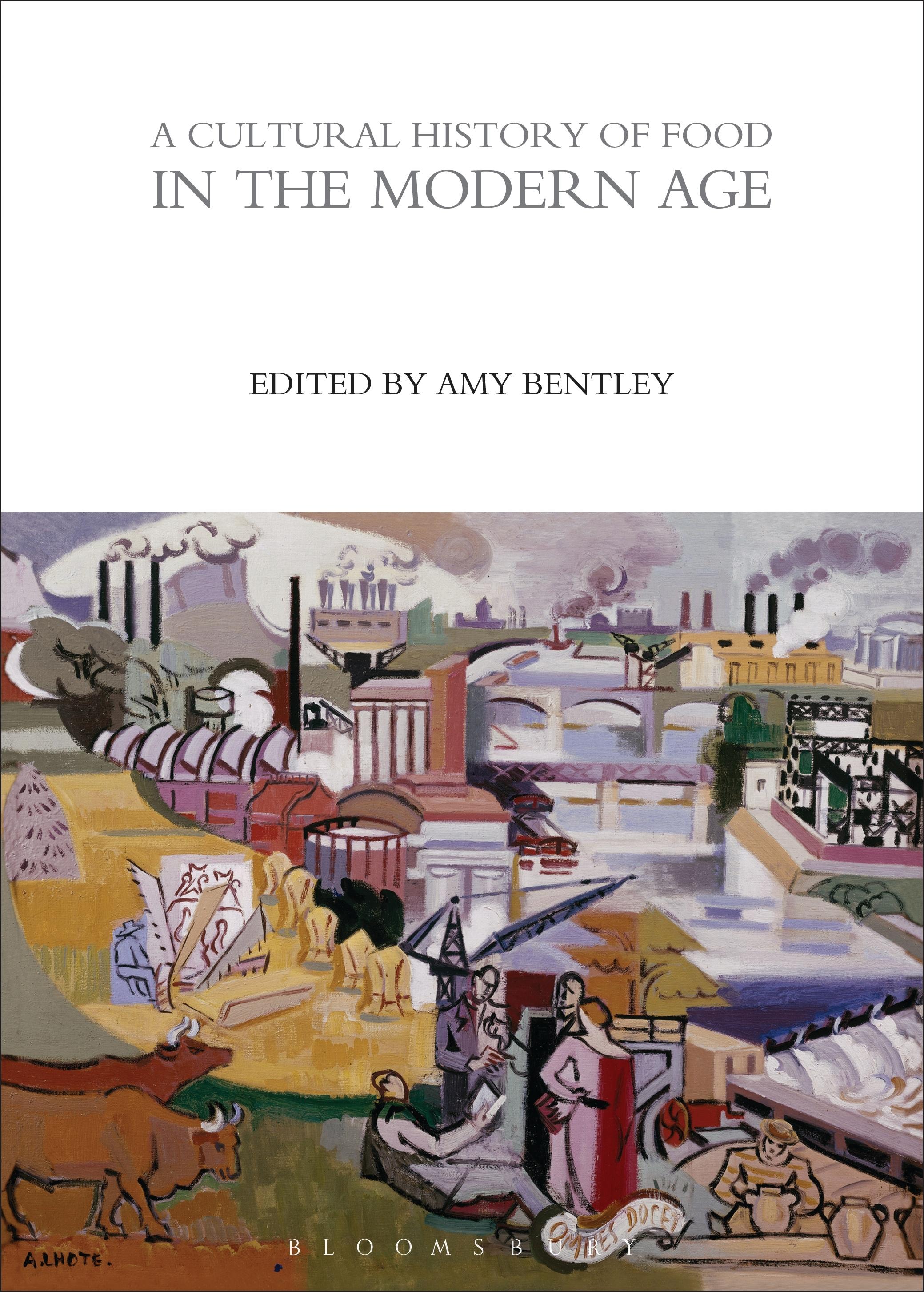
In the modern age (1920–2000), vast technological innovation spurred greater concentration, standardization, and globalization of the food supply. As advances in agricultural production in the post-World War II era propelled population growth, a significant portion of the population gained access to cheap, industrially produced food while significant numbers remained mired in hunger and malnutrition. Further, as globalization allowed unprecedented access to foods from all parts of the globe, it also hastened environmental degradation, contributed to poor health, and remained a key element in global politics, economics and culture.
A Cultural History of Food in the Modern Age presents an overview of the period with essays on food production, food systems, food security, safety and crises, food and politics, eating out, professional cooking, kitchens and service work, family and domesticity, body and soul, representations of food, and developments in food production and consumption globally.
A Cultural History of Food in the Modern Age presents an overview of the period with essays on food production, food systems, food security, safety and crises, food and politics, eating out, professional cooking, kitchens and service work, family and domesticity, body and soul, representations of food, and developments in food production and consumption globally.
Betala smidigt med kort, Klarna, Apple Pay eller Google Pay. Är du inte nöjd har du alltid 14 dagars ångerrätt. Läs mer i våra villkor. Har du några frågor, mejla oss på hello@memmo.org.
Memmo gör det enklare att plugga – var du än är i världen. Hos oss samlar du kursböcker och smarta studieverktyg på ett och samma ställe: sammanfattningar, quiz, poddar och flashcards. Och så Ted, din studiekompis som svarar på allt du undrar. Över 50 000 studenter pluggar redan här – byggt för att du ska lära dig snabbare och stressa mindre.