
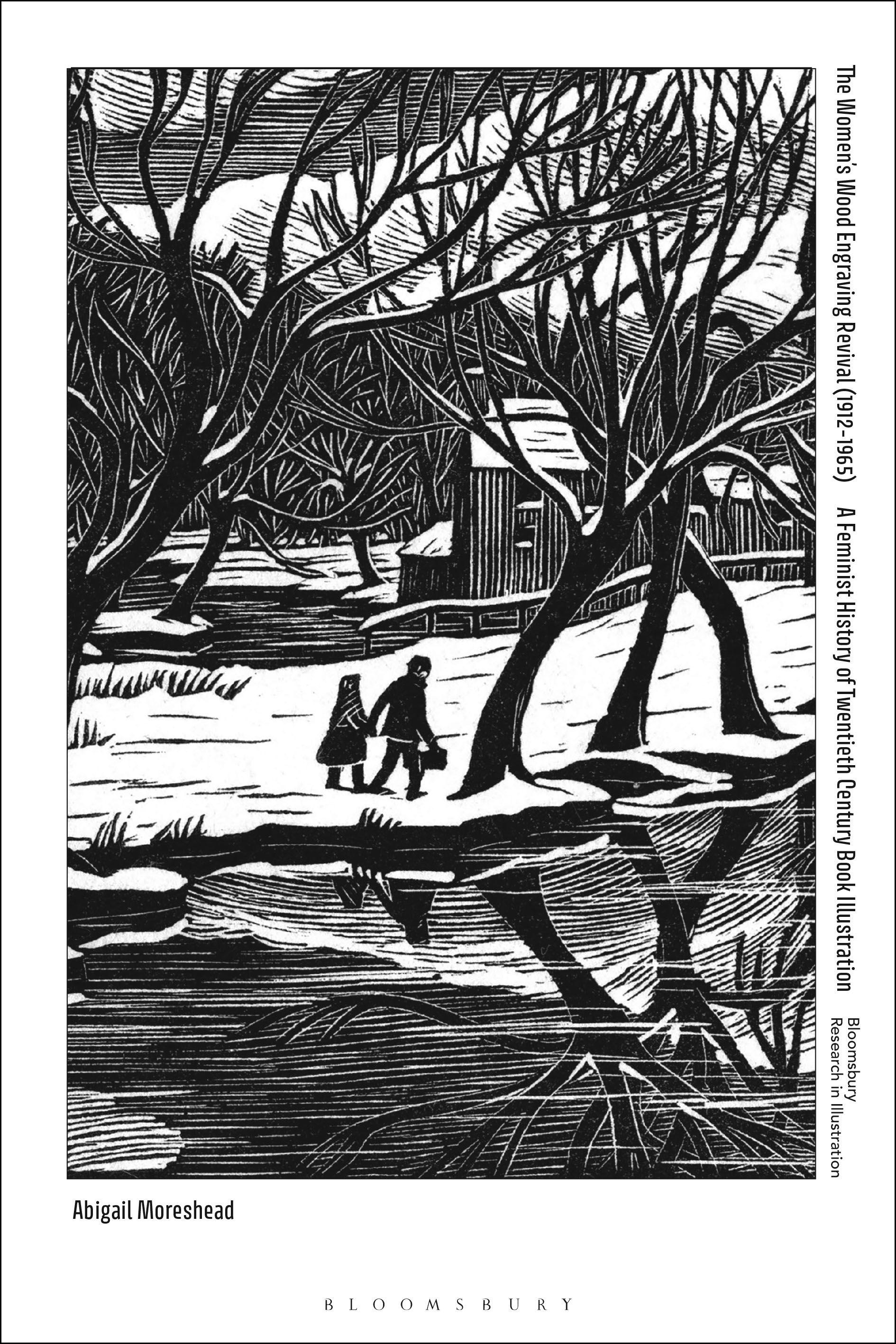
The Women's Wood-Engraving Revival focuses on the lives and work of women illustrators who were instrumental in an artistic revival of wood-engraving as a book illustration technique.
As a reaction to the mass-produced engravings churned out by anonymous engravers in the mid-nineteenth century, the revival sought to recapture the perceived authenticity and artistic superiority of wood engraving's earliest instantiation, in which the artist and engraver were the same person.
While bound up with the limitations of the gendered legacy of the Arts and Crafts Movement and the remnants of the Victorian era, the Wood Engraving Revival afforded women new opportunities to develop as professional artists and illustrators. Wood-engraving as a technique required few tools and was specifically suited to the needs of women artists, who required autonomy over their workspaces. Lacking independent wealth, all four women profiled in this book used wood-engraving for book and periodical publishers as a means of supporting themselves) and building professional reputations
Covering the work of Gwen Raverat, Agnes Miller Parker, Clare Leighton and Joan Hassall, the book brings scholarly attention to the work of women illustrators, whose impact on the material text went beyond images to include many facets of print culture that appealed to a growing middle-class audience, and highlights the gender politics around book production that persist today.
As a reaction to the mass-produced engravings churned out by anonymous engravers in the mid-nineteenth century, the revival sought to recapture the perceived authenticity and artistic superiority of wood engraving's earliest instantiation, in which the artist and engraver were the same person.
While bound up with the limitations of the gendered legacy of the Arts and Crafts Movement and the remnants of the Victorian era, the Wood Engraving Revival afforded women new opportunities to develop as professional artists and illustrators. Wood-engraving as a technique required few tools and was specifically suited to the needs of women artists, who required autonomy over their workspaces. Lacking independent wealth, all four women profiled in this book used wood-engraving for book and periodical publishers as a means of supporting themselves) and building professional reputations
Covering the work of Gwen Raverat, Agnes Miller Parker, Clare Leighton and Joan Hassall, the book brings scholarly attention to the work of women illustrators, whose impact on the material text went beyond images to include many facets of print culture that appealed to a growing middle-class audience, and highlights the gender politics around book production that persist today.
Betala smidigt med kort, Klarna, Apple Pay eller Google Pay. Är du inte nöjd har du alltid 14 dagars ångerrätt. Läs mer i våra villkor. Har du några frågor, mejla oss på hello@memmo.org.
Memmo gör det enklare att plugga – var du än är i världen. Hos oss samlar du kursböcker och smarta studieverktyg på ett och samma ställe: sammanfattningar, quiz, poddar och flashcards. Och så Ted, din studiekompis som svarar på allt du undrar. Över 50 000 studenter pluggar redan här – byggt för att du ska lära dig snabbare och stressa mindre.