
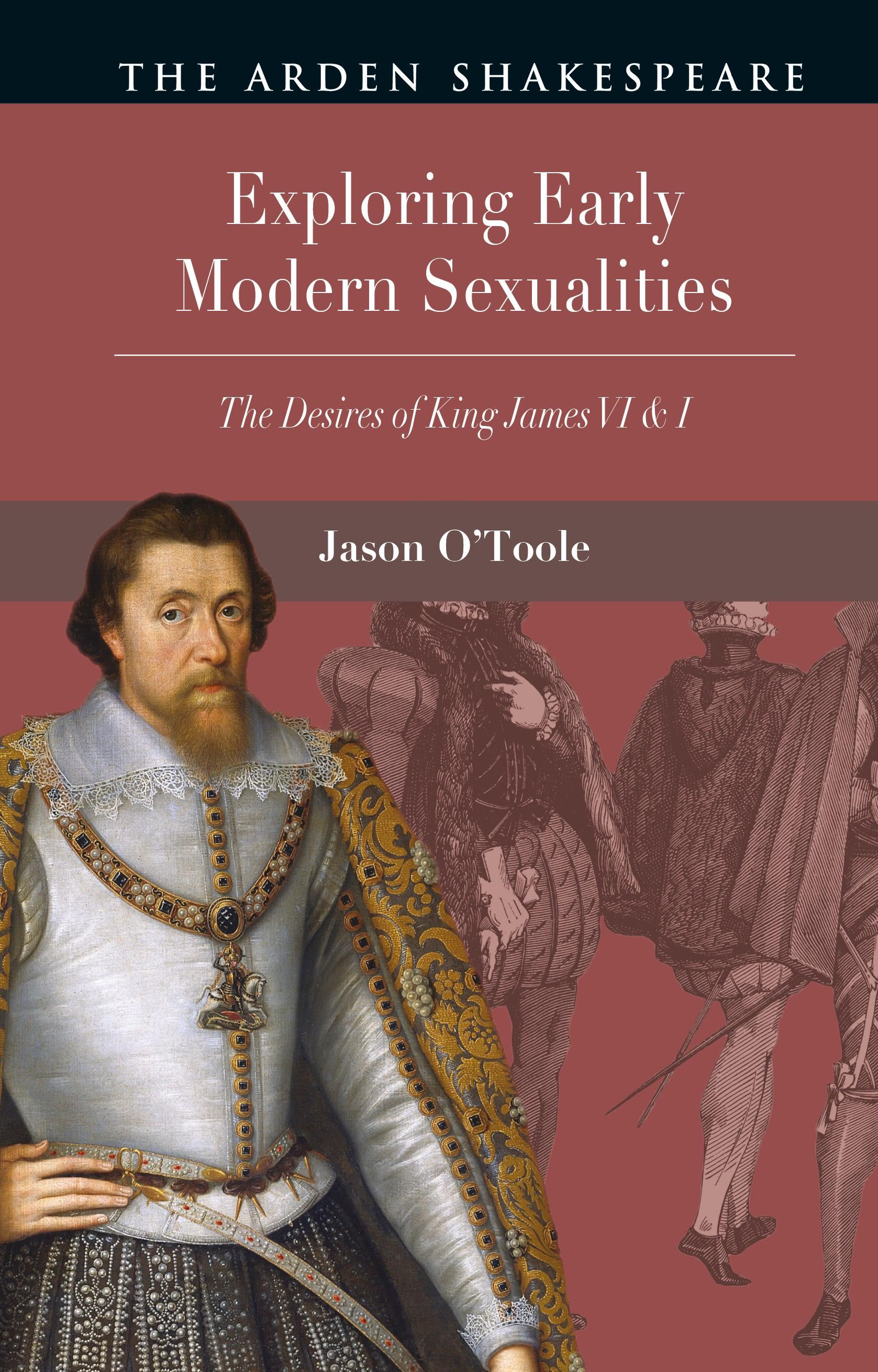
How might we understand early modern sexuality prior to contemporary interpretations of sexuality? What does the sex life of James VI and I tell us about the history of sexuality?
Jason O'Toole explores the network of intimacy which structured itself around King James VI and I, his wife Anna of Denmark and James' prominent as well as ancillary favourites to provide answers to these questions. O'Toole presents a cultural and literary history of homoerotic desire by analysing the politics and texture of queer culture at the Jacobean court.
To uncover this history, he investigates how physical manifestations of desire reveal themselves through intimacy between physical bodies and through the handling, employment and exchange of material bodies and objects. Objects which simultaneously represent accepted and forbidden desire. Highlighting how same-sex desire was often concealed, O'Toole evaluates how literary works from the period communicate an unnamed desire between men through metaphor, allegories and Classical allusions. Primary texts including poems, masques, and unpublished manuscripts, recurrent tropes, material culture such as artistic artefacts and architectural design are analysed to unpack sexual double meanings and demonstrate how homoeroticism acts as a regular and accessible subtext. This focus illustrates how homoerotic and homosocial desire were both interwoven and normative in the courts of King James VI & I, foregrounding the social, cultural and political importance of same-sex desire in the early modern period.
Jason O'Toole explores the network of intimacy which structured itself around King James VI and I, his wife Anna of Denmark and James' prominent as well as ancillary favourites to provide answers to these questions. O'Toole presents a cultural and literary history of homoerotic desire by analysing the politics and texture of queer culture at the Jacobean court.
To uncover this history, he investigates how physical manifestations of desire reveal themselves through intimacy between physical bodies and through the handling, employment and exchange of material bodies and objects. Objects which simultaneously represent accepted and forbidden desire. Highlighting how same-sex desire was often concealed, O'Toole evaluates how literary works from the period communicate an unnamed desire between men through metaphor, allegories and Classical allusions. Primary texts including poems, masques, and unpublished manuscripts, recurrent tropes, material culture such as artistic artefacts and architectural design are analysed to unpack sexual double meanings and demonstrate how homoeroticism acts as a regular and accessible subtext. This focus illustrates how homoerotic and homosocial desire were both interwoven and normative in the courts of King James VI & I, foregrounding the social, cultural and political importance of same-sex desire in the early modern period.
Sidor: 296
Kategori: Kultur-, Genus- & Postkoloniala studier
e-ISBN: 9781350541689
Fraktvikt: 1.2 kg
Skickas inom: 1-2 dagar
Betala smidigt med kort, Klarna, Apple Pay eller Google Pay. Är du inte nöjd har du alltid 14 dagars ångerrätt. Läs mer i våra villkor. Har du några frågor, mejla oss på hello@memmo.org.
Memmo gör det enklare att plugga – var du än är i världen. Hos oss samlar du kursböcker och smarta studieverktyg på ett och samma ställe: sammanfattningar, quiz, poddar och flashcards. Och så Ted, din studiekompis som svarar på allt du undrar. Över 50 000 studenter pluggar redan här – byggt för att du ska lära dig snabbare och stressa mindre.