
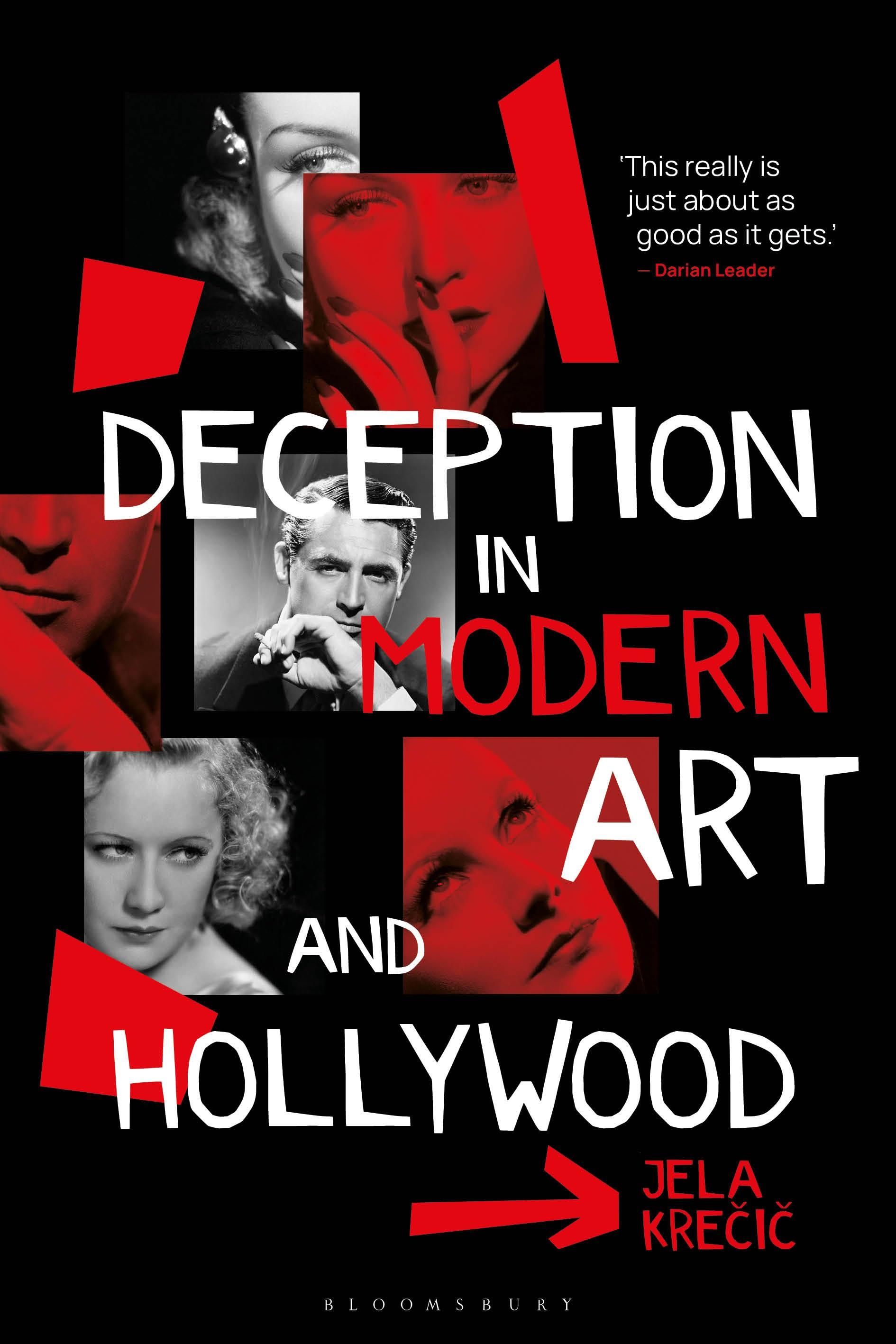
Over the last 200 years, a paradoxical fear of deception has grown in the fields of art and popular culture – modes of expression that are traditionally dedicated to creating illusory, artificial worlds.
More and more, fiction is expected to reflect what we perceive to be reality and, simultaneously, to indicate to viewers that they are dealing with deceptive strategies. But what if fabrications are not devoid of truth? What if art and popular culture, with all their fakery, can critically and convincingly tackle individual or political predicaments? And what if, as Jacques Lacan put it, truth has the structure of a fiction?
Deception in Modern Art and Hollywood pursues this topic on several levels. It explores the philosophical implications of 'being in the know' and the fear of deception within the theoretical frame of Hegelian dialectics and Lacanian psychoanalysis. Meanwhile, a Marxist theoretical tradition – from Theodor Adorno to Fredric Jameson and Louis Althusser – is used to conceptualize the broader historical, social and political implications of these ideas.
Ranging from the late nineteenth century to the present day, this exciting text takes psychoanalytic and Marxist theory to classic Hollywood themes of appearance, mediation, indirection and deception. It presents a novel understanding of our ongoing, entangled affair with moving images, and the emancipatory messages that they contain.
More and more, fiction is expected to reflect what we perceive to be reality and, simultaneously, to indicate to viewers that they are dealing with deceptive strategies. But what if fabrications are not devoid of truth? What if art and popular culture, with all their fakery, can critically and convincingly tackle individual or political predicaments? And what if, as Jacques Lacan put it, truth has the structure of a fiction?
Deception in Modern Art and Hollywood pursues this topic on several levels. It explores the philosophical implications of 'being in the know' and the fear of deception within the theoretical frame of Hegelian dialectics and Lacanian psychoanalysis. Meanwhile, a Marxist theoretical tradition – from Theodor Adorno to Fredric Jameson and Louis Althusser – is used to conceptualize the broader historical, social and political implications of these ideas.
Ranging from the late nineteenth century to the present day, this exciting text takes psychoanalytic and Marxist theory to classic Hollywood themes of appearance, mediation, indirection and deception. It presents a novel understanding of our ongoing, entangled affair with moving images, and the emancipatory messages that they contain.
Sidor: 224
Kategori: Film- & Medievetenskap
e-ISBN: 9781350515109
Fraktvikt: 1.2 kg
Skickas inom: 1-2 dagar
Betala smidigt med kort, Klarna, Apple Pay eller Google Pay. Är du inte nöjd har du alltid 14 dagars ångerrätt. Läs mer i våra villkor. Har du några frågor, mejla oss på hello@memmo.org.
Memmo gör det enklare att plugga – var du än är i världen. Hos oss samlar du kursböcker och smarta studieverktyg på ett och samma ställe: sammanfattningar, quiz, poddar och flashcards. Och så Ted, din studiekompis som svarar på allt du undrar. Över 50 000 studenter pluggar redan här – byggt för att du ska lära dig snabbare och stressa mindre.