
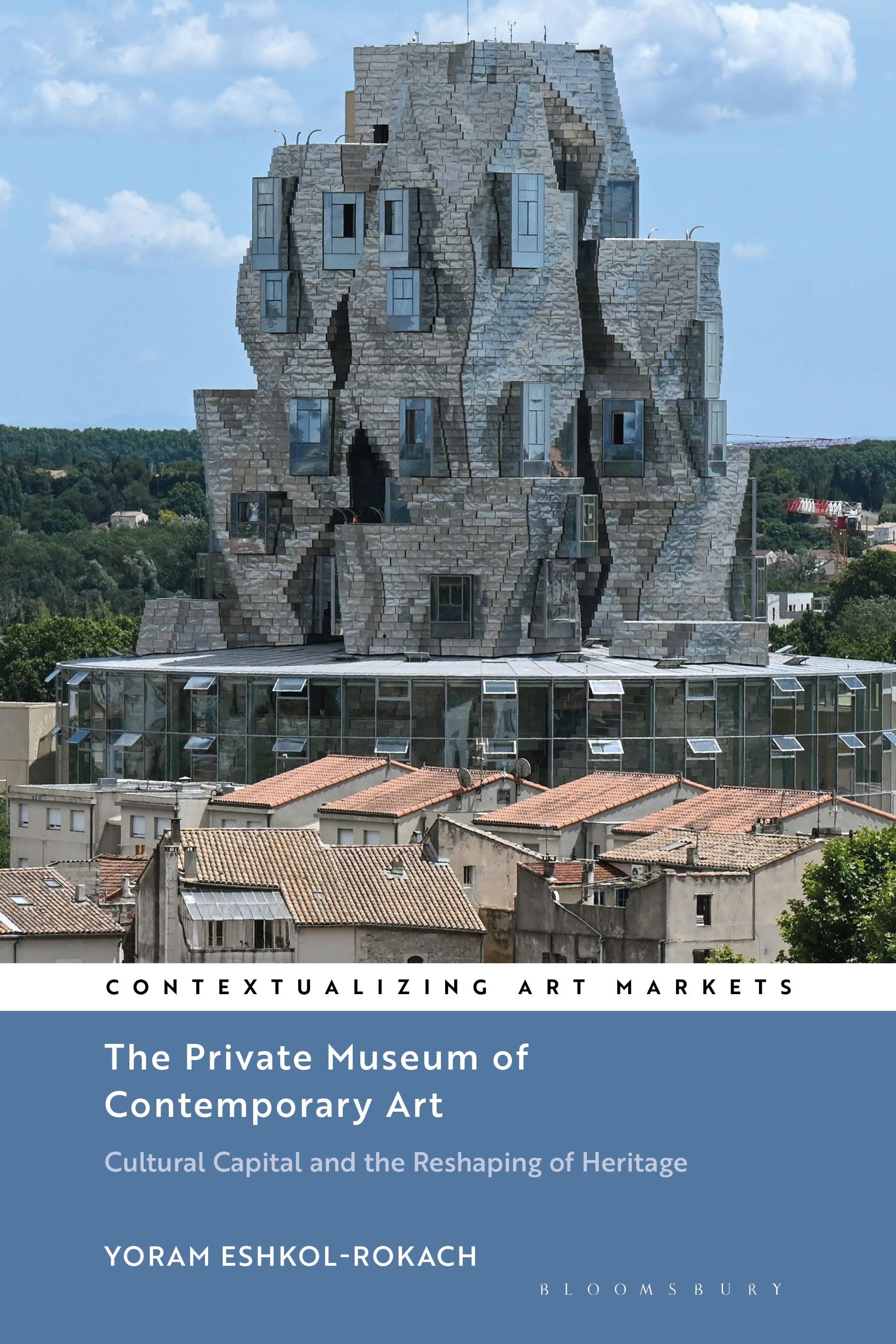
What is the purpose of private museums? Who do they benefit and what threat do they pose to their public counterparts? This book examines the global phenomenon of the private museum of contemporary art, assessing the benefits gained by founder-owners of such institutions, and the impact they have on canon formation and art history.
The public museum, long considered a pillar of civic society, has for centuries been the manager and keeper of national collections and narratives, the guardian of cultural patrimony. This important role is now being compromised. Private museums, with their ever-expanding collections and often-unlimited financial resources, contribute considerably to this erosion. When it comes to contemporary art, the most sought-after commodity on the art market, this shift of ownership from public to private is at its most pronounced. Thus, control over the creation and safeguarding of future heritage is increasingly in private hands.
In this book art dealer and critic Yoram Eshkol-Rokach investigates the political, social and economic circumstances which have created the conditions behind the rise in this phenomenon, addressing ten case studies across the US, France and China. A former gallery owner himself, Eshkol-Rokach utilises his unique position to explore the business histories of each of the individual museum owners and reveals the returns they reap in political, social and economic spheres: benefits that transcend those of traditional art philanthropy.
Employing ideas from political and economic theory, art market studies, art sociology, consumer and critical luxury scholarship, and art and fashion histories, The Private Museum of Contemporary Art reveals the interlocking relationship of the museum sector with the art market and the impact of philanthrocapitalism, a venture capitalist gifting ideology, on the museum model.
The public museum, long considered a pillar of civic society, has for centuries been the manager and keeper of national collections and narratives, the guardian of cultural patrimony. This important role is now being compromised. Private museums, with their ever-expanding collections and often-unlimited financial resources, contribute considerably to this erosion. When it comes to contemporary art, the most sought-after commodity on the art market, this shift of ownership from public to private is at its most pronounced. Thus, control over the creation and safeguarding of future heritage is increasingly in private hands.
In this book art dealer and critic Yoram Eshkol-Rokach investigates the political, social and economic circumstances which have created the conditions behind the rise in this phenomenon, addressing ten case studies across the US, France and China. A former gallery owner himself, Eshkol-Rokach utilises his unique position to explore the business histories of each of the individual museum owners and reveals the returns they reap in political, social and economic spheres: benefits that transcend those of traditional art philanthropy.
Employing ideas from political and economic theory, art market studies, art sociology, consumer and critical luxury scholarship, and art and fashion histories, The Private Museum of Contemporary Art reveals the interlocking relationship of the museum sector with the art market and the impact of philanthrocapitalism, a venture capitalist gifting ideology, on the museum model.
Betala smidigt med kort, Klarna, Apple Pay eller Google Pay. Är du inte nöjd har du alltid 14 dagars ångerrätt. Läs mer i våra villkor. Har du några frågor, mejla oss på hello@memmo.org.
Memmo gör det enklare att plugga – var du än är i världen. Hos oss samlar du kursböcker och smarta studieverktyg på ett och samma ställe: sammanfattningar, quiz, poddar och flashcards. Och så Ted, din studiekompis som svarar på allt du undrar. Över 50 000 studenter pluggar redan här – byggt för att du ska lära dig snabbare och stressa mindre.