
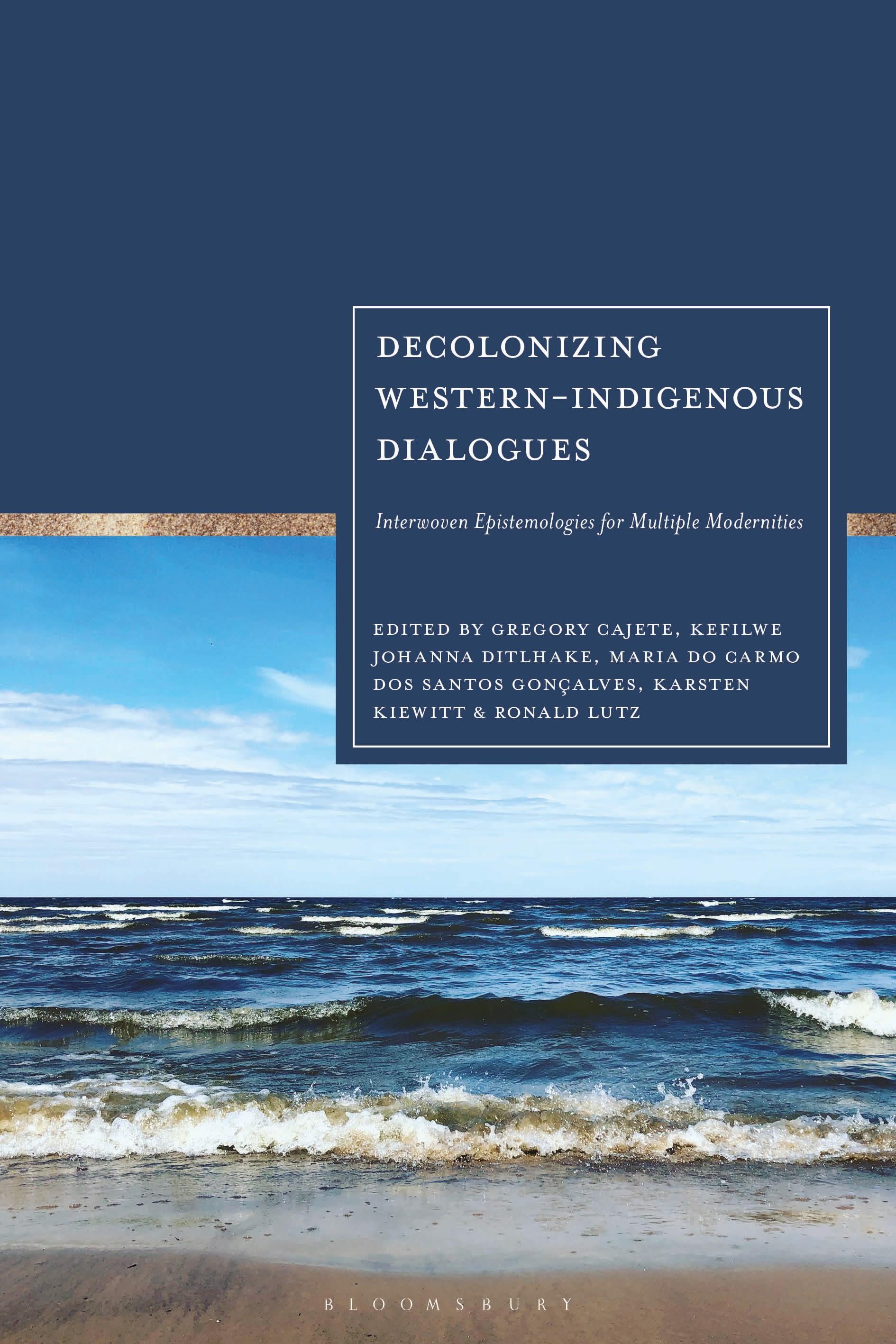
This groundbreaking book offers a unique collection of Indigenous and non-Indigenous approaches to decolonizing international development.
The world is facing enormous challenges, from ever-growing global inequality to climate change to the continuing fallout from the Covid pandemic. It is becoming increasingly clear that the origin of these challenges lies in the economic models and imperial lifestyles perpetuated by the Global North. In order to find new answers to the world's biggest challenges, then, it is necessary for the Global North to acknowledge Indigenous knowledge systems as unique and legitimate epistemologies and to engage in dialogues with them.
This collection brings together contributions from Indigenous and non-Indigenous authors to promote that dialogue. It provides a unique, rare forum for discourse between the expressive potentials of differing world views, and ultimately, for developing cooperation in the terms of Eisenstein's notion of interbeing, which counteracts the “History of Separation” between nature and culture and between Global South and Global North. What emerges is a path forward towards a new, interwoven modernity characterized by an embrace of separate, but mutually constitutive, ways of knowing.
For its wide topical and geographic breadth, and for its bringing together of Indigenous and non-Indigenous scholars around the world, this book is a must-read for researchers and students interested in indigenous studies and decolonial approaches to international development.
The world is facing enormous challenges, from ever-growing global inequality to climate change to the continuing fallout from the Covid pandemic. It is becoming increasingly clear that the origin of these challenges lies in the economic models and imperial lifestyles perpetuated by the Global North. In order to find new answers to the world's biggest challenges, then, it is necessary for the Global North to acknowledge Indigenous knowledge systems as unique and legitimate epistemologies and to engage in dialogues with them.
This collection brings together contributions from Indigenous and non-Indigenous authors to promote that dialogue. It provides a unique, rare forum for discourse between the expressive potentials of differing world views, and ultimately, for developing cooperation in the terms of Eisenstein's notion of interbeing, which counteracts the “History of Separation” between nature and culture and between Global South and Global North. What emerges is a path forward towards a new, interwoven modernity characterized by an embrace of separate, but mutually constitutive, ways of knowing.
For its wide topical and geographic breadth, and for its bringing together of Indigenous and non-Indigenous scholars around the world, this book is a must-read for researchers and students interested in indigenous studies and decolonial approaches to international development.
Sidor: 296
Kategori: Kultur-, Genus- & Postkoloniala studier
e-ISBN: 9781350425217
Fraktvikt: 1.2 kg
Skickas inom: 1-2 dagar
Betala smidigt med kort, Klarna, Apple Pay eller Google Pay. Är du inte nöjd har du alltid 14 dagars ångerrätt. Läs mer i våra villkor. Har du några frågor, mejla oss på hello@memmo.org.
Memmo gör det enklare att plugga – var du än är i världen. Hos oss samlar du kursböcker och smarta studieverktyg på ett och samma ställe: sammanfattningar, quiz, poddar och flashcards. Och så Ted, din studiekompis som svarar på allt du undrar. Över 50 000 studenter pluggar redan här – byggt för att du ska lära dig snabbare och stressa mindre.