
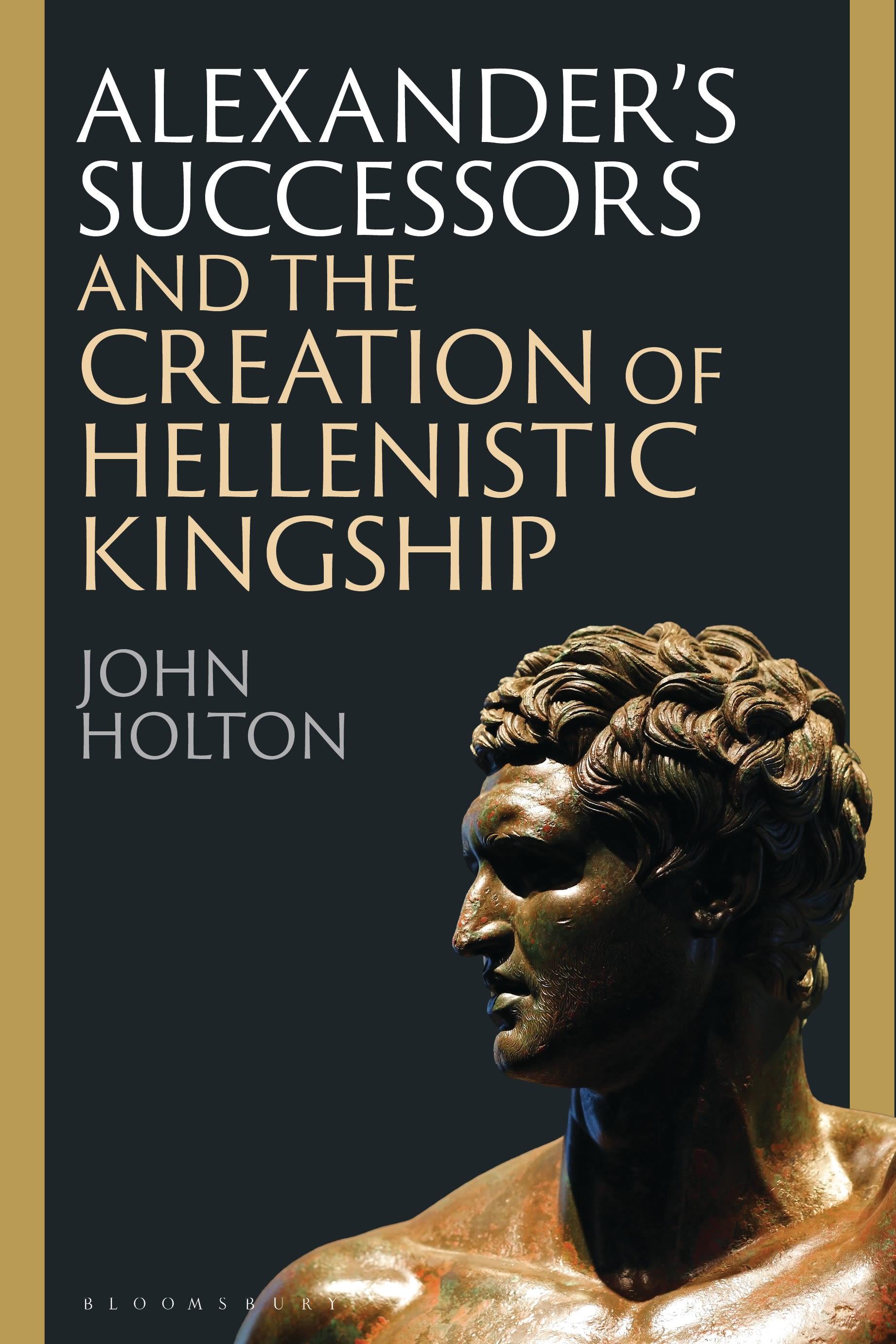
What happened to Alexander the Great's empire when he died, and to the generals and companions that had conquered that empire with him? How did they begin to develop their own power and positions after his death?
Alexander's Successors and the Creation of Hellenistic Kingship reconstructs how the development of royal ideologies led to five powerful new kingships after Alexander's death. It reveals how ideological performances and ongoing competition among the post-Alexander elite created the reality of the long-lasting institution of Hellenistic kingship, which would last for generations and even centuries as the model for autocratic power in the ancient world. A parallel study, Royal Traditions and the Consolidation of Power by Alexander's Successors, then examines the innovative new traditions of royal ideology that were developed in the consolidation of the new Hellenistic kingships.
Ranging from the early regencies and civil wars after Alexander's death to the formation of multiple independent kingdoms and beyond, the generation of Alexander's successors (323-276 BC) is comprehensively investigated. With a comparative perspective and detailed studies of diverse evidence, this is the first dedicated study of the beginnings of Hellenistic kingship and the first to put these beginnings in an international context.
Alexander's Successors and the Creation of Hellenistic Kingship reconstructs how the development of royal ideologies led to five powerful new kingships after Alexander's death. It reveals how ideological performances and ongoing competition among the post-Alexander elite created the reality of the long-lasting institution of Hellenistic kingship, which would last for generations and even centuries as the model for autocratic power in the ancient world. A parallel study, Royal Traditions and the Consolidation of Power by Alexander's Successors, then examines the innovative new traditions of royal ideology that were developed in the consolidation of the new Hellenistic kingships.
Ranging from the early regencies and civil wars after Alexander's death to the formation of multiple independent kingdoms and beyond, the generation of Alexander's successors (323-276 BC) is comprehensively investigated. With a comparative perspective and detailed studies of diverse evidence, this is the first dedicated study of the beginnings of Hellenistic kingship and the first to put these beginnings in an international context.
Betala smidigt med kort, Klarna, Apple Pay eller Google Pay. Är du inte nöjd har du alltid 14 dagars ångerrätt. Läs mer i våra villkor. Har du några frågor, mejla oss på hello@memmo.org.
Memmo gör det enklare att plugga – var du än är i världen. Hos oss samlar du kursböcker och smarta studieverktyg på ett och samma ställe: sammanfattningar, quiz, poddar och flashcards. Och så Ted, din studiekompis som svarar på allt du undrar. Över 50 000 studenter pluggar redan här – byggt för att du ska lära dig snabbare och stressa mindre.