
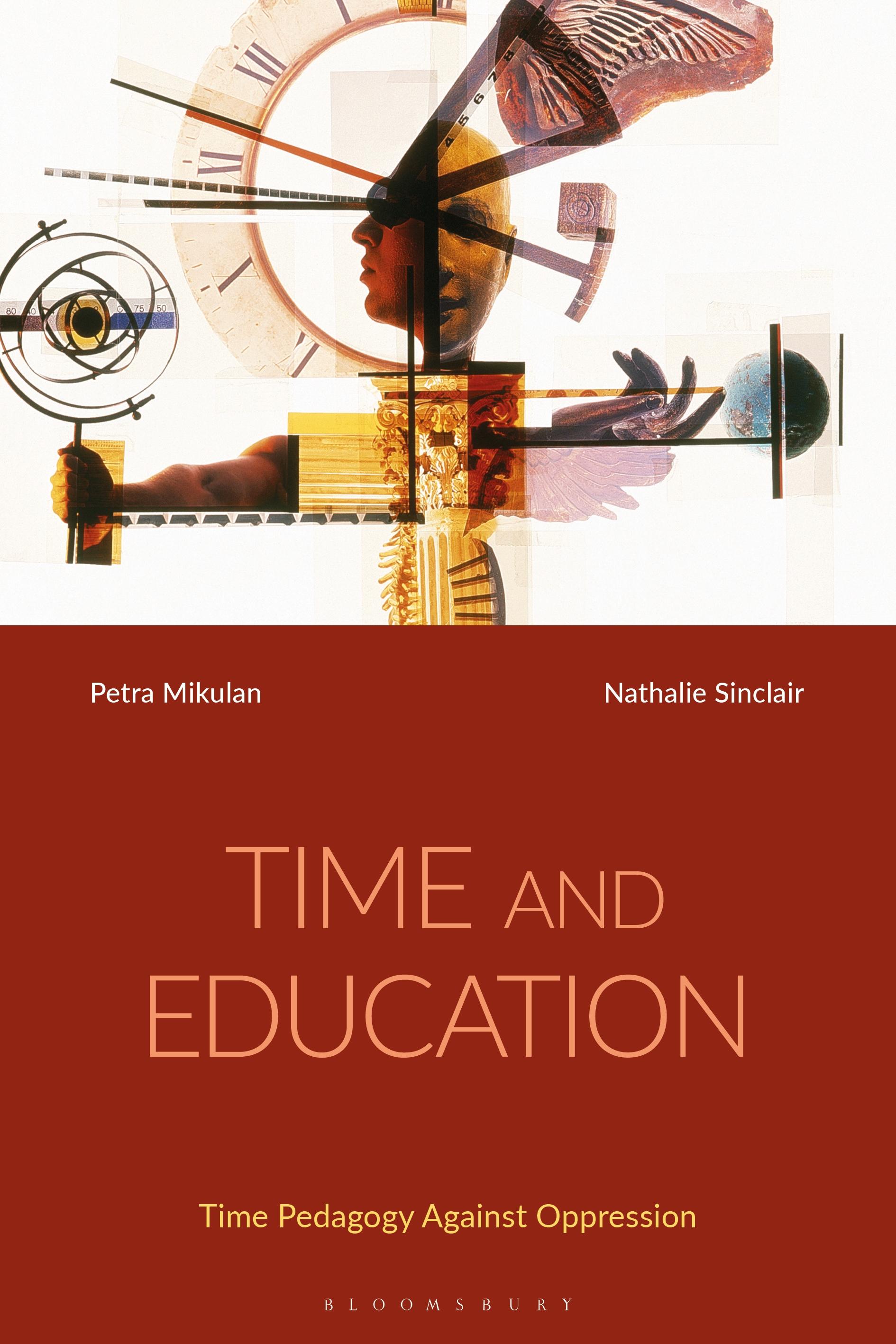
Despite pervading all aspects of educational practice and theory, little scholarship focuses on time in education. This book addresses that lacuna questioning our assumptions about time and their ramifications on theories of learning, issues of equity and diversity, and on the purposes of education itself.
The authors examine ideas about time in a wide variety of contexts, from ancient Greek fiction to 19th century theories of evolution and from 20th century indigenous stories to 20th century afro-futurist fiction. They show how pervasive the image of 'time as an arrow' has become, an image of time that is one-way, singular and teleological. Through exploring other theories of time, the authors propose alternatives for time in education. They argue that time is one of the key biopolitical tools we think and operate with, but rarely address as a historical, cultural and pedagogical category with which schools reproduce oppressive structures around race, class, and gender in society.
The book draws on ideas from the arts and the sciences to illustrate and trouble assumptions of time drawing on artistic and theoretic work from Édouard Glissant, Henri Lefebvre, Giordano Nanni, Denise Ferreira da Silva, Bonnie Honig and others.
The authors examine ideas about time in a wide variety of contexts, from ancient Greek fiction to 19th century theories of evolution and from 20th century indigenous stories to 20th century afro-futurist fiction. They show how pervasive the image of 'time as an arrow' has become, an image of time that is one-way, singular and teleological. Through exploring other theories of time, the authors propose alternatives for time in education. They argue that time is one of the key biopolitical tools we think and operate with, but rarely address as a historical, cultural and pedagogical category with which schools reproduce oppressive structures around race, class, and gender in society.
The book draws on ideas from the arts and the sciences to illustrate and trouble assumptions of time drawing on artistic and theoretic work from Édouard Glissant, Henri Lefebvre, Giordano Nanni, Denise Ferreira da Silva, Bonnie Honig and others.
Betala smidigt med kort, Klarna, Apple Pay eller Google Pay. Är du inte nöjd har du alltid 14 dagars ångerrätt. Läs mer i våra villkor. Har du några frågor, mejla oss på hello@memmo.org.
Memmo gör det enklare att plugga – var du än är i världen. Hos oss samlar du kursböcker och smarta studieverktyg på ett och samma ställe: sammanfattningar, quiz, poddar och flashcards. Och så Ted, din studiekompis som svarar på allt du undrar. Över 50 000 studenter pluggar redan här – byggt för att du ska lära dig snabbare och stressa mindre.