
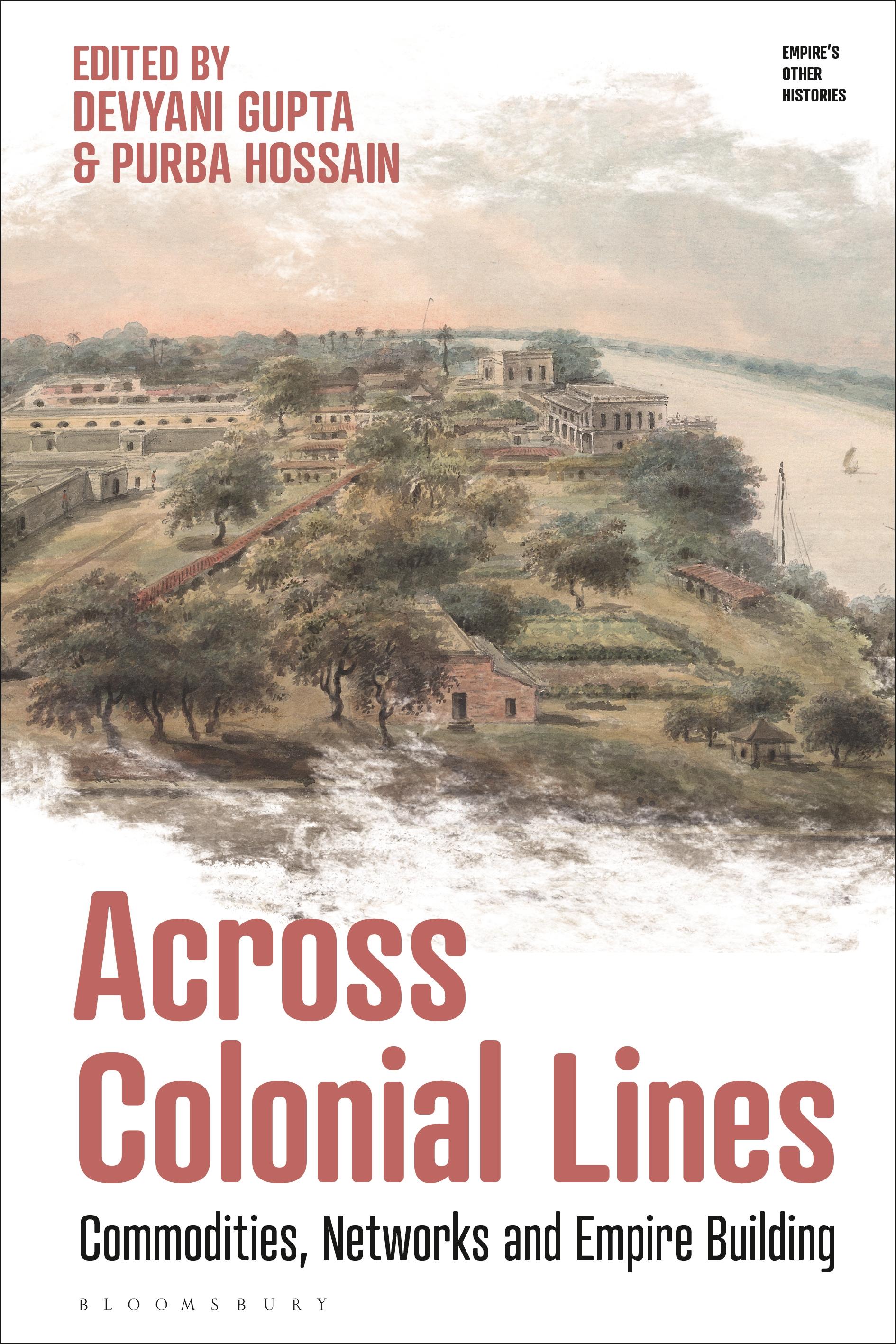
Across Colonial Lines takes a multi-perspective approach to the study of empire and commodities, and encourages readers to look at commodity histories in alternative spatial and temporal contexts. It offers a comparative understanding of commodities in the Venetian, Portuguese, Dutch, French and British Empires.
Highlighting the interwoven character of multiple commodity networks, this book situates commodities like gold, coffee, tea and indigo, to name a few, within pre-existing networks of labour, consumption and knowledge production. It explores the nexus between the local and the global, and highlights the role played by individual producers, petty traders, sailors and even consumers in creating regional circulations within a global political economy. In this volume, commodity networks are not just sites of production and trade, but also of political control, social organisation and consumption choices. They provide the impetus for globalisation from as early as the thirteenth century.
Each chapter takes an individual commodity to illustrate the history of commodity transmission within imperial contexts. From early modern Venetian commerce to the trade networks of the Eurasian world; from the trading ambitions of British sailors to Portuguese global imperial ambitions; from the cross-imperial knowledge networks of indigo to the assertion of indigenous agency in Angola; and from the commodification of labour to the experience of tourism in the Caribbean and Indian Ocean World, Across Colonial Lines uses commodity networks as a lens to study empire building across varied yet connected geographies and chronologies.
Highlighting the interwoven character of multiple commodity networks, this book situates commodities like gold, coffee, tea and indigo, to name a few, within pre-existing networks of labour, consumption and knowledge production. It explores the nexus between the local and the global, and highlights the role played by individual producers, petty traders, sailors and even consumers in creating regional circulations within a global political economy. In this volume, commodity networks are not just sites of production and trade, but also of political control, social organisation and consumption choices. They provide the impetus for globalisation from as early as the thirteenth century.
Each chapter takes an individual commodity to illustrate the history of commodity transmission within imperial contexts. From early modern Venetian commerce to the trade networks of the Eurasian world; from the trading ambitions of British sailors to Portuguese global imperial ambitions; from the cross-imperial knowledge networks of indigo to the assertion of indigenous agency in Angola; and from the commodification of labour to the experience of tourism in the Caribbean and Indian Ocean World, Across Colonial Lines uses commodity networks as a lens to study empire building across varied yet connected geographies and chronologies.
Sidor: 256
Kategori: Kultur-, Genus- & Postkoloniala studier
e-ISBN: 9781350327047
Fraktvikt: 1.2 kg
Skickas inom: 1-2 dagar
Betala smidigt med kort, Klarna, Apple Pay eller Google Pay. Är du inte nöjd har du alltid 14 dagars ångerrätt. Läs mer i våra villkor. Har du några frågor, mejla oss på hello@memmo.org.
Memmo gör det enklare att plugga – var du än är i världen. Hos oss samlar du kursböcker och smarta studieverktyg på ett och samma ställe: sammanfattningar, quiz, poddar och flashcards. Och så Ted, din studiekompis som svarar på allt du undrar. Över 50 000 studenter pluggar redan här – byggt för att du ska lära dig snabbare och stressa mindre.