
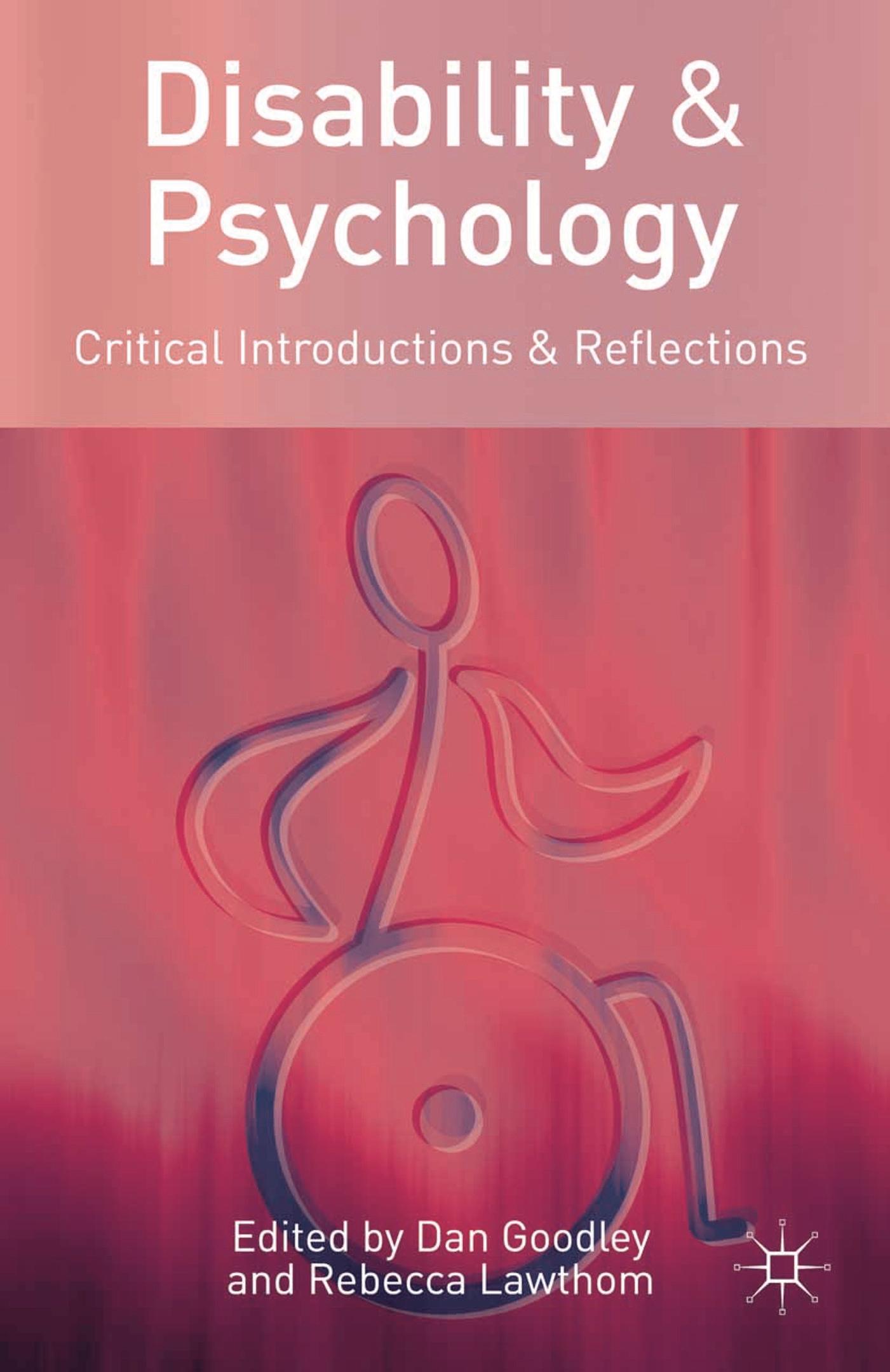
Disability is not just the physical, sensory or intellectual impairments a person has, but the exclusion from society they face as a result. Organisations for disabled people are a growing voice in challenging this exclusion and anti-discrimination legislation is helping to change the structures in society that have contributed to it.
This book examines the discipline of psychology in this regard. It argues that psychology has tended to ignore the socio-cultural aspects of disability and treat disabled people as objects rather than arbiters of psychological intervention. Bringing together disabled and non-disabled researchers and psychologists, this book proposes ideas for an enabling psychological theory and practice, and addresses questions such as:
-"How can we support the inclusion of disabled children?"
- "Can therapy enable rather than pathologise?”
- "What can be learnt from the experience of disabled psychologists?"
"How can psychology contribute to social models of disability?”
In examining these issues, this volume challenges the reader to reconsider the relationship between disability studies and psychology and to do so in ways that contribute to the emancipation - rather than the exclusion - of disabled people.
A key text for students on relevant courses within disability studies and psychology degrees, this book is also an important resource for those who study or work in the areas of healthcare studies, nursing, sociology and social work.
Dan Goodley is a Reader in disability studies, University of Sheffield, with research interests in disability theory, activism and methodology.
Rebecca Lawthom is Principal Lecturer in psychology, Manchester Metropolitan University and a member of the Research Institute for Health and Social Change. Her research interests are in disability, community and feminist psychology.
This book examines the discipline of psychology in this regard. It argues that psychology has tended to ignore the socio-cultural aspects of disability and treat disabled people as objects rather than arbiters of psychological intervention. Bringing together disabled and non-disabled researchers and psychologists, this book proposes ideas for an enabling psychological theory and practice, and addresses questions such as:
-"How can we support the inclusion of disabled children?"
- "Can therapy enable rather than pathologise?”
- "What can be learnt from the experience of disabled psychologists?"
"How can psychology contribute to social models of disability?”
In examining these issues, this volume challenges the reader to reconsider the relationship between disability studies and psychology and to do so in ways that contribute to the emancipation - rather than the exclusion - of disabled people.
A key text for students on relevant courses within disability studies and psychology degrees, this book is also an important resource for those who study or work in the areas of healthcare studies, nursing, sociology and social work.
Dan Goodley is a Reader in disability studies, University of Sheffield, with research interests in disability theory, activism and methodology.
Rebecca Lawthom is Principal Lecturer in psychology, Manchester Metropolitan University and a member of the Research Institute for Health and Social Change. Her research interests are in disability, community and feminist psychology.
Betala smidigt med kort, Klarna, Apple Pay eller Google Pay. Är du inte nöjd har du alltid 14 dagars ångerrätt. Läs mer i våra villkor. Har du några frågor, mejla oss på hello@memmo.org.
Memmo gör det enklare att plugga – var du än är i världen. Hos oss samlar du kursböcker och smarta studieverktyg på ett och samma ställe: sammanfattningar, quiz, poddar och flashcards. Och så Ted, din studiekompis som svarar på allt du undrar. Över 50 000 studenter pluggar redan här – byggt för att du ska lära dig snabbare och stressa mindre.