
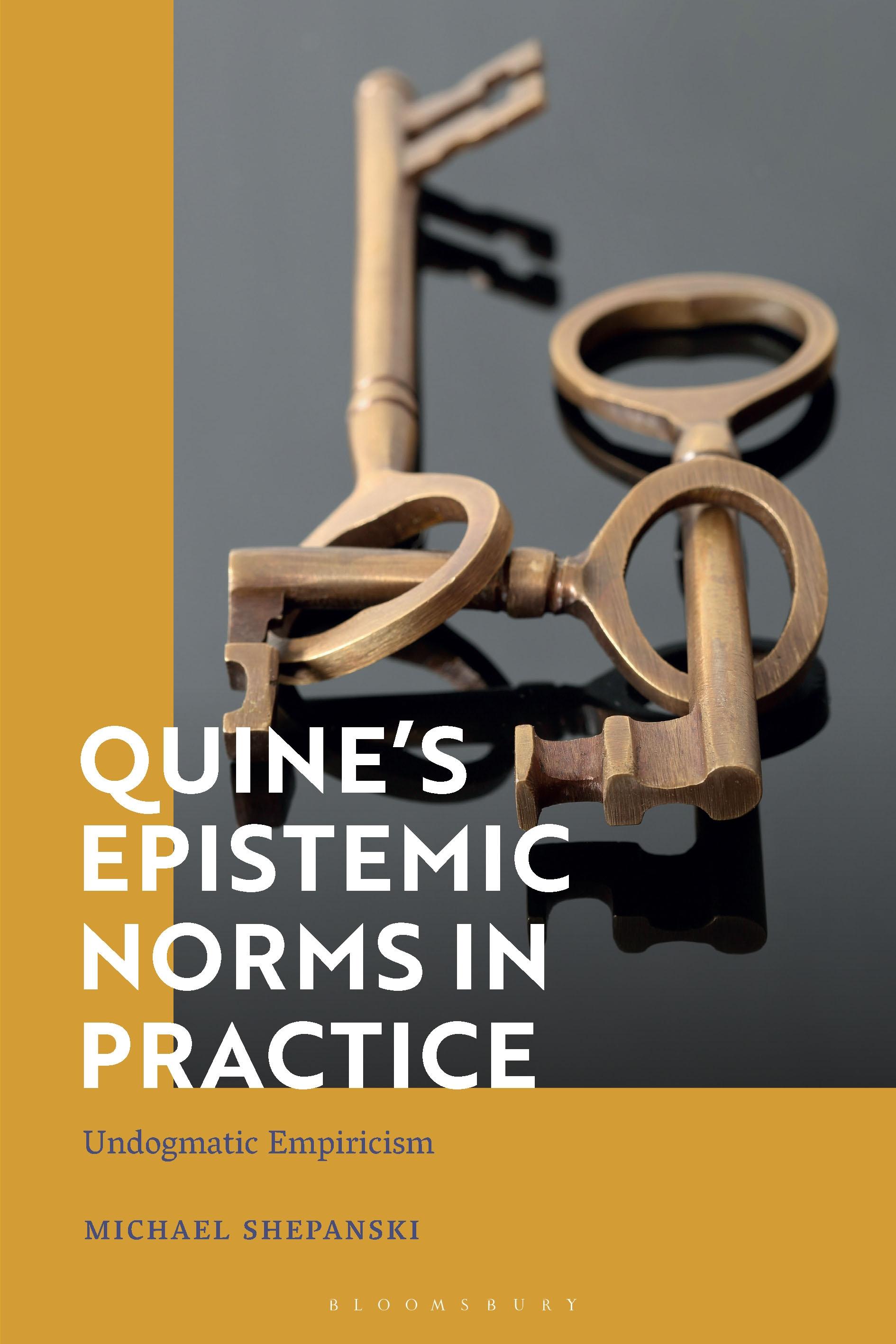
In this illuminating guide to the criteria of rational theorizing, Michael Shepanski identifies, defends and applies W. V. Quine's epistemic norms – the norms that best explain Quine's decisions to accept some theories and not others.
Parts I and II set out the doctrines of this epistemology, demonstrating their potential for philosophical application. Part III is a case study in which Shepanski develops a theory of the propositional attitudes by the method of formalizing inferences to behaviour. He presents critiques of popular alternative views, including foundationalism, the centrality of knowledge and Quine's own epistemological naturalism.
By reassessing Quine's normative epistemology, Shepanski advances our understanding of Quine's philosophy whilst providing a guide for our own theorizing.
Parts I and II set out the doctrines of this epistemology, demonstrating their potential for philosophical application. Part III is a case study in which Shepanski develops a theory of the propositional attitudes by the method of formalizing inferences to behaviour. He presents critiques of popular alternative views, including foundationalism, the centrality of knowledge and Quine's own epistemological naturalism.
By reassessing Quine's normative epistemology, Shepanski advances our understanding of Quine's philosophy whilst providing a guide for our own theorizing.
Betala smidigt med kort, Klarna, Apple Pay eller Google Pay. Är du inte nöjd har du alltid 14 dagars ångerrätt. Läs mer i våra villkor. Har du några frågor, mejla oss på hello@memmo.org.
Memmo gör det enklare att plugga – var du än är i världen. Hos oss samlar du kursböcker och smarta studieverktyg på ett och samma ställe: sammanfattningar, quiz, poddar och flashcards. Och så Ted, din studiekompis som svarar på allt du undrar. Över 50 000 studenter pluggar redan här – byggt för att du ska lära dig snabbare och stressa mindre.