
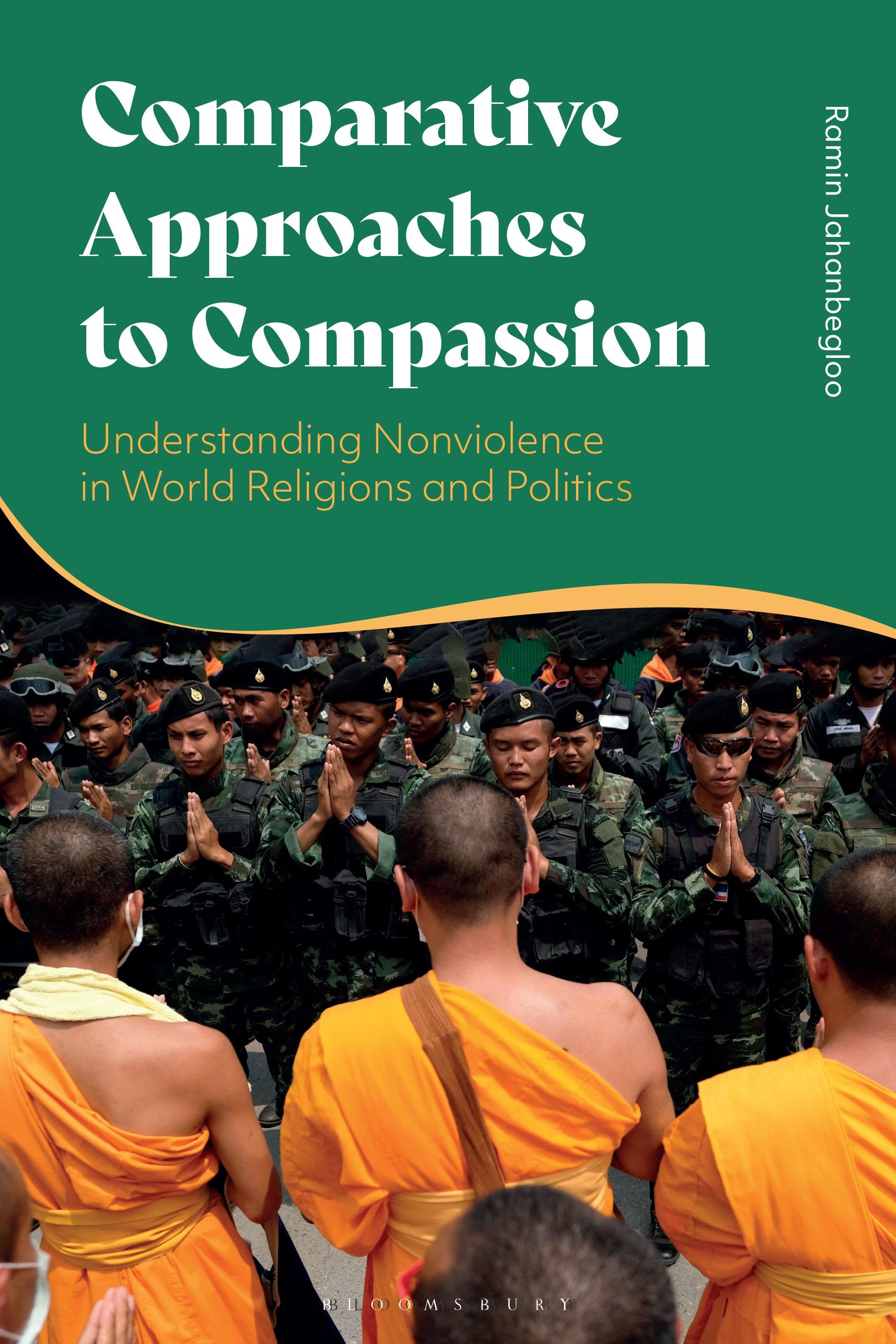
Ramin Jahanbegloo develops the concept of compassion as a practical and ethical response to the problems of today's world. Examining the power of compassion through the lens of multiple world religions, he explores ahimsa in Buddhism, Jainism and Hinduism and neighbourly love in Christianity, before synthesizing the two concepts in the Gandhian theory of non-violence and its impact on Muslim and Christian thinkers such as Abdul Ghaffar Khan and Martin Luther King, Jr. Jahanbegloo considers the idea of a compassionate civilization based on the nonviolent democratic theory put forward by Gandhi with Swaraj, and completed by Martin Luther King, Jr. with the Beloved Community.
By scrutinizing compassion in various religious and ethical traditions and exploring the relevance of homo fragilis, Jahanbegloo's comparative approach enriches our understanding of nonviolence as a universal philosophy and practice for the 21st century. He shows that nonviolence is not only a mode of thinking and a way of life, but also a powerful strategy of social and political transformation.
By scrutinizing compassion in various religious and ethical traditions and exploring the relevance of homo fragilis, Jahanbegloo's comparative approach enriches our understanding of nonviolence as a universal philosophy and practice for the 21st century. He shows that nonviolence is not only a mode of thinking and a way of life, but also a powerful strategy of social and political transformation.
Betala smidigt med kort, Klarna, Apple Pay eller Google Pay. Är du inte nöjd har du alltid 14 dagars ångerrätt. Läs mer i våra villkor. Har du några frågor, mejla oss på hello@memmo.org.
Memmo gör det enklare att plugga – var du än är i världen. Hos oss samlar du kursböcker och smarta studieverktyg på ett och samma ställe: sammanfattningar, quiz, poddar och flashcards. Och så Ted, din studiekompis som svarar på allt du undrar. Över 50 000 studenter pluggar redan här – byggt för att du ska lära dig snabbare och stressa mindre.