
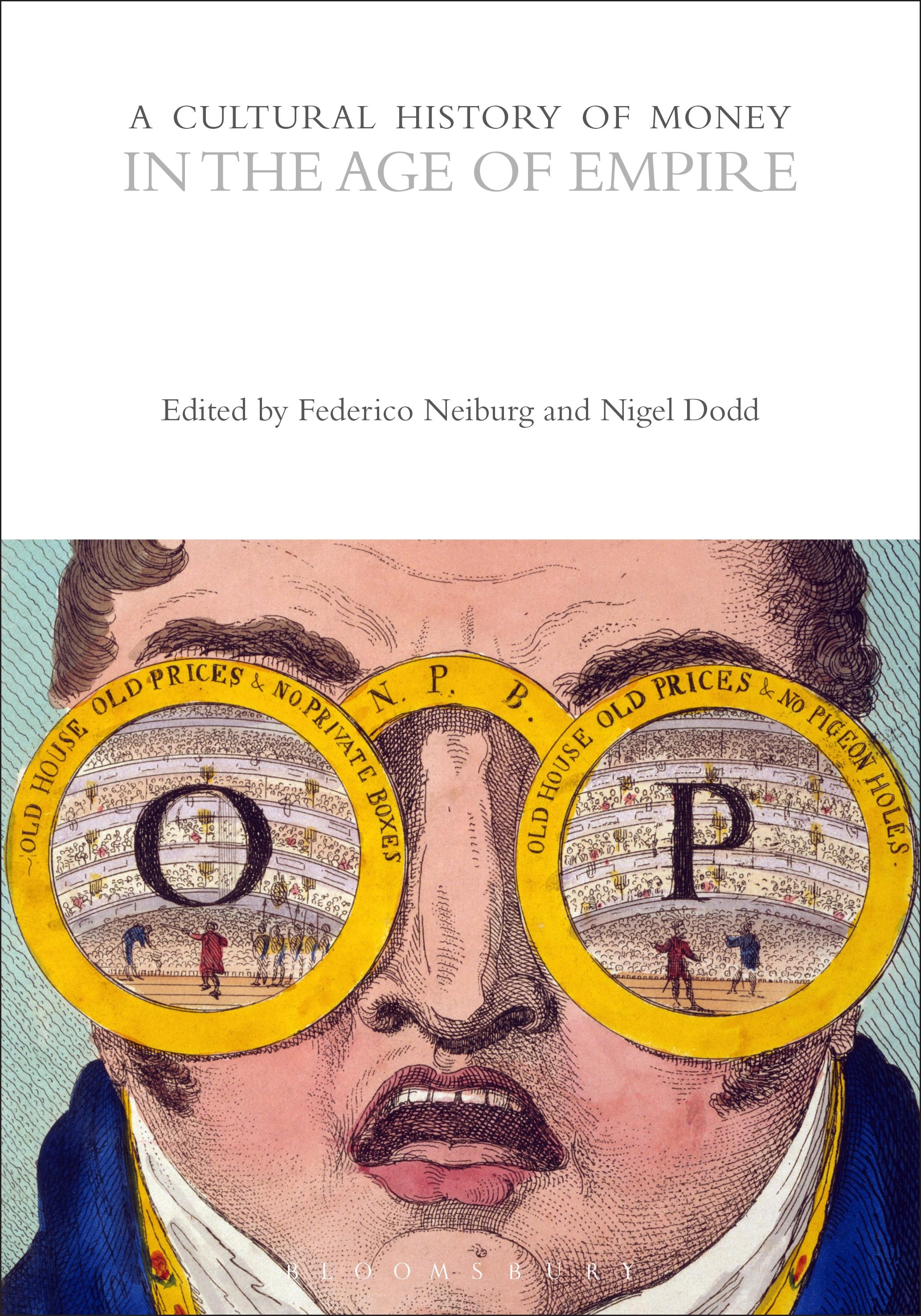
The nineteenth century was a time of intense monetization of social life: increasingly money became the only means of access to goods and services, especially in the new metropolises; new technologies and infrastructures emerged for saving and circulating money and for standardizing coinage; and paper currencies were printed, founded purely on trust without any intrinsic metallic value. But the monetary landscape was ambivalent so that the forces unifying monetary practice (imperial and national currencies, global monetary standards such as the gold standard) coexisted with the proliferation of local currencies. Money became a central issue in politics, the arts, and sciences - and the modern discipline of economics was born, with its claim to a monopoly on knowing and governing money.
Drawing upon a wealth of visual and textual sources, A Cultural History of Money in the Age of Empire presents essays that examine key cultural case studies of the period on the themes of technologies, ideas, ritual and religion, the everyday, art and representation, interpretation, and the issues of the age.
Drawing upon a wealth of visual and textual sources, A Cultural History of Money in the Age of Empire presents essays that examine key cultural case studies of the period on the themes of technologies, ideas, ritual and religion, the everyday, art and representation, interpretation, and the issues of the age.
Betala smidigt med kort, Klarna, Apple Pay eller Google Pay. Är du inte nöjd har du alltid 14 dagars ångerrätt. Läs mer i våra villkor. Har du några frågor, mejla oss på hello@memmo.org.
Memmo gör det enklare att plugga – var du än är i världen. Hos oss samlar du kursböcker och smarta studieverktyg på ett och samma ställe: sammanfattningar, quiz, poddar och flashcards. Och så Ted, din studiekompis som svarar på allt du undrar. Över 50 000 studenter pluggar redan här – byggt för att du ska lära dig snabbare och stressa mindre.