
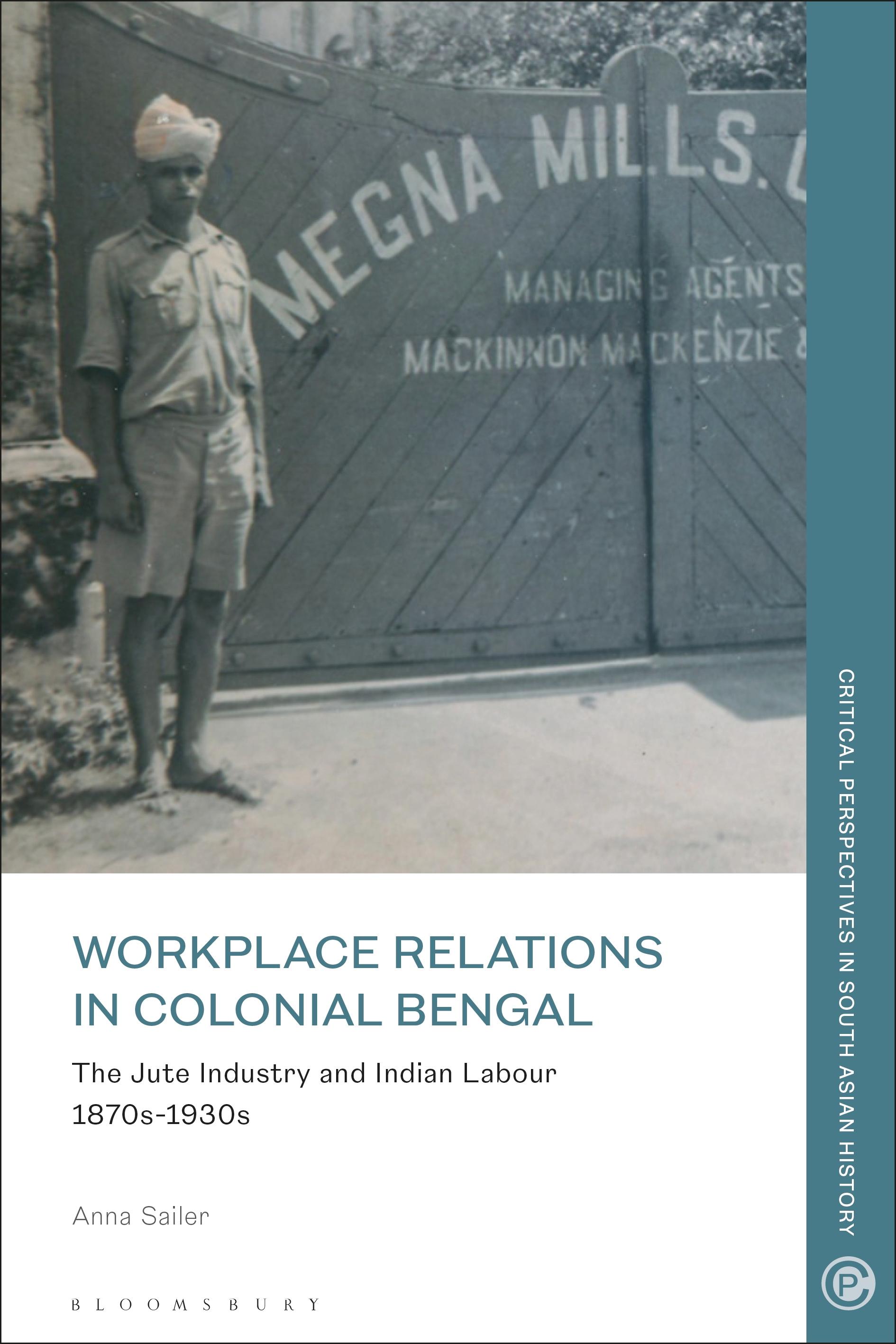
This book connects the history of labour movements with the transformation of workplace relations in South Asia from the late 19th century to the 1930s. Contending that labour conflicts in the Bengal jute industry must be understood against the backdrop of a radical change in the organisation of work in this period, Sailer shows how this led to a rupture in worker's relations in the workplace and beyond.
Moving away from polarities such as class/culture or modernity/tradition and reconsidering the context around industrial conflicts in this period, Workplace relations in Colonial Bengal offers a new framework to analyse the changing organisation of work in colonial India, and identifies the implications for worker relations both inside and outside the factory. Focusing on a major colonial era industry, this book opens up new perspectives n the history of workers and colonial capitalism in modern India.
Moving away from polarities such as class/culture or modernity/tradition and reconsidering the context around industrial conflicts in this period, Workplace relations in Colonial Bengal offers a new framework to analyse the changing organisation of work in colonial India, and identifies the implications for worker relations both inside and outside the factory. Focusing on a major colonial era industry, this book opens up new perspectives n the history of workers and colonial capitalism in modern India.
Betala smidigt med kort, Klarna, Apple Pay eller Google Pay. Är du inte nöjd har du alltid 14 dagars ångerrätt. Läs mer i våra villkor. Har du några frågor, mejla oss på hello@memmo.org.
Memmo gör det enklare att plugga – var du än är i världen. Hos oss samlar du kursböcker och smarta studieverktyg på ett och samma ställe: sammanfattningar, quiz, poddar och flashcards. Och så Ted, din studiekompis som svarar på allt du undrar. Över 50 000 studenter pluggar redan här – byggt för att du ska lära dig snabbare och stressa mindre.