
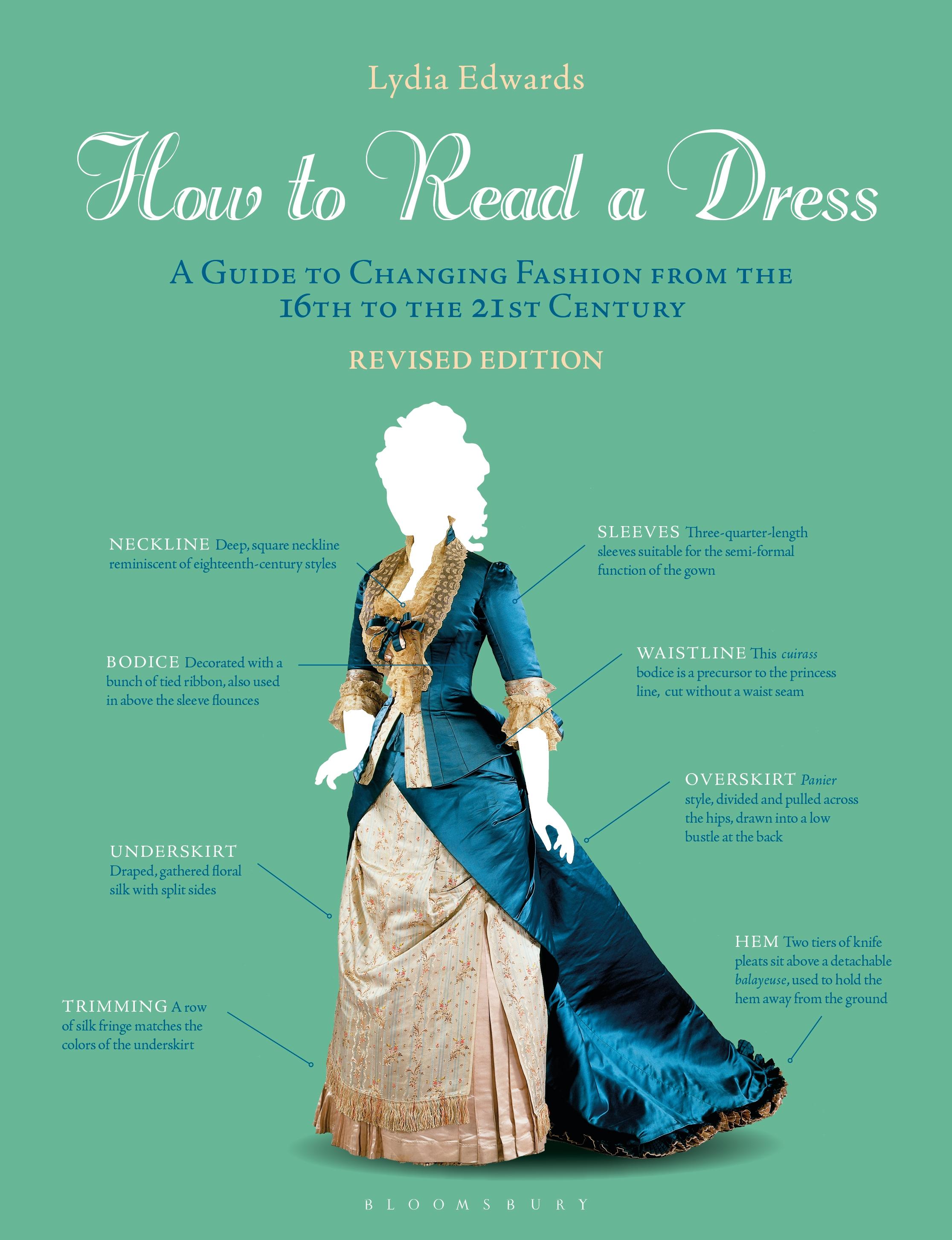
Fashion is ever-changing, and while some styles mark a dramatic departure from the past, many exhibit subtle differences from year to year that are not always easily identifiable. With overviews of each key period and detailed illustrations for each new style, How to Read a Dress is an appealing and accessible guide to women's fashion across five centuries. Each entry includes annotated color images of historical garments, outlining important features and highlighting how styles have developed over time, whether in shape, fabric choice, trimming, or undergarments. Readers learn how garments were constructed and where their inspiration stemmed from at key points in history – as well as how dresses have varied in type, cut, detailing and popularity according to the occasion and the class, age and social status of the wearer.
This new edition includes additional styles to illustrate and explain the journey between one style and another; larger images to allow closer investigation of details of dress; examples of lower and working-class, as well as middle-class, clothing; and a completely new chapter covering the 1980s to 2020. The latter demonstrates how the late 20th century and early 21st century firmly left the dress behind as a requirement, but retained it as a perennially popular choice and illustrates how far the traditional boundaries of 'the dress' have been pushed (even including reference to a newly non-binary appreciation of the garment), and the intellectual shifts in the way women's fashion is both inspired and inspires.
With these new additions, How to Read a Dress, revised edition, presents a complete and up-to-date picture of 'the dress' in all its forms, across the centuries, and taking into account different sartorial and social experiences. It is the ideal tool for anyone who has ever wanted to know their cartridge pleats from their Récamier ruffles. Equipping the reader with all the information they need to 'read' a dress, this is the ultimate guide for students, researchers, and anyone interested in historical fashion.
This new edition includes additional styles to illustrate and explain the journey between one style and another; larger images to allow closer investigation of details of dress; examples of lower and working-class, as well as middle-class, clothing; and a completely new chapter covering the 1980s to 2020. The latter demonstrates how the late 20th century and early 21st century firmly left the dress behind as a requirement, but retained it as a perennially popular choice and illustrates how far the traditional boundaries of 'the dress' have been pushed (even including reference to a newly non-binary appreciation of the garment), and the intellectual shifts in the way women's fashion is both inspired and inspires.
With these new additions, How to Read a Dress, revised edition, presents a complete and up-to-date picture of 'the dress' in all its forms, across the centuries, and taking into account different sartorial and social experiences. It is the ideal tool for anyone who has ever wanted to know their cartridge pleats from their Récamier ruffles. Equipping the reader with all the information they need to 'read' a dress, this is the ultimate guide for students, researchers, and anyone interested in historical fashion.
Betala smidigt med kort, Klarna, Apple Pay eller Google Pay. Är du inte nöjd har du alltid 14 dagars ångerrätt. Läs mer i våra villkor. Har du några frågor, mejla oss på hello@memmo.org.
Memmo gör det enklare att plugga – var du än är i världen. Hos oss samlar du kursböcker och smarta studieverktyg på ett och samma ställe: sammanfattningar, quiz, poddar och flashcards. Och så Ted, din studiekompis som svarar på allt du undrar. Över 50 000 studenter pluggar redan här – byggt för att du ska lära dig snabbare och stressa mindre.