
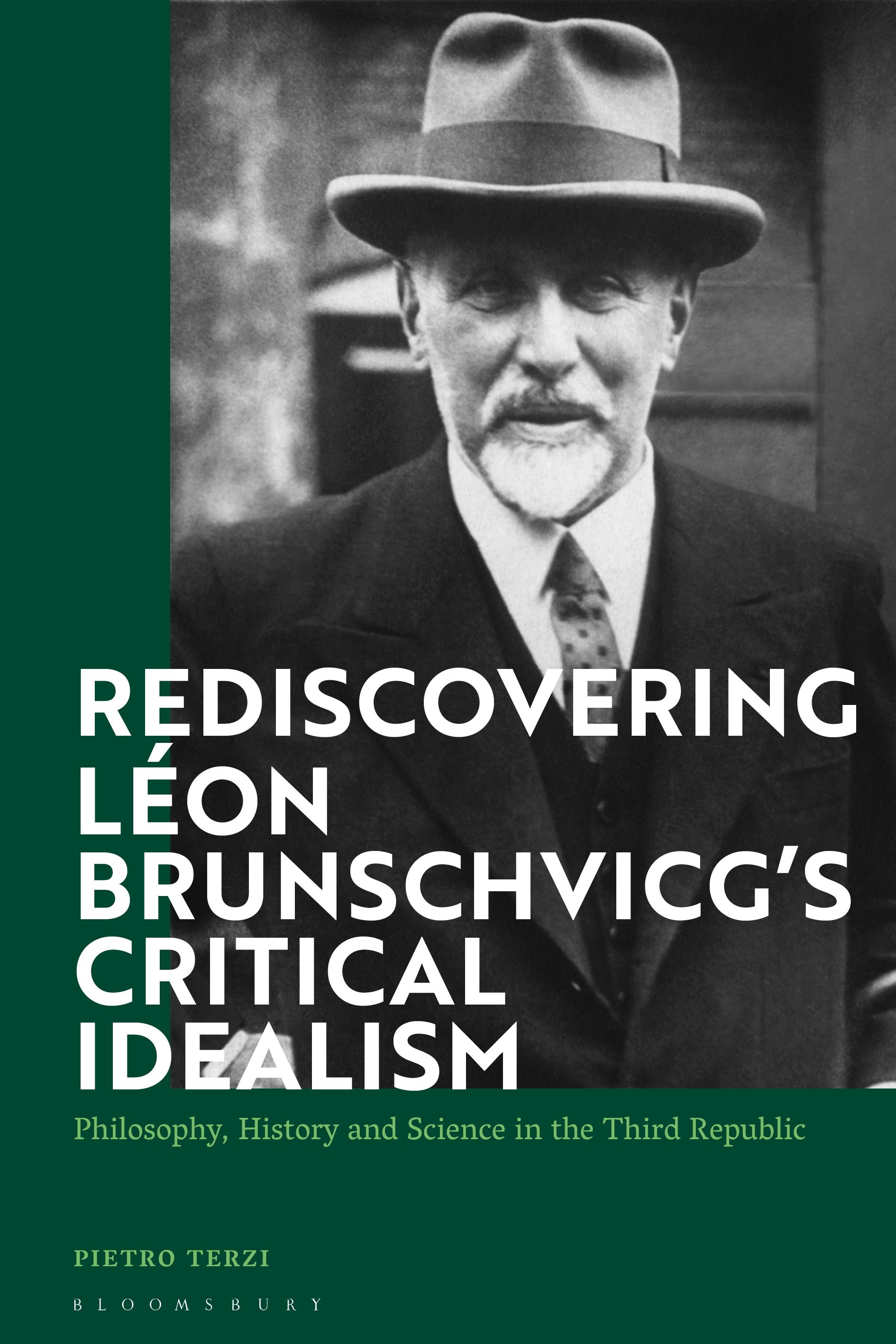
Léon Brunschvicg's contribution to philosophical thought in fin-de-siècle France receives full explication in the first English-language study on his work. Arguing that Brunschvicg is crucial to understanding the philosophical schools which took root in 20th-century France, Pietro Terzi locates Brunschvicg alongside his contemporary Henri Bergson, as well as the range of thinkers he taught and influenced, including Lévinas, Merleau-Ponty, de Beauvoir, and Sartre. Brunschvicg's deep engagement with debates concerning spiritualism and rationalism, neo-Kantian philosophy, and the role of mathematics in philosophy made him the perfect supervisor for a whole host of nascent philosophical ideas which were forming in the work of his students.
Terzi outlines Brunchvicg's defence of neo-Kantian judgement, historical analysis and the inextricability of the natural and humanist sciences to any rigorous system of philosophy, with wide-ranging implications for contemporary scholarship.
Terzi outlines Brunchvicg's defence of neo-Kantian judgement, historical analysis and the inextricability of the natural and humanist sciences to any rigorous system of philosophy, with wide-ranging implications for contemporary scholarship.
Betala smidigt med kort, Klarna, Apple Pay eller Google Pay. Är du inte nöjd har du alltid 14 dagars ångerrätt. Läs mer i våra villkor. Har du några frågor, mejla oss på hello@memmo.org.
Memmo gör det enklare att plugga – var du än är i världen. Hos oss samlar du kursböcker och smarta studieverktyg på ett och samma ställe: sammanfattningar, quiz, poddar och flashcards. Och så Ted, din studiekompis som svarar på allt du undrar. Över 50 000 studenter pluggar redan här – byggt för att du ska lära dig snabbare och stressa mindre.