
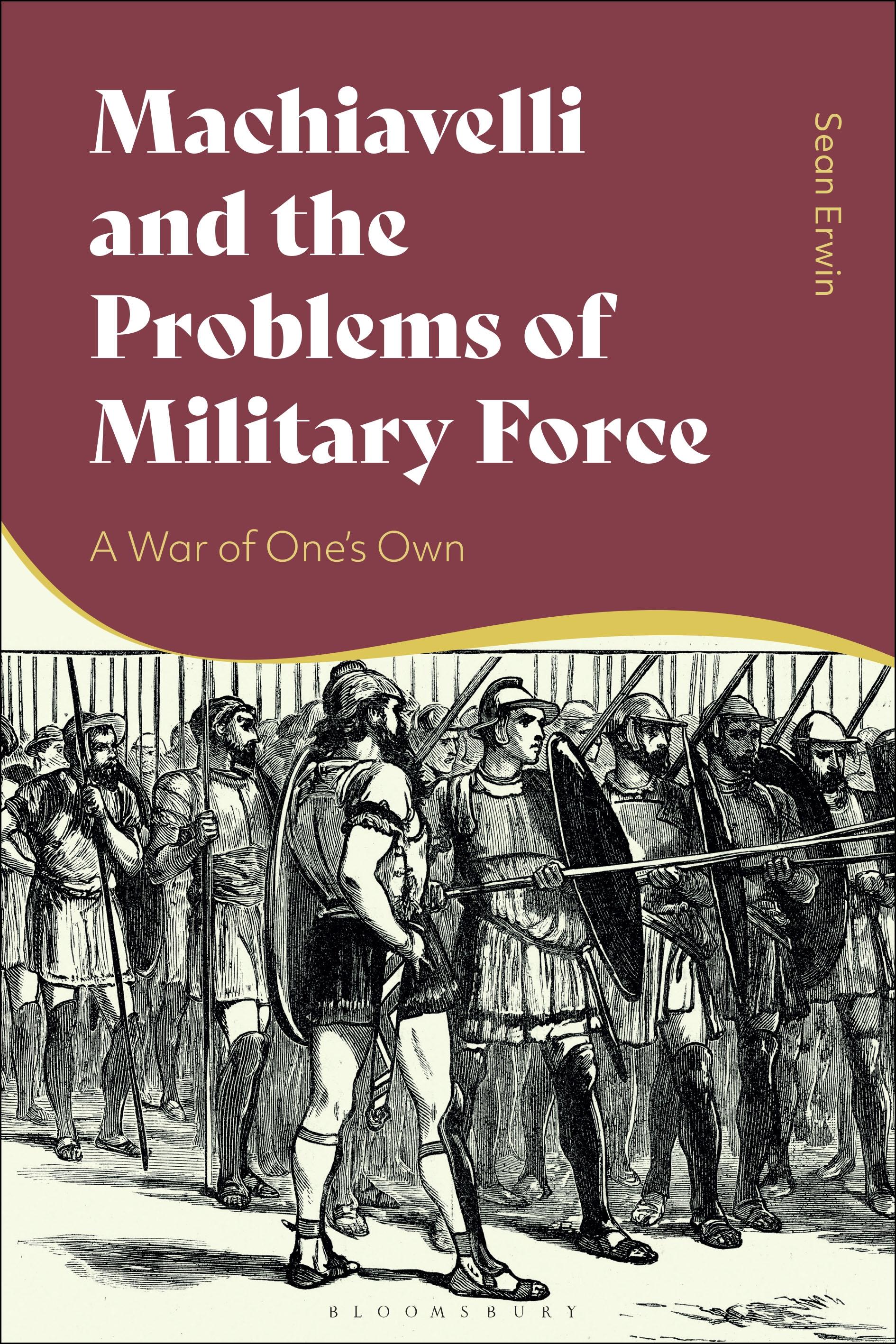
Central to Niccolò Machiavelli's writing is the argument that a successful state is one that prefers to lose with its own arms (arma propriis) than to win with the arms of others (arma alienis). This book sheds light on Machiavelli's critiques of military force and provides an important reinterpretation of his military theory.
Sean Erwin argues that the distinction between arma propriis and arma alienis poses a central problem to Machiavelli's case for why modern political institutions offer modes of political existence that ancient ones did not. Starting from the influence of Lucretius and Aelianus Tacticus on the Dell'arte della guerra, Erwin examines Machiavelli's criticism of mercenary, auxiliary, and mixed forces.
Giving due consideration to an overlooked conceptual distinction in Machiavelli studies, this book is a valuable and original contribution to the field.
Sean Erwin argues that the distinction between arma propriis and arma alienis poses a central problem to Machiavelli's case for why modern political institutions offer modes of political existence that ancient ones did not. Starting from the influence of Lucretius and Aelianus Tacticus on the Dell'arte della guerra, Erwin examines Machiavelli's criticism of mercenary, auxiliary, and mixed forces.
Giving due consideration to an overlooked conceptual distinction in Machiavelli studies, this book is a valuable and original contribution to the field.
Betala smidigt med kort, Klarna, Apple Pay eller Google Pay. Är du inte nöjd har du alltid 14 dagars ångerrätt. Läs mer i våra villkor. Har du några frågor, mejla oss på hello@memmo.org.
Memmo gör det enklare att plugga – var du än är i världen. Hos oss samlar du kursböcker och smarta studieverktyg på ett och samma ställe: sammanfattningar, quiz, poddar och flashcards. Och så Ted, din studiekompis som svarar på allt du undrar. Över 50 000 studenter pluggar redan här – byggt för att du ska lära dig snabbare och stressa mindre.