
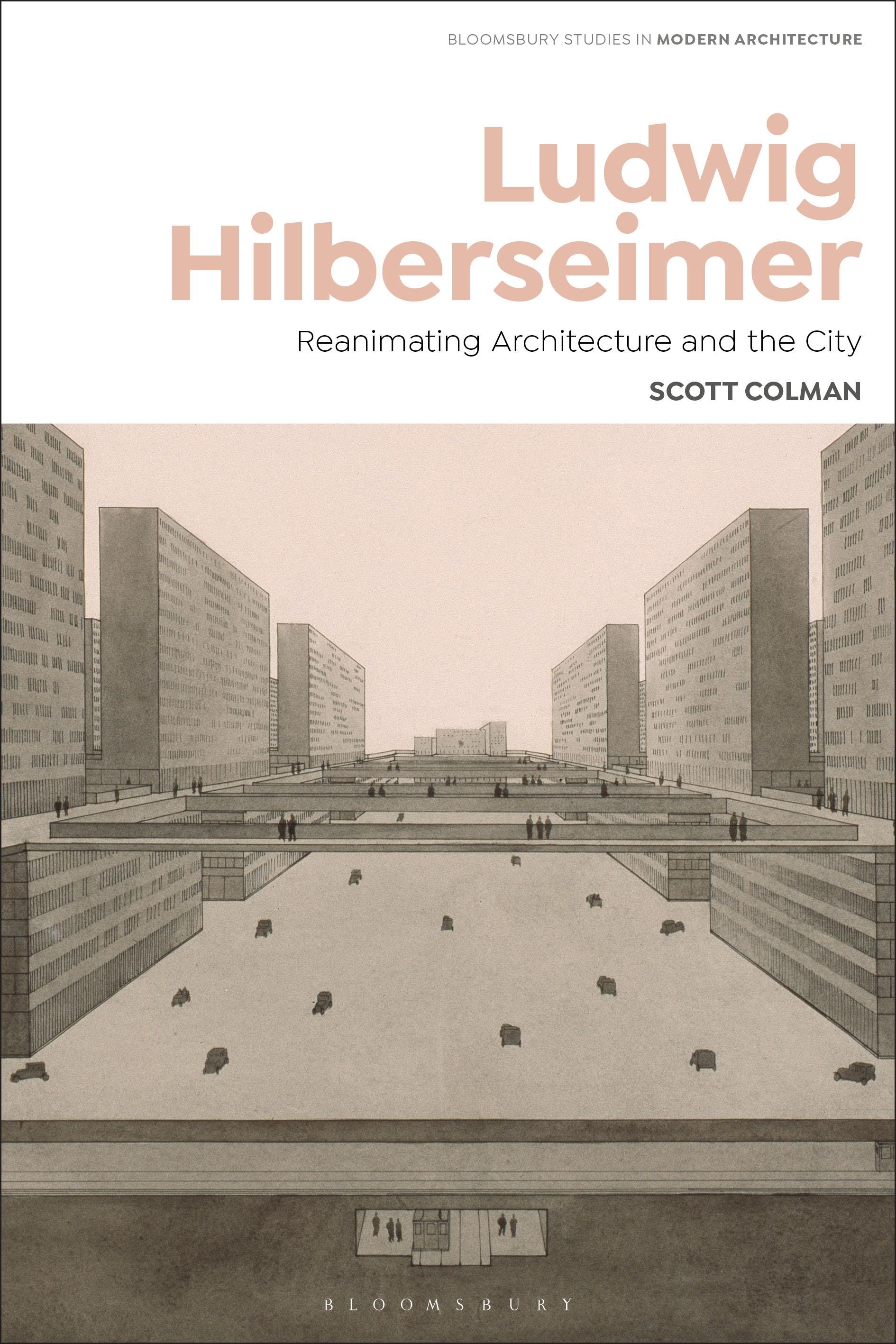
The German-American architect, art critic, and urban planner Ludwig Hilberseimer was central to avant-garde art and architecture in the Weimar Republic, an important Bauhaus teacher, and long-standing collaborator of leading modern architect Ludwig Mies van der Rohe.
Despite being internationally-known for his work on Lafayette Park in Detroit, Hilberseimer's legacy as a whole has been obscured in the history of modern architecture. Whether this is due to the intense shadow cast by Mies, or by his oeuvre being split between the differing languages and contexts of interwar Germany and postwar North America, this book argues that the time is now right for a critical reassessment of Hilberseimer's work and writings.
Published as part of the Bloomsbury Studies in Modern Architecture series, which brings to light the work of significant yet overlooked modernist architects, this study clarifies and situates Hilberseimer's ideas both as an architect and writer, and examines their influence on modern and contemporary architecture and urbanism. The first synthetic account of Hilberseimer in English, it provides a contextual account of Hilberseimer's works which have until now been subject to fragmentary or highly specialized interpretations. By demonstrating the influence of Hilberseimer's ideas on the architecture of Mies van der Rohe, the book also lends Mies's work a newfound urban significance.
Despite being internationally-known for his work on Lafayette Park in Detroit, Hilberseimer's legacy as a whole has been obscured in the history of modern architecture. Whether this is due to the intense shadow cast by Mies, or by his oeuvre being split between the differing languages and contexts of interwar Germany and postwar North America, this book argues that the time is now right for a critical reassessment of Hilberseimer's work and writings.
Published as part of the Bloomsbury Studies in Modern Architecture series, which brings to light the work of significant yet overlooked modernist architects, this study clarifies and situates Hilberseimer's ideas both as an architect and writer, and examines their influence on modern and contemporary architecture and urbanism. The first synthetic account of Hilberseimer in English, it provides a contextual account of Hilberseimer's works which have until now been subject to fragmentary or highly specialized interpretations. By demonstrating the influence of Hilberseimer's ideas on the architecture of Mies van der Rohe, the book also lends Mies's work a newfound urban significance.
Betala smidigt med kort, Klarna, Apple Pay eller Google Pay. Är du inte nöjd har du alltid 14 dagars ångerrätt. Läs mer i våra villkor. Har du några frågor, mejla oss på hello@memmo.org.
Memmo gör det enklare att plugga – var du än är i världen. Hos oss samlar du kursböcker och smarta studieverktyg på ett och samma ställe: sammanfattningar, quiz, poddar och flashcards. Och så Ted, din studiekompis som svarar på allt du undrar. Över 75 000 studenter pluggar redan här – byggt för att du ska lära dig snabbare och stressa mindre.