
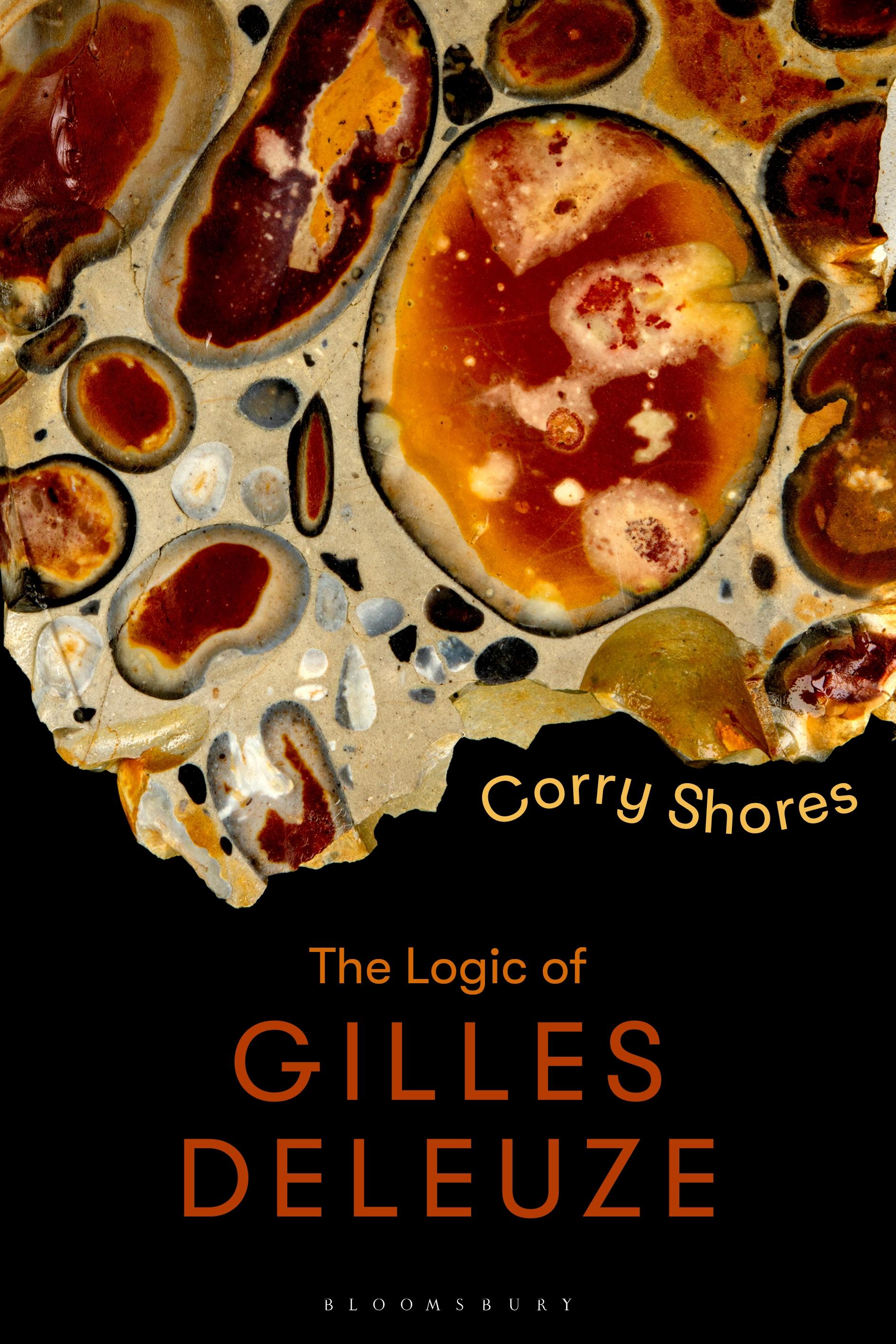
French philosopher Gilles Deleuze wrote two 'logic' books: Francis Bacon: The Logic of Sensation and The Logic of Sense. However, in neither of these books nor in any other works does Deleuze articulate in a formal way the features of the logic he employs. He certainly does not use classical logic. And the best options for the non-classical logic that he may be implementing are: fuzzy, intuitionist, and many-valued. These are applicable to his concepts of heterogeneous composition and becoming, affirmative synthetic disjunction, and powers of the false.
In The Logic of Gilles Deleuze: Basic Principles, Corry Shores examines the applicability of three non-classical logics to Deleuze's philosophy, by building from the philosophical and logical writings of Graham Priest, the world's leading proponent of dialetheism. Through so doing, Shores argues that Deleuze's logic is best understood as a dialetheic, paraconsistent, many-valued logic.
In The Logic of Gilles Deleuze: Basic Principles, Corry Shores examines the applicability of three non-classical logics to Deleuze's philosophy, by building from the philosophical and logical writings of Graham Priest, the world's leading proponent of dialetheism. Through so doing, Shores argues that Deleuze's logic is best understood as a dialetheic, paraconsistent, many-valued logic.
Betala smidigt med kort, Klarna, Apple Pay eller Google Pay. Är du inte nöjd har du alltid 14 dagars ångerrätt. Läs mer i våra villkor. Har du några frågor, mejla oss på hello@memmo.org.
Memmo gör det enklare att plugga – var du än är i världen. Hos oss samlar du kursböcker och smarta studieverktyg på ett och samma ställe: sammanfattningar, quiz, poddar och flashcards. Och så Ted, din studiekompis som svarar på allt du undrar. Över 50 000 studenter pluggar redan här – byggt för att du ska lära dig snabbare och stressa mindre.