
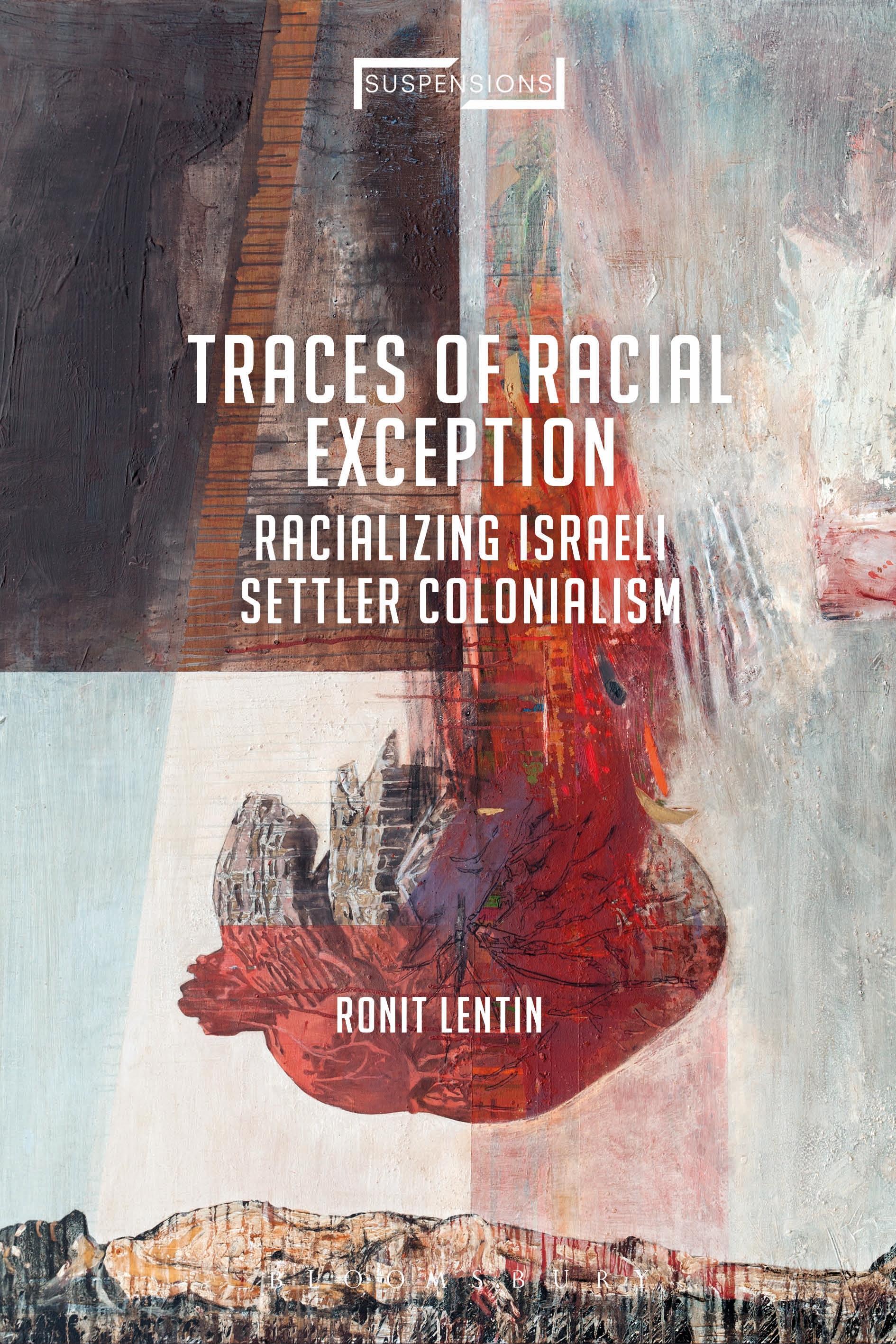
Positioning race front and centre, this book theorizes that political violence, in the form of a socio-political process that differentiates between human and less-than-human populations, is used by the state of Israel in racializing and ruling the citizens of occupied Palestine.
Lentin argues that Israel's rule over Palestine is an example of Agamben's state of exception, Goldberg's racial state and Wolfe's settler colony; the Israeli racial settler colony employs its laws to rule besieged Palestine, while excluding itself and its Jewish citizen-colonists from legal instruments and governmental technologies. Governing through emergency legislation and through practices of exception, emergency, necessity and security, Israel positions itself outside domestic and international law.
Deconstructing Agamben's Eurocentric theoretical position Lentin shows that it occludes colonialism, settler colonialism and anti-colonialism and fails to specifically foreground race; instead she combines the work of Wolfe, who proposes race as a trace of settler colonialism, and Weheliye, who argues that Agamben's western-centric understanding of exception fail to speak from explicitly racialized and gendered standpoints.
Employing existing media, activist, and academic accounts of racialization this book deliberately breaks from white, Western theorizations of biopolitics, exception, and bare life, and instead foregrounds race and gender in analysing settler colonial conditions in Israel.
Lentin argues that Israel's rule over Palestine is an example of Agamben's state of exception, Goldberg's racial state and Wolfe's settler colony; the Israeli racial settler colony employs its laws to rule besieged Palestine, while excluding itself and its Jewish citizen-colonists from legal instruments and governmental technologies. Governing through emergency legislation and through practices of exception, emergency, necessity and security, Israel positions itself outside domestic and international law.
Deconstructing Agamben's Eurocentric theoretical position Lentin shows that it occludes colonialism, settler colonialism and anti-colonialism and fails to specifically foreground race; instead she combines the work of Wolfe, who proposes race as a trace of settler colonialism, and Weheliye, who argues that Agamben's western-centric understanding of exception fail to speak from explicitly racialized and gendered standpoints.
Employing existing media, activist, and academic accounts of racialization this book deliberately breaks from white, Western theorizations of biopolitics, exception, and bare life, and instead foregrounds race and gender in analysing settler colonial conditions in Israel.
Sidor: 224
Kategori: Kultur-, Genus- & Postkoloniala studier
e-ISBN: 9781350032071
Fraktvikt: 1.2 kg
Skickas inom: 1-2 dagar
Betala smidigt med kort, Klarna, Apple Pay eller Google Pay. Är du inte nöjd har du alltid 14 dagars ångerrätt. Läs mer i våra villkor. Har du några frågor, mejla oss på hello@memmo.org.
Memmo gör det enklare att plugga – var du än är i världen. Hos oss samlar du kursböcker och smarta studieverktyg på ett och samma ställe: sammanfattningar, quiz, poddar och flashcards. Och så Ted, din studiekompis som svarar på allt du undrar. Över 50 000 studenter pluggar redan här – byggt för att du ska lära dig snabbare och stressa mindre.