
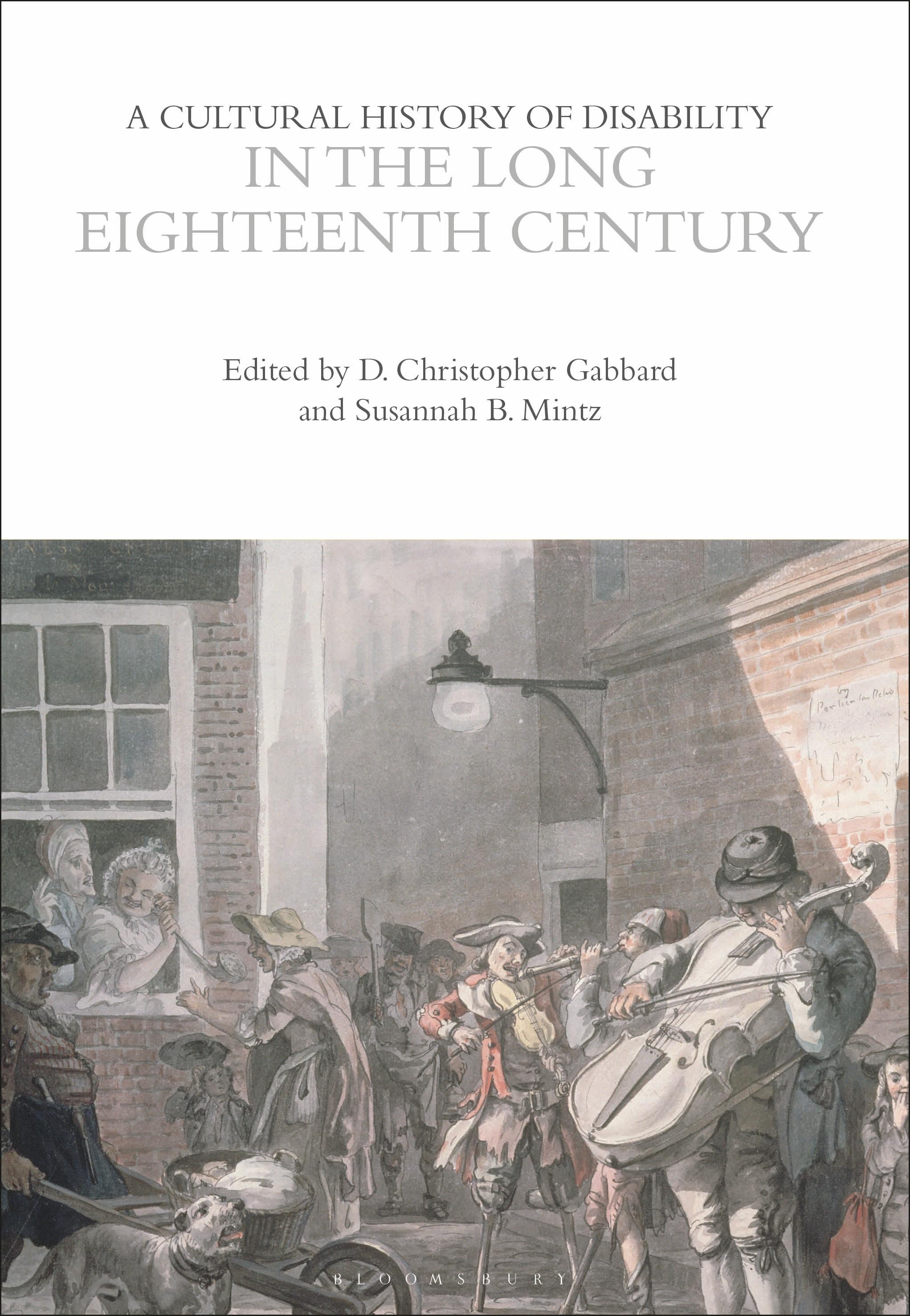
18th century philosopher Edmund Burke wrote, 'deformity is opposed, not to beauty, but to the complete, common form. If one of the legs of a man be found shorter than the other, the man is deformed; because there is something wanting to complete the whole idea we form of a man'. During the long 18th century, new ideas from aesthetics and the emerging scientific disciplines of physics, biology and zoology contributed to changing fundamental notions about human form, function and ability. The interrelated concepts of the natural and the beautiful coalesced into a hegemonic ideology of form, one which defined communal standards regarding which aspects of human appearance and ability would be considered typical and socially acceptable and which would not.
An essential resource for researchers, scholars and students of history, literature, culture and education, A Cultural History of Disability in the Long Eighteenth Century explores such themes and topics as: atypical bodies; mobility impairment; chronic pain and illness; blindness; deafness; speech; learning difficulties; and mental health.
An essential resource for researchers, scholars and students of history, literature, culture and education, A Cultural History of Disability in the Long Eighteenth Century explores such themes and topics as: atypical bodies; mobility impairment; chronic pain and illness; blindness; deafness; speech; learning difficulties; and mental health.
Betala smidigt med kort, Klarna, Apple Pay eller Google Pay. Är du inte nöjd har du alltid 14 dagars ångerrätt. Läs mer i våra villkor. Har du några frågor, mejla oss på hello@memmo.org.
Memmo gör det enklare att plugga – var du än är i världen. Hos oss samlar du kursböcker och smarta studieverktyg på ett och samma ställe: sammanfattningar, quiz, poddar och flashcards. Och så Ted, din studiekompis som svarar på allt du undrar. Över 50 000 studenter pluggar redan här – byggt för att du ska lära dig snabbare och stressa mindre.