
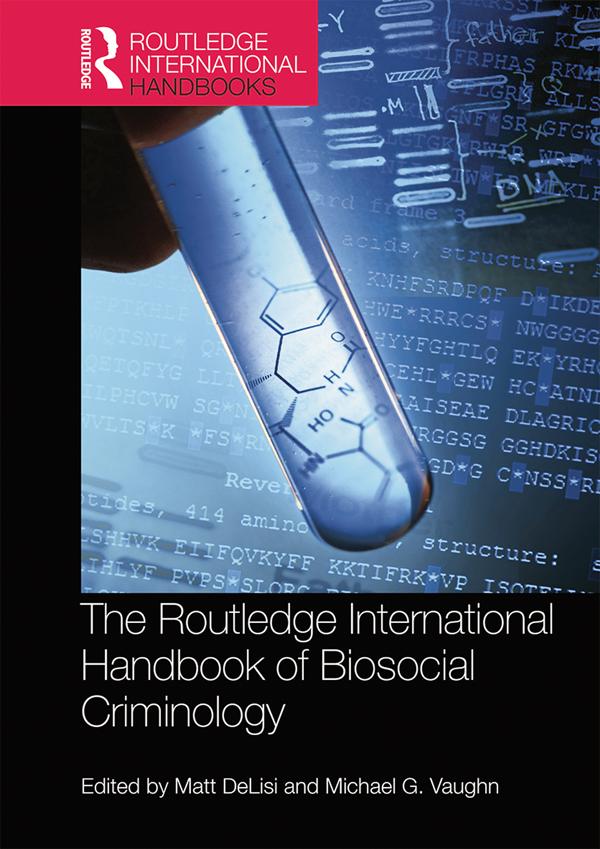
Biosocial criminology is an interdisciplinary field that aims to explain crime and antisocial behavior by exploring both biological factors and environmental factors. Since the mapping of the human genome, scientists have been able to study the biosocial causes of human behaviour with the greatest specificity.
After decades of almost exclusive sociological focus, criminology has undergone a paradigm shift where the field is more interdisciplinary and this book combines perspectives from criminology and sociology with contributions from fields such as genetics, neuropsychology, and evolutionary psychology. The Routledge International Handbook of Biosocial Criminology is the largest and most comprehensive work of its kind, and is organized into five sections that collectively span the terrain of biosocial research on antisocial behavior.
Bringing together leading experts from around the world, this book considers the criminological, genetic and neuropsychological foundations of offending, as well as the legal and criminal justice applications of biosocial criminological theory. The handbook is essential reading for students, researchers, and practitioners from across the social, behavioural, and natural sciences who are engaged in the study of antisocial behaviour.
Betala smidigt med kort, Klarna, Apple Pay eller Google Pay. Är du inte nöjd har du alltid 14 dagars ångerrätt. Läs mer i våra villkor. Har du några frågor, mejla oss på hello@memmo.org.
Memmo gör det enklare att plugga – var du än är i världen. Hos oss samlar du kursböcker och smarta studieverktyg på ett och samma ställe: sammanfattningar, quiz, poddar och flashcards. Och så Ted, din studiekompis som svarar på allt du undrar. Över 50 000 studenter pluggar redan här – byggt för att du ska lära dig snabbare och stressa mindre.