
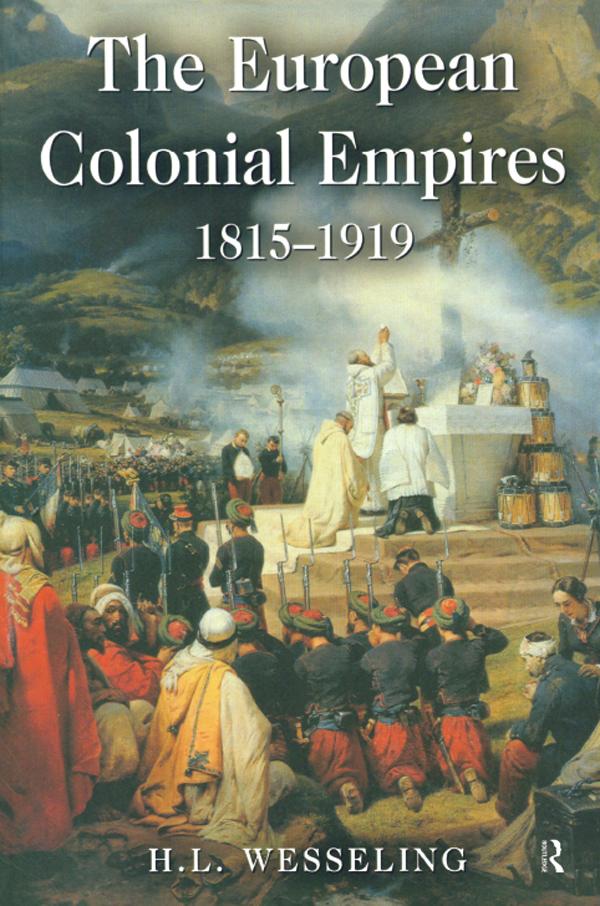
The nineteenth century was Europe's colonial century. At the beginning of the period, the only colonial empire that existed was the British Empire. By the end of the century the situation was completely different and Europe's colonial possessions had come to constitute a large part of the world. The French had acquired an immense colonial empire and the Dutch had extended their control over Indonesia. Germany and Italy, unified only in the latter half of the century, had claimed their place under the sun. Even the tiny Kingdom of Belgium had acquired a huge colonial territory in Africa: the Belgian Congo.
This is the first book to describe the whole process of colonization from conquest to pacification, and to analyze it in the light of administrative, cultural and economic developments. The European Colonial Empires discusses a uniquely long period instead of merely focussing on the shorter, accepted age of classical imperialism. Wesseling argues that European colonial expansion can be understood only by putting it into this long-term perspective and by comparing the differences between the colonies in Africa, Asia, Oceania and the Caribbean.
This book redresses the balance that privileges the British colonial and imperial experience. It emphasizes the continental European experience while relating developments to the British enterprise.
Betala smidigt med kort, Klarna, Apple Pay eller Google Pay. Är du inte nöjd har du alltid 14 dagars ångerrätt. Läs mer i våra villkor. Har du några frågor, mejla oss på hello@memmo.org.
Memmo gör det enklare att plugga – var du än är i världen. Hos oss samlar du kursböcker och smarta studieverktyg på ett och samma ställe: sammanfattningar, quiz, poddar och flashcards. Och så Ted, din studiekompis som svarar på allt du undrar. Över 50 000 studenter pluggar redan här – byggt för att du ska lära dig snabbare och stressa mindre.