
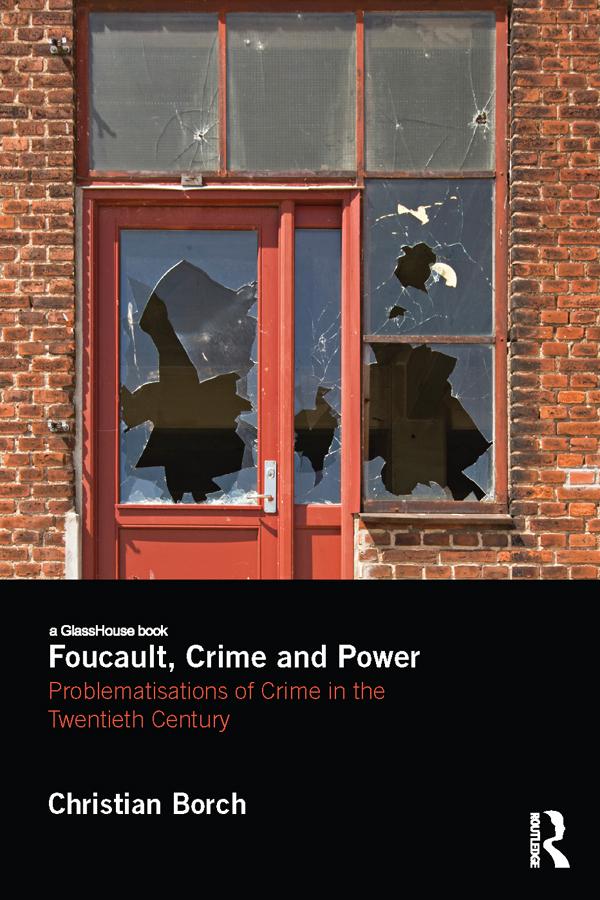
This book presents a Foucauldian problematisation analysis of crime, with a particular focus on the twentieth century. It considers how crime has been conceived as problem and, by scrutinising the responses that have been adapted to deal with crime, demonstrates how a range of power modalities have evolved throughout the twentieth century.
Christian Borch shows how the tendency of criminologists to focus on either disciplinary power or governmentality has neglected the broader complex of Foucault’s concerns: ignoring its historical underpinnings, whilst for the most part limiting studies to only very recent developments, without giving sufficient attention to their historical backdrop. The book uses developments in Denmark – developments that can be readily identified in most other western countries – as a paradigmatic case for understanding how crime has been problematised in the West. Thus, Foucault, Crime and Power: Problematisations of Crime in the Twentieth Century demonstrates that a Foucauldian approach to crime holds greater analytical potentials for criminological research than have so far been recognized.
Betala smidigt med kort, Klarna, Apple Pay eller Google Pay. Är du inte nöjd har du alltid 14 dagars ångerrätt. Läs mer i våra villkor. Har du några frågor, mejla oss på hello@memmo.org.
Memmo gör det enklare att plugga – var du än är i världen. Hos oss samlar du kursböcker och smarta studieverktyg på ett och samma ställe: sammanfattningar, quiz, poddar och flashcards. Och så Ted, din studiekompis som svarar på allt du undrar. Över 50 000 studenter pluggar redan här – byggt för att du ska lära dig snabbare och stressa mindre.