
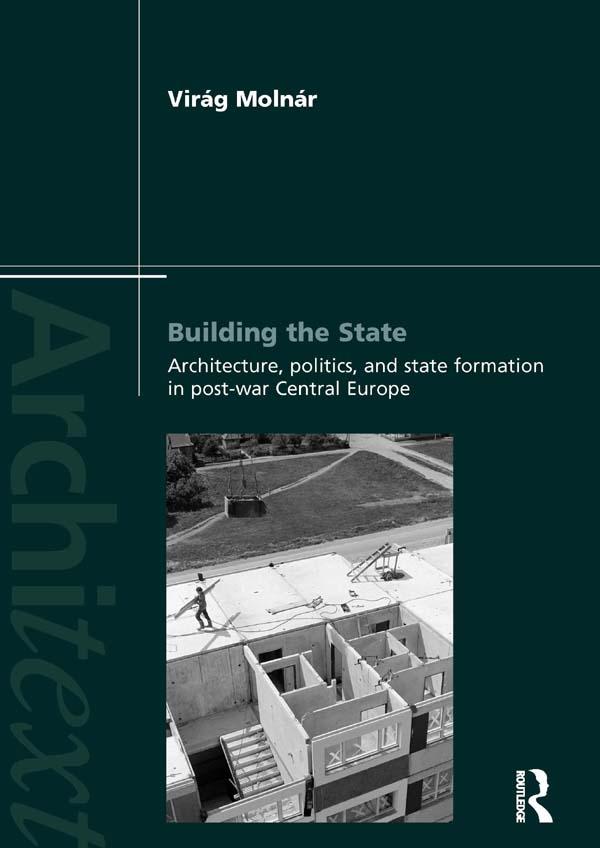
The built environment of former socialist countries is often deemed uniform and drab, an apt reflection of a repressive regime. Building the State peeks behind the grey façade to reveal a colourful struggle over competing meanings of the nation, Europe, modernity and the past in a divided continent.
Examining how social change is closely intertwined with transformations of the built environment, this volume focuses on the relationship between architecture and state politics in postwar Central Europe using examples from Hungary and Germany. Built around four case studies, the book traces how architecture was politically mobilized in the service of social change, first in socialist modernization programs and then in the postsocialist transition.
Building the State does not only offer a comprehensive survey of the diverse political uses of architecture in postwar Central Europe but is the first book to explore how transformations of the built environment can offer a lens into broader processes of state formation and social change.
Betala smidigt med kort, Klarna, Apple Pay eller Google Pay. Är du inte nöjd har du alltid 14 dagars ångerrätt. Läs mer i våra villkor. Har du några frågor, mejla oss på hello@memmo.org.
Memmo gör det enklare att plugga – var du än är i världen. Hos oss samlar du kursböcker och smarta studieverktyg på ett och samma ställe: sammanfattningar, quiz, poddar och flashcards. Och så Ted, din studiekompis som svarar på allt du undrar. Över 75 000 studenter pluggar redan här – byggt för att du ska lära dig snabbare och stressa mindre.