
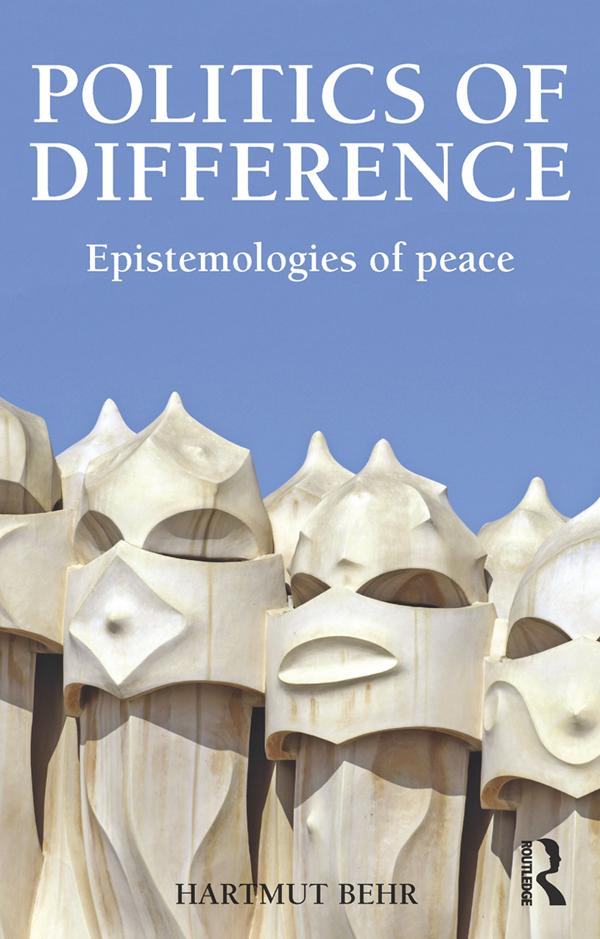
This book develops a notion of differences and 'otherness' beyond hegemonic and hierarchical thinking as represented by the legacies of Western philosophical and political thought.
In doing so, it relates to the phenomenological discourse of the twentieth century, especially to Georg Simmel, Alfred Schütz, Emmanual Lévinas, and Jacques Derrida, and drafts our understanding of difference as a genuine human experience of a social and political world that is in motion and transformative, rather than static and predictable. On this basis of temporalized ontology and its normative consequences, differences are drafted as a positive social and political force and as powerful capacities of transformation and change. In practical terms, this understanding is most important for our theorizing and acting upon peace, peace-building, and conflict solution. Differences now appear not as obstacle to peace and reconciliation, but as lively and constructive articulations of 'otherness' and as a positive power of transformation, emancipation, and change.
This book will be of interest to students of international relations, philosophy and political theory.
Betala smidigt med kort, Klarna, Apple Pay eller Google Pay. Är du inte nöjd har du alltid 14 dagars ångerrätt. Läs mer i våra villkor. Har du några frågor, mejla oss på hello@memmo.org.
Memmo gör det enklare att plugga – var du än är i världen. Hos oss samlar du kursböcker och smarta studieverktyg på ett och samma ställe: sammanfattningar, quiz, poddar och flashcards. Och så Ted, din studiekompis som svarar på allt du undrar. Över 50 000 studenter pluggar redan här – byggt för att du ska lära dig snabbare och stressa mindre.