
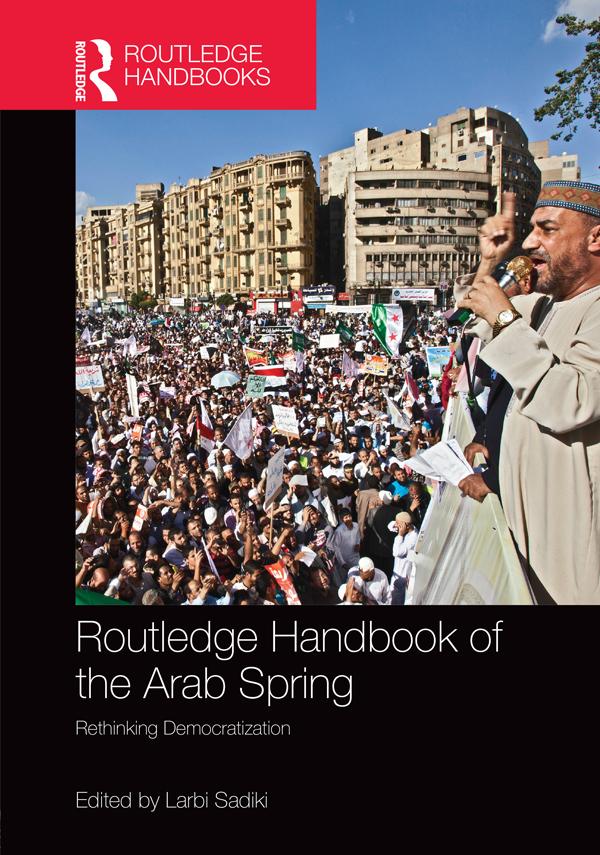
The self-immolation of Mohammed Bouazizi in Tunisia in December 2010 heralded the arrival of the ‘Arab Spring,’ a startling, yet not unprecedented, era of profound social and political upheaval.
The meme of the Arab Spring is characterised by bottom-up change, or the lack thereof, and its effects are still unfurling today. The Routledge Handbook of the Arab Spring seeks to provide a departure point for ongoing discussion of a fluid phenomenon on a plethora of topics, including:
- Contexts and contests of democratisation
- The sweep of the Arab Spring
- Egypt
- Women and the Arab Spring
- Agents of change and the technology of protest
- Impact of the Arab Spring in the wider Middle East and further afield
Collating a wide array of viewpoints, specialisms, biases, and degrees of proximity and distance from events that shook the Arab world to its core, the Handbook is written with the reader in mind, to provide students, practitioners, diplomats, policy-makers and lay readers with contextualization and knowledge, and to set the stage for further discussion of the Arab Spring.
Betala smidigt med kort, Klarna, Apple Pay eller Google Pay. Är du inte nöjd har du alltid 14 dagars ångerrätt. Läs mer i våra villkor. Har du några frågor, mejla oss på hello@memmo.org.
Memmo gör det enklare att plugga – var du än är i världen. Hos oss samlar du kursböcker och smarta studieverktyg på ett och samma ställe: sammanfattningar, quiz, poddar och flashcards. Och så Ted, din studiekompis som svarar på allt du undrar. Över 50 000 studenter pluggar redan här – byggt för att du ska lära dig snabbare och stressa mindre.